Error Codes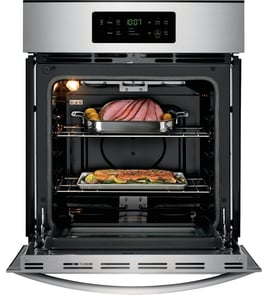



Does a wall oven need its own circuit?
Yes. A Thermador wall oven such as model PODC30201 needs its own dedicated electrical circuit because it draws high current while heating. Sharing a circuit with other appliances can trip the breaker, cause poor performance, and create an overheating risk in the wiring.
What “dedicated circuit” means
A dedicated circuit is a breaker and wiring run that supplies only the wall oven (no outlets, microwave, dishwasher, or lighting on the same breaker).
Typical circuit requirements for electric wall ovens
Exact requirements vary by model and installation, but most electric wall ovens are wired as follows:
- 240/208 VAC supply (depending on your home)
- Dedicated double-pole breaker
- Common breaker sizes: 30A, 40A, or 50A (many are 40A to 50A)
- Copper wire sized to the breaker and local electrical code
| What you’re checking | What you want to see | Why it matters |
|---|---|---|
| Breaker type | Double-pole | Supplies both hot legs for 240V heating |
| Circuit sharing | Oven only | Prevents nuisance trips and overheating |
| Breaker size | Matches oven rating | Protects wiring and components |
Quick checks before installation
- Locate the oven’s dedicated breaker in the panel and confirm it is labeled for the wall oven.
- Verify the junction box and cable are sized for the breaker (do not “upsize” a breaker to stop trips).
- If the breaker trips during preheat or self-clean, stop using the oven and have the circuit inspected.
Why it matters
Heating elements and convection systems pull a lot of power. A dedicated circuit helps your Thermador wall oven heat consistently and protects the home’s wiring from excessive load.
Related help
If the oven is not heating or trips a breaker, we use the same troubleshooting path as thermal protection issues; see wall oven wont heat troubleshooting thermal switch problems video.
Last updated: February 2026
What is the code F34 on Thermador wall oven?
On a Thermador PODC30201 wall oven, error code F34 points to a cooling or air-circulation problem that can also be triggered by a wiring or connection issue in the cooling circuit. We focus first on airflow (fan and vents), then verify wiring and temperature-sensing components.
What to check first (fast, no tools)
- Power reset: Turn the breaker off for 2 to 5 minutes, then restore power and see if F34 returns.
- Cooling airflow: Make sure the oven’s vents are not blocked by foil, pans, or cabinetry trim.
- Listen for the cooling fan: After preheat starts, you should typically hear a fan running to move hot air away from controls.
- Heat symptoms: Note whether the oven stops heating, overheats, or shuts down during preheat.
Likely causes and the parts that relate
F34 is commonly tied to the oven’s ability to manage heat around the control area.
| Likely cause | What you may notice | Related part on this model page |
|---|---|---|
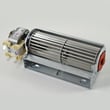
| Cooling fan not running or restricted | Code appears during/after preheat; control area feels very hot | Thermador fan 00643600 |
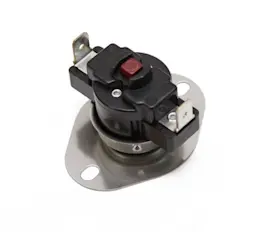
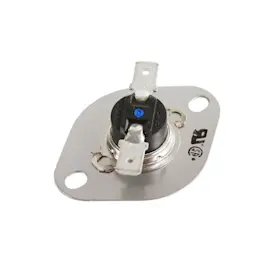
| High-limit thermostat opened (overheat protection) | Oven shuts down, then may work again after cooling | Thermador limiter 00617877 |
| Temperature sensing issue | Temps seem erratic; code appears during heating | Thermador sensor 00642855 |
If you’re comfortable using a multimeter
Turn off power at the breaker before accessing wiring.
- Check for loose connectors at the cooling fan, limiter, and sensor.
- Inspect harnesses for heat damage (brittle insulation, discoloration, melted spots).
- Verify the fan motor is not seized and wiring is not pinched.
Why it matters
The cooling system protects the electronic controls and wiring from overheating. Addressing F34 quickly helps prevent nuisance shutdowns and heat-related damage to components like the limiter, sensor, and fan.
Last updated: February 2026
Can I put a wall oven under a cooktop?
Yes. A Thermador wall oven like model PODC30201 can be installed under a cooktop in many kitchen layouts, as long as the cabinet cutout, clearances, ventilation, and electrical requirements for both appliances are met and the cooktop installation allows it.
What to confirm before you plan the install
- Cooktop installation instructions: some cooktops specifically allow or restrict an oven below.
- Cabinet cutout and clearances: verify there is enough space around the oven chassis and cooktop base.
- Ventilation and heat management: both appliances need proper airflow so heat does not build up in the cabinet.
- Electrical supply: wall ovens commonly require a dedicated circuit; cooktops often do as well.
- Service access: you need a way to pull the oven for service without removing the entire cooktop and countertop.
Common fit and safety guidelines (typical)
These are typical wall oven and cooktop planning rules that help prevent overheating and nuisance shutdowns:
- Keep required side and rear clearances around the oven and cooktop per their install specs.
- Avoid blocking airflow with insulation, trim, or cabinet modifications.
- Do not share junction boxes or circuits unless the installation instructions explicitly allow it.
- Confirm the cooktop does not hang too low into the cabinet space needed by the oven.
Quick compatibility checklist
| Item to check | What “good” looks like | What causes problems |
|---|---|---|
| Cutout size | Matches both appliances’ requirements | Oven or cooktop won’t seat correctly |
| Clearance | Air gaps maintained around oven | Heat buildup, error codes, shutdowns |
| Power | Correct voltage and dedicated circuits | Tripped breakers, weak heating |
| Serviceability | Oven can slide out for repair | Countertop or cooktop must be removed |
Why it matters
Installing a wall oven under a cooktop concentrates heat and electrical loads in one cabinet. When the layout is correct, performance is normal; when it is tight or under-ventilated, you can see overheating symptoms and temperature control issues.
Helpful related guidance
If you run into heating or temperature problems after installation, use our troubleshooting content like wall oven wont heat troubleshooting thermal switch problems video and check model-specific fault patterns in Thermador masterpiece wall oven error codes.
Last updated: February 2026
Why is my Thermador wall oven not heating up?
If your Thermador wall oven model PODC30201 isn’t heating, the most common causes are a power supply problem, a failed heating element, a tripped high-limit thermostat, or a bad temperature sensor. We recommend checking power first, then testing the heat circuit parts in a safe, step-by-step order.
Quick checks first (no disassembly)
- Confirm the oven is getting full power (many electric wall ovens need 240V; a half-tripped breaker can leave you with lights but no heat).
- Make sure the oven is not in a timed mode or locked out after a self-clean cycle.
- Try Bake and Broil separately; if Broil works but Bake does not, the bake circuit is the focus.
- If the display shows an error, use Thermador masterpiece wall oven error codes to match the code to the likely failed part.
Parts that commonly stop heating
On the PODC30201, these parts are frequent “no heat” culprits:
- Broil element: Thermador element 00144648
- Temperature sensor: Thermador sensor 00642855
- High-limit thermostat (thermal limiter): Thermador limiter 00617877
- Other heating elements used in some modes: Thermador element 00144667 and Thermador element 00144647
What to test (recommended order)
- Incoming power: verify the breaker and wiring are supplying proper voltage.
- High-limit thermostat: if it opens, the oven can stop heating to prevent overheating.
- Heating element(s): look for visible damage; then test for continuity.
- Temperature sensor: if it reads out of range, the control may prevent heating or heat incorrectly.
Symptom-to-likely-cause guide
| What you notice | Most likely cause | What to do next |
|---|---|---|
| No heat in Bake or Broil | Power issue or high-limit open | Check breaker, then test limiter |
| Broil works, Bake doesn’t | Failed bake element or bake relay/control issue | Test bake element circuit |
| Heats briefly, then stops | High-limit opening or airflow issue | Check limiter and cooling fan |
| Error code displayed | Sensor, latch, or control-related fault | Use error code guide |
Why it matters
A wall oven that won’t heat is often a simple electrical or heat-circuit failure. Checking power and the safety limiter first prevents unnecessary parts replacement and helps restore safe, consistent baking and broiling.
Last updated: February 2026
What are the parts of an electric oven?
An electric wall oven like the Thermador PODC30201 is built around heating, temperature sensing, airflow, lighting, and door hardware. The core parts include bake and broil elements, a temperature sensor, safety limit controls, a fan system (on convection models), racks, and door glass and latches.
Main parts you will find in most electric ovens
- Bake system: bake element (sometimes hidden under the oven floor) and related wiring
- Broil system: broil element at the top of the oven cavity
- Temperature control: temperature sensor and electronic control (varies by design)
- Safety devices: high-limit thermostat (thermal limiter) to prevent overheating
- Air movement (if equipped): convection fan and related components
- Door assembly: outer door, glass panels, hinges, and door latch (especially on self-clean models)
- Interior accessories: oven racks and extension racks
- Lighting: oven lamp and lens/cover (varies by model)
Examples of PODC30201 parts from our parts list
These are common, real components you can match to symptoms like “won’t heat,” “door won’t lock,” or “glass is broken”:
| Oven function | Example part on this model | What it affects |
|---|---|---|
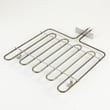
| Broiling heat | Thermador element 00144648 | Top heat for broiling |
| Temperature feedback | Thermador sensor 00642855 | Temperature accuracy and heating cycles |
| Overheat protection | Thermador limiter 00617877 | Shuts heating down if temperatures get unsafe |
| Door locking | Thermador door latch 00751505 | Self-clean lock and door-closed sensing |
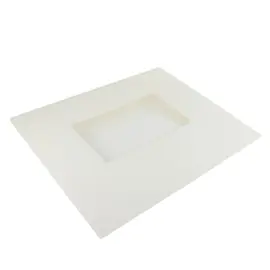
| Door glass | Thermador glass panel 00478310 | Door insulation and viewing window |
Why it matters
Knowing which part does what helps you troubleshoot faster. For example, a failed element often causes no heat or uneven cooking, while a bad sensor can cause temperature swings, and a tripped limiter can stop heating entirely until the underlying overheating issue is corrected.
Quick troubleshooting pointers (before replacing parts)
- Confirm the oven is getting power (many wall ovens use a 240V supply).
- If bake works but broil does not, suspect the broil element.
- If temperatures are consistently off, suspect the temperature sensor or calibration settings.
- If the oven overheats or shuts down, check the high-limit thermostat and cooling airflow.
- If the door will not unlock after self-clean, check the door latch mechanism.
For model-specific fault displays, use Thermador masterpiece wall oven error codes.
Last updated: February 2026