 Installation guide
 Owner’s manual
 Error Codes




How do I get rid of standing water in my Kenmore dishwasher?
To get rid of standing water in your Kenmore 58714012402 dishwasher, shut off power first, then bail out the water with a cup and soak up the remainder with towels. After it’s empty, focus on the drain path (air gap, hose, and pump) so the water doesn’t return.
Safe, quick water removal
- Turn off power at the breaker (or unplug the dishwasher).
- Place towels at the toe-kick area to catch spills.
- Remove as much water as possible with a cup or small container.
- Use towels or a sponge to soak up the last bit of water.
- Remove the lower rack to improve access while you work.
Fix the cause so it drains normally
Standing water usually means a restriction in the drain system or a drain component problem.
- Check the drain air gap (if your sink has one): A clogged air gap can prevent draining; the 58714012402 owner's manual notes it should be kept clean so the dishwasher will drain properly.
- Inspect the drain hose routing: Look for kinks, crushing, or a low loop that lets water flow back into the tub.
- Look for a clog at the sink/disposer connection: Food debris at the drain inlet is a common blockage point.
- If the dishwasher still won’t drain: The drain pump can be jammed or failed; replacing the dishwasher drain pump A00126501 is a common repair when the motor won’t evacuate water.
What to check first (fast triage)
| What you see | Most likely cause | What to do next |
|---|---|---|
| Water stays after every cycle | Drain restriction | Check air gap, hose, and sink/disposer inlet |
| Hums but doesn’t drain | Pump jam or failed pump | Clear debris; consider drain pump replacement |
| Drains slowly | Partial clog or hose issue | Straighten hose; clear restriction |
Why it matters
Standing water can cause odors and redeposit soil on dishes. Restoring proper draining protects the pump area and helps your Kenmore dishwasher clean and dry as designed.
Last updated: January 2026
What is the spinning thing at the bottom of a dishwasher called?
In the Kenmore 58714012402 dishwasher, the spinning part at the bottom is the lower spray arm (also called the wash arm). It rotates during the wash to spray water up through the lower rack and circulate water through the tub.
What the spray arm does
The spray arm is a rotating water distributor; it uses water pressure from the pump to push water through small spray holes.
Common jobs it handles:
- Sprays wash water up into the lower rack for cleaning
- Helps circulate water so detergent dissolves and moves through the load
- Keeps food soil moving toward the filter/sump area
- Rotates freely so coverage reaches corners and tall items
Signs the lower spray arm is not working right
If the spray arm is blocked or not spinning, cleaning performance drops fast.
Watch for:
- Grit or detergent left on dishes after the cycle
- Items in the lower rack not getting clean
- A rattling or thumping sound (spray arm hitting a pan handle)
- Spray holes clogged with hard-water scale or food debris
- Dishes loaded in a way that blocks rotation (handles protruding through the rack)
Quick checks you can do
Use these steps before replacing parts.
- Spin the lower spray arm by hand; it should turn smoothly.
- Re-load the bottom rack so nothing blocks spray arm rotation (pan handles are a common cause).
- Clean spray holes with warm water and a soft brush or toothpick.
- Confirm the dishwasher is level and the door closes and latches correctly.
For model-specific loading guidance that helps prevent blocking the spray arm, follow the 58714012402 owner's manual.
Spray arm vs other “spinning” parts
| What you see | Common name | What it does |
|---|---|---|
| Spinning arm under bottom rack | Lower spray arm | Sprays water upward for washing |
| Spinning arm under upper rack | Upper spray arm | Sprays water for the top rack |
| Motor-driven assembly below tub | Pump/motor | Pressurizes and moves water |
Why it matters
The spray arm must rotate freely to deliver full wash coverage. Even a small obstruction can leave dishes dirty and can make the dishwasher sound louder than normal.
Last updated: January 2026
What does F2 mean on a Kenmore dishwasher?
On a Kenmore dishwasher, an F2 code typically points to a drain or water-level problem, such as the dishwasher not draining correctly or sensing water when it should not. For model 58714012402, use the 58714012402 user manual to confirm the exact meaning and the recommended reset/check steps.
What to check first (fast, no parts)
- Cancel the cycle and let the unit run its drain portion; listen for the drain pump running.
- Check the sink drain and garbage disposer inlet (if used) for a clog that can block dishwasher draining.
- Inspect the drain hose routing for kinks and make sure it has a proper high loop.
- Turn off power at the breaker for 5 minutes, then restore power and try a short cycle.
- If the tub is overfilled, do not keep restarting cycles; address the fill issue first.
Common causes and the parts that usually fix them
If the dishwasher will not drain or keeps showing F2 after basic checks, these are the most common repair paths:
| Symptom you see | Most likely cause | Part to consider for 58714012402 |
|---|---|---|
| Standing water in tub | Failed drain pump or blockage | Dishwasher drain pump A00126501 |
| Intermittent overfill or odd fill behavior | Float/float switch issue | Switch 154773201 |
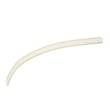
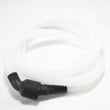
| Slow drain, water backing up | Restricted or damaged drain hose | Hose 807117001 |
Why it matters
Drain and water-level faults can leave dirty water in the tub, trigger repeated error codes, and lead to leaks at the door if the water level gets too high. Fixing the root cause protects the pump, wiring, and kitchen flooring.
When installation details matter
Improper hose selection or routing can contribute to flooding and drain problems. Follow the water supply and drain setup guidance in the 58714012402 installation guide, including using the correct type of water supply line and proper drain connection methods.
Last updated: January 2026
What are the commonly replaced parts in a dishwasher?
In a Kenmore dishwasher model 58714012402, the most commonly replaced parts are the ones that handle sealing, filling, heating, and draining. When you see leaks, poor cleaning, cold water, or standing water, these wear items are the first places we check; see the 58714012402 owner's manual for symptom-specific guidance.
Most common dishwasher parts that get replaced
These parts fail most often because of normal wear, mineral buildup, clogs, or repeated door use:
- Door seals and gaskets (leaks at the front or corners)
- Drain components (standing water in the tub after a cycle)
- Water fill components (won't fill or fills too slowly)
- Heating components (poor drying, cool wash water)
- Rack wheels and rack assemblies (racks fall off track or roll poorly)
- Switches and controls (won't start, stops mid-cycle)
Model 58714012402 parts we see replaced often
Here are examples of common replacements available for this model:
| Symptom you notice | Likely part area | Example part for this model |
|---|---|---|
| Water leaking at the door | Door seal | Dishwasher door seal 809006501 |
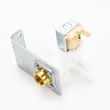
| Dishwasher won't fill or fills slowly | Water inlet valve, float system | Valve 154637401 or switch 154773201 |
| Water left in bottom of tub | Drain hose, drain pump | Hose 807117001 or dishwasher drain pump A00126501 |
| Poor drying or cool wash results | Heating element and hardware | Heater 154665201 and heating element nut 154106202 |
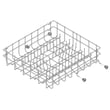
| Lower rack not rolling smoothly | Rack rollers | Dishwasher dishrack roller, lower 5304532229 |
Quick checks before you buy a part
These checks help confirm whether you have a part failure or a setup issue:
- Verify the dishwasher is level; an unlevel tub can contribute to leaks.
- Confirm the water supply is on and household water pressure is adequate.
- Check incoming water temperature; many dishwashers clean best with hot water.
- Make sure dishes are loaded so spray arms can rotate freely.
- If there is standing water, inspect for a kinked drain hose and a clear drain path.
Why it matters
Replacing the right part first saves time and prevents repeat problems. For example, a door leak can be caused by a worn seal, but it can also happen if the dishwasher is not level or the door is not closing squarely, which the installation steps cover.
Last updated: January 2026





