Owner’s manual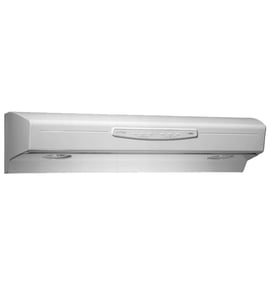



How do I know what model range hood I have?
To know what model Kenmore range hood you have, find the rating label on the hood and match the model number printed there. On Kenmore model 23353349591, the label is typically on the top, the underside, or behind the grease filter; confirm the exact location in the owner's manual.
Where to look for the model number label
Check these common spots first (power off is best):
- On the top of the hood (often visible inside the cabinet above)
- On the underside of the hood near the light or fan area
- Behind the filter (remove the aluminum mesh filter and look on the inner frame)
- Inside the hood near the wiring cover area
What the label looks like and what to copy
The label is usually a small sticker or metal plate. Write down:
- Model number (example format: 23353349591)
- Serial number (helps with production details)
- Electrical rating (volts/amps), if listed
Why the exact model number matters
We use the model number to match the correct parts and diagrams for your hood. Even similar-looking Kenmore range hoods can use different filters, switches, or motor parts.
| If you need to replace | What the model number helps us match |
|---|---|
| Grease filter retention hardware | Correct latch and mounting style |
| Fan control | Correct switch type and wiring |
| Lighting cover | Correct lens shape and fit |
Quick tip if the label is hard to read
Grease and heat can fade labels. If it is smudged:
- Wipe gently with a damp cloth and mild detergent
- Use a flashlight and take a close-up photo, then zoom in
- Compare any partial digits to the model format shown in the owner's manual
Last updated: February 2026
Are all range hood filters the same?
No. Range hood filters are not all the same; your Kenmore range hood model 23353349591 uses a specific filter type based on whether it is ducted or non-ducted, and the filter must match the hood’s size and mounting so it seals and captures grease properly (see the owner's manual).
What types of range hood filters are common?
Most home range hoods use one of these filter setups:
- Aluminum mesh grease filter (typical for ducted hoods); washable about monthly depending on cooking
- Non-ducted “clean cooking” filter (for recirculating hoods); clean the surface often, but do not immerse or dishwasher-clean
- Charcoal-style odor filters (often used with non-ducted setups); replaced on a schedule
- Different latch and frame styles; even similar-looking filters can mount differently
How to choose the right filter for model 23353349591
Use these checks before ordering:
| What to match | Why it matters | What to do |
|---|---|---|
| Hood configuration (ducted vs non-ducted) | Filter type is different | Confirm how your hood vents (outside vs recirculating) |
| Physical size and shape | Prevents gaps and rattles | Measure the existing filter and compare |
| Mounting method (latch, tabs, rails) | Ensures it locks in place | Inspect the latch points and frame |
| Cleaning requirements | Avoids damage | Follow the cleaning method for your filter type |
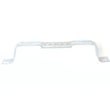
If your filter will not stay secured, the latch or retaining hardware may be the real issue. For this model, a common related part is the range hood filter latch S99420472.
Why it matters
A correctly fitted filter protects the fan motor and blower area from grease buildup, helps airflow stay strong, and reduces noise and vibration. Using the wrong filter can restrict airflow or allow grease to bypass the filter and coat internal parts.
Last updated: February 2026
What is the life expectancy of a range hood?
Most range hoods last 10 to 20 years; for the Kenmore 23353349591, regular filter cleaning and keeping grease off the fan area are the biggest factors that help you reach the longer end of that range. Use the owner's manual for the cleaning schedule and operating details.
Typical lifespan and what affects it
A range hood’s service life depends more on grease management and daily use than on age alone.
- Cooking frequency and heat level (heavy frying shortens life)
- Filter cleaning (grease buildup strains the motor)
- Vent path condition (restricted ducting makes the blower work harder)
- Switch wear (rocker switches can fail after years of use)
- Moisture and corrosion (especially near coastal areas)
Maintenance that extends life
These steps reduce motor load, noise, and overheating risk.
- Clean the aluminum mesh filter frequently with hot water and mild detergent (per the manual).
- Wipe grease from the hood interior so it does not migrate into the blower area.
- Run the fan on high when cooking at high heat; it reduces grease accumulation.
- Keep ducting clear and properly connected; avoid crushed or kinked duct runs.
- If the fan starts getting noisy or weak, inspect the blower area and mounting hardware.
Common “end of life” symptoms and likely fixes
| Symptom | Most common cause | What to check first |
|---|---|---|
| Fan runs but airflow is weak | Greasy filter or restricted duct | Clean filter; inspect duct/transition |
| Fan is noisy or vibrating | Blade buildup or loose mounting | Clean blade; check brackets and fasteners |
| Fan will not run | Failed switch or motor issue | Test switch; inspect wiring connections |
| Lights work but fan does not | Fan switch problem | Check the fan rocker switch |
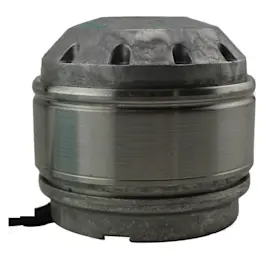
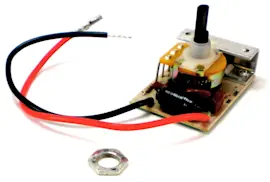
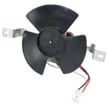
If you’re repairing instead of replacing, common wear items for this model include the range hood fan motor S97011220 and the switch S97016970.
Why it matters
A hood that is clogged with grease or fighting a restricted vent path runs hotter and louder, and it wears out the motor and switches faster. Good airflow also helps remove smoke and cooking odors more effectively.
Last updated: February 2026
Can range hoods be repaired?
Yes. Most problems on the Kenmore 23353349591 range hood are repairable by cleaning, tightening, rewiring, or replacing common service parts like switches, the fan motor, or the filter latch; the owner's manual also outlines safe operation and maintenance that prevents many failures.
What you can usually repair (and what to check first)
- Fan will not run: verify power, then inspect the fan switch and motor wiring.
- Fan runs but airflow is weak: check for a dirty/blocked filter and restricted ducting.
- Noisy operation: look for a loose fan blade, grease buildup, or a worn motor.
- Lights not working: check the bulb and lens fitment before replacing electrical parts.
- Fan turns on or acts erratically: a failing switch or loose connection is common.
Common repair parts for this model
If troubleshooting points to a failed component, these are typical replacements for the 23353349591:
| Symptom | Likely part to inspect/replace | Example part on this model |
|---|---|---|
| Fan does not run | Fan switch, motor, harness | Switch S97016970, range hood fan motor S97011220, range hood blower motor wire harness S97005678 |
| Rattling or vibration | Fan blade, motor mount/bracket | Blade S99020287, range hood fan motor bracket S98005568 |
| Filter will not stay in place | Filter latch | Range hood filter latch S99420472 |
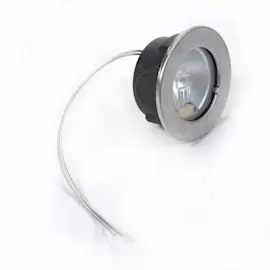
| Light cover issue | Lens | Range hood light lens S99110437 |
Safety and installation details that affect repair success
We recommend following these basics from the product guidance before servicing:
- Disconnect power before cleaning or servicing.
- Clean the fan and filter frequently; grease buildup causes poor performance and noise.
- Use only metal ductwork and vent ducted fans to the outdoors.
- Mounting height is typically 24 to 30 inches above the cooking surface.
Why it matters
A range hood is a simple appliance, so small issues (grease buildup, a worn switch, a loose blade, or a failing motor) often look like a major failure. Targeted troubleshooting and the right replacement part usually restores normal ventilation and lighting.
Last updated: February 2026
What are the parts of a range hood called?
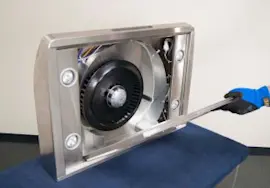
A Kenmore range hood like model 23353349591 is typically described by its housing (canopy), ventilation path (ducting or recirculating), blower (fan blade and motor), controls, lighting, and filters. Using the correct names helps you match symptoms to the right replacement part.
Common range hood part names
- Hood canopy (housing): the main body that captures smoke, steam, and grease
- Grease filter or cooking filter: traps grease and needs regular cleaning
- Blower assembly: moves air; usually includes the fan motor and fan blade
- Controls: switches or pushbuttons that run the fan speeds and lights
- Light assembly: bulb socket, bulb, and lens/cover
- Ducting components (ducted setups): duct, vent transition, and dampers that route air outside
Examples from the Kenmore 23353349591 parts list
These are common names you will see when ordering parts:
| Part name (as listed) | What it does | Example part ID |
|---|---|---|
| Range hood filter latch | Secures the filter in place | S99420472 |
| Range hood fan motor | Powers the blower | S97011220 |
| Blade | Moves air through the hood | S99020287 |
| Switch | Controls fan speed or light function | S97016970 |
| Range hood light lens | Covers and diffuses the light | S99110437 |
| Range hood vent transition | Connects hood outlet to ductwork | S412H |
Why it matters
When airflow is weak, we focus on the filter and blower parts (motor, blade, ducting). When the fan or lights will not respond, we focus on the control parts (switches) and wiring connections.
Where to confirm the exact names for your hood
Your 23353349591 diagrams and part descriptions are shown in the 23353349591 owner's manual, along with cleaning guidance and component identification.
Last updated: February 2026