Owner’s manual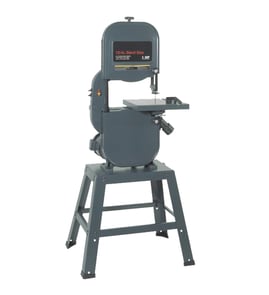

How do I know the size of my bandsaw blade?
For your Craftsman 113243300 12-inch band saw sander, blade size is identified by blade width (the manual supports 1/8 inch to 1/2 inch widths) plus the blade’s length and TPI (teeth per inch). We recommend confirming the exact blade length in the 113243300 owner's manual and measuring your current blade if it is already installed.
Blade “size” usually includes more than one spec. Use this checklist so you buy the right replacement.
- Blade length: total length of the loop (most important for fit)
- Blade width: front-to-back width of the band (your saw accepts 1/8 inch to 1/2 inch)
- TPI: teeth per inch (controls cut speed and finish)
- Kerf and set: affects how freely the blade cuts (varies by blade type)
- Tooth direction: teeth must point down toward the table when installed
If you have the blade off the saw, we use this practical approach:
- Lay the blade flat on the floor in a large loop.
- Mark one spot on the blade with tape or a marker.
- Roll the blade along the floor until the mark returns to the starting point.
- Measure the distance traveled; that is the blade length.
- Measure the band’s width with a ruler or caliper; that is the blade width.
- Count teeth across 1 inch to get TPI.
Your manual notes a 1/4 inch blade is commonly used on this model, and the tension scale pointer is set to match the blade width.
| What you want to do | Common blade width | Common TPI range | Why it helps |
|---|---|---|---|
| Tight curves | 1/8 inch to 3/16 inch | 10 to 18 | Narrow blade turns easier |
| General cutting | 1/4 inch | 6 to 10 | Balanced control and speed |
| Straighter resaw-style cuts | 3/8 inch to 1/2 inch | 3 to 6 | Wider blade tracks straighter |
Using the correct blade length prevents tracking problems, and matching blade width to the tension scale helps reduce blade breakage and poor cuts. Correct tooth direction and guide adjustment also protect the wheels, guides, and thrust bearings.
Last updated: February 2026
What are the specs of the Craftsman 12 inch bandsaw 113243300?
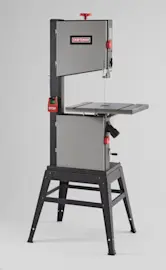
The Craftsman 113243300 is a 12-inch band saw/sander designed for general woodworking cuts and light sanding. The manual confirms the model family (113.243300 and 113.243311) and provides detailed parts, wiring, and setup information; use the 113243300 owner's manual for the exact capacity, table size, and motor rating for your specific configuration.
Because band saw/sander specs can vary by setup (stand, motor, blade, and sanding attachment), we recommend verifying these items in the 113243300 owner's manual:
- Cutting capacity: maximum cut height and throat (resaw and width capacity)
- Table details: table size and tilt range for bevel cuts
- Motor and electrical: motor type, voltage, wiring diagram, and grounding method
- Blade and speed: blade length/width range and recommended blade types
- Sanding setup: sanding platen and sanding belt size (if equipped)
The retrieved manual pages for Craftsman 12-inch band saw/sander models 113.243300 and 113.243311 show this is a combined band saw and sander design with a documented wiring diagram and a full parts list.
| Spec area | What to use | Why it helps |
|---|---|---|
| Electrical and wiring | Wiring diagram section | Confirms correct connections and grounding |
| Wear items | Parts list (tires, bearings, belts) | Helps match replacement parts correctly |
| Sanding function | Sanding alignment plate and sanding belt listing | Confirms sanding attachment components |
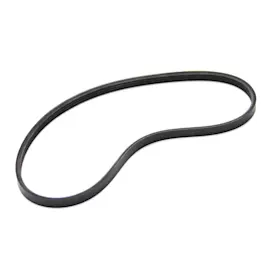
Getting the exact specs right helps you choose the correct blade, set proper tension and tracking, and avoid motor overload. It also prevents ordering the wrong wear parts (like wheel tires, V-belts, or sanding belts) for the Craftsman 113243300.
Last updated: February 2026
What is the 3-tooth rule for bandsaws?
On the Craftsman 113243300 band saw/sander, the 3-tooth rule means your blade and tooth pitch should be chosen so at least three blade teeth are in the cut at all times. This reduces snagging, tooth stripping, rough cuts, and kickback-like grabbing, especially on thin stock.
Use the material thickness to pick a tooth pitch (TPI) that keeps multiple teeth engaged.
- Thin material needs a higher TPI so you do not have a single tooth “hooking” the work.
- Thick material can use a lower TPI for faster cutting and better sawdust clearing.
- For curves, use a narrower blade; for straighter cuts, use a wider blade.
- This model accepts blade widths from 1/8 in. to 1/2 in. (a 1/4 in. blade is commonly used). See the owner's manual.
- Set the upper blade guides just above the workpiece before cutting; that helps control the blade and improves cut quality. See the owner's manual.
These are practical starting points for wood and many plastics; adjust based on cut quality and burning.
| Material thickness | Typical goal | Common starting TPI range |
|---|---|---|
| Under 1/4 in. | Prevent tooth snagging | 14 to 24 TPI |
| 1/4 in. to 1 in. | Balanced cut and control | 6 to 10 TPI |
| Over 1 in. | Clear sawdust efficiently | 3 to 6 TPI |
Even with the right TPI, poor setup causes wandering and grabbing.
- Unplug the saw before adjustments.
- Confirm the blade teeth point down toward the table.
- Track the blade near the center of the tire by turning the upper wheel by hand.
- Adjust thrust bearings and blade guides so they support the blade without forcing it sideways.
- Bolt the saw securely to a bench or stand so it cannot tip or shift during long cuts.
Keeping at least three teeth engaged spreads cutting forces across multiple teeth. That improves control, extends blade life, and helps you get smoother, straighter cuts on the 113243300.
Last updated: February 2026