Installation guide
 Owner’s manual



Are Bosch dishwashers a standard size?
Yes. Bosch dishwashers like model SGV68U53UC are built to fit standard residential kitchen cabinetry openings; the key is making sure your cabinet enclosure is square and matches the installation cutout dimensions in the installation guide.
Most built-in dishwashers (including Bosch) are designed around a standard cabinet opening, not a one-off custom size. What matters most is the opening width, height, and depth, plus door clearance.
- Measure the cabinet opening in three places (top, middle, bottom) to confirm it is square
- Confirm you have enough clearance to fully open the door, especially in a corner install
- Plan routing for the water supply line, drain hose, and electrical so the unit can slide in without pinching
- Use the mounting method that matches your opening width (top mount or side mount options are common)
Use this checklist for SGV68U53UC installations:
- Cabinet opening is square (not racked or twisted)
- Opening width is around the common 24-inch class (measure precisely)
- Adequate clearance to open the door without hitting a wall or cabinet
- Water, drain, and power pass-through holes are placed so they do not interfere with sliding the dishwasher in
- Supplies are shut off before service or installation
| Issue | What you may notice | Typical fix |
|---|---|---|
| Opening not square | Gaps at sides, door alignment issues | Shim or correct cabinet opening |
| Tight routing for hoses/wiring | Dishwasher will not slide in fully | Reposition pass-through holes and lines |
| Corner clearance problem | Door hits wall/cabinet | Adjust location or add clearance |
A dishwasher can be a standard size and still fit poorly if the enclosure is out of square or the supply lines are routed where they bind. Getting the opening and routing right prevents leaks, vibration, and door sealing problems.
Last updated: February 2026
What is the most common problem with Bosch dishwashers?
The most common issues we see with Bosch dishwashers like model SGV68U53UC are poor cleaning results and drain or leak-related symptoms. In many cases, the root cause is basic maintenance (clogged filters, blocked spray arms, or a door seal not seated correctly) rather than a major component failure; see the troubleshooting and care steps in the owner's manual.
- Dishes not getting clean: spray arms blocked, spray arm nozzles clogged, filters clogged, or loading too tight.
- Odor: food debris in the filter/sump area, debris near the door seal, or standing water after a cycle.
- Long cycle times: incoming water not hot enough, soil sensors extending the cycle, or rinse aid empty.
- Not drying well: rinse aid empty, plastic items, or a cycle/option that does not include drying.
- Leaks: suds from the wrong detergent, door seal pulled out of its track, blocked vent, or installation issues.
- Run hot water at the sink before starting a cycle so the dishwasher fills with warmer water.
- Check the filters and clean them (this is one of the biggest causes of poor cleaning and odor).
- Spin the spray arms by hand to confirm they are not obstructed by tall items.
- Use only dishwasher detergent (hand soap creates suds that can leak).
- Inspect the door seal to make sure it is fully seated in the channel.
If cleaning and loading changes do not fix the issue, these parts are often involved depending on the symptom:
| Symptom | Commonly involved area | Example part for SGV68U53UC |
|---|---|---|
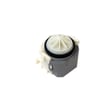
| Not draining, water left in tub | Drain path and pump | Dishwasher drain pump 00631200 |
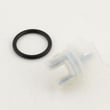
| Leaking at the door | Door sealing surface | Dishwasher door seal 00263096 |
| Detergent cup not dispensing | Dispenser mechanism | Dishwasher detergent dispenser assembly 12008380 |
Most “common Bosch dishwasher problems” start as airflow, water flow, or sealing problems. Keeping filters and seals clean helps prevent repeat issues, improves cleaning performance, and reduces odors and leak risk.
Last updated: February 2026
How to force drain a Bosch dishwasher?
To force-drain your Bosch dishwasher model SGV68U53UC, cancel the current cycle: press and hold Start/Resume for about 3 seconds until the display shows “0:01”, then wait about 1 minute while it pumps the water out. See the exact steps in the owner's manual.
- Press On/Off to turn the dishwasher on.
- Press and hold Start/Resume for approximately 3 seconds.
- Confirm the display reads “0:01”.
- Wait about 1 minute for the drain pump to run.
- Press On/Off to turn the unit off.
These checks fix most “water left in bottom” and “not draining” complaints.
- Clean the filter area and remove any food debris.
- Check the drain hose for kinks, crushing, or a clog.
- Make sure the drain hose routing has a high loop (secured 20 in. (508 mm) above the cabinet floor).
- If you use a disposer, make sure the disposer’s dishwasher inlet plug has been removed.
- If an air gap is required where you live, make sure it is installed and not blocked.
Use these installation limits to prevent slow drains and recurring standing water (details in the installation guide).
| Item | What to use for best draining |
|---|---|
| High loop | Secure at least one point 20 in. (508 mm) above cabinet floor |
| Max drain hose length | Up to 150 in. (3800 mm) total (including hose to air gap) |
| Air gap | Install if required by local ordinance |
If the dishwasher hums but does not pump out, or it drains intermittently, these parts are common suspects:
Standing water can cause odors, poor cleaning, and repeated drain errors. A proper cancel-and-drain plus correct drain hose routing prevents backflow and helps the drain pump clear the tub.
Last updated: February 2026