Owner’s manual
 Error Codes



What's the lifespan of a bottom freezer fridge?
Most bottom freezer refrigerators last 15 to 20 years with normal use and routine maintenance. For a Samsung bottom-mount like RF32FMQDBSR, lifespan depends most on compressor health, airflow (clean coils and working fans), and keeping the doors sealing properly; see the owner's manual for model-specific care guidance.
Typical lifespan and what affects it
A bottom freezer design is generally long-lasting, but it has more components than a basic top-freezer unit (ice maker, dispenser, multiple fans), so maintenance and small repairs can make a big difference.
Common factors that shorten lifespan:
- Dirty condenser area causing higher compressor run time
- Door gasket leaks leading to frost and temperature swings
- Ice maker or water system leaks that create icing or corrosion
- Blocked vents from overpacked shelves
- Power surges that stress control boards
Maintenance that helps you reach 15 to 20 years
We recommend these habits for Samsung refrigerators:
- Keep the condenser area clean and unobstructed
- Replace the water filter on schedule; a restricted filter can reduce water flow and strain the inlet valve
- Confirm doors close fully and the seals are clean
- Keep freezer and fresh food vents clear
- Set stable temperatures and avoid frequent large adjustments
Parts that commonly come up over time
If performance drops, these are common wear items we see on this model family:
| Symptom | Often related to | Example part on this model page |
|---|---|---|
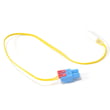
| Warm fridge or uneven temps | Temperature sensing or airflow | Refrigerator temperature sensor DA32-10104N |
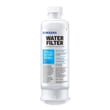
| Slow water dispensing or poor ice fill | Filtration or water supply control | Refrigerator water filter DA29-00019A |
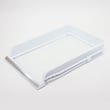
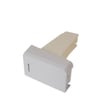
| No ice or weak ice production | Ice maker system issues | Refrigerator ice container DA97-14474A |
Why it matters
Knowing the typical 15 to 20 year lifespan helps you decide whether to maintain and repair (filters, sensors, fans) versus planning for replacement when major sealed-system parts like the compressor become the issue.
Last updated: February 2026
What is the most common problem with Samsung refrigerators?
The most common problems we see on Samsung refrigerators like model RF32FMQDBSR are cooling issues and ice maker troubles. These usually trace back to airflow problems (evaporator fan), defrost-related ice buildup, or water supply components that affect ice production.
Most common symptoms customers notice
- Fresh food section gets warm while the freezer still seems cold
- Ice maker stops producing ice or makes small, hollow cubes
- Frost or ice buildup on the back wall inside the refrigerator
- Fan noise, rattling, or a buzzing sound that comes and goes
- Water dispenser slows down after a filter change
What typically causes those problems
On RF32FMQDBSR, the most frequent root causes fall into a few part and system areas:
| Problem area | What it affects | Common related parts on this model |
|---|---|---|
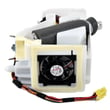
| Airflow in the cabinet | Warm temps, uneven cooling | Refrigerator evaporator fan motor DA31-00287B |
| Defrost and frost control | Ice buildup, blocked airflow | Temperature sensing and defrost control logic (often tied to sensors/boards) |
| Ice and water supply | No ice, slow fill, dispenser issues | Refrigerator water inlet valve DA62-04027A, refrigerator water filter DA29-00019A |
| Electronic control | Intermittent cooling, odd behavior | Power/control boards (varies by symptom) |
Quick checks we recommend before replacing parts
- Confirm the temperature settings are correct and the doors seal tightly.
- Look for frost buildup on the rear interior panel; heavy frost often points to a defrost or airflow issue.
- Listen for the evaporator fan; if it is not running, cooling performance drops fast.
- If ice is the issue, verify household water supply is on and the water line is not kinked.
- Replace the water filter on schedule; a restricted filter can reduce water flow to the ice maker.
Why it matters
Cooling and ice maker problems often start as minor airflow or water-flow issues, then turn into food spoilage, heavy frost, and strain on the compressor if they are left unresolved.
For model-specific operating tips, error displays, and care steps, use the RF32FMQDBSR owner's manual. For ice maker troubleshooting steps that match common Samsung symptoms, see why your Samsung fridge stopped making ice and how to fix it.
Last updated: February 2026
What are the disadvantages of a bottom freezer refrigerator?
Bottom-freezer refrigerators like the Samsung RF32FMQDBSR put fresh food at eye level, but the tradeoffs are higher purchase cost, more bending to access frozen items, and deep freezer drawers that can be harder to sort. They can also be more sensitive to drain and ice-maker related issues over time (see the owner's manual).
Common disadvantages you may notice day to day
- More bending and lifting: you reach down for frozen foods, and heavy items often sit in the bottom basket.
- Drawer organization challenges: deep bins can hide smaller packages unless you use dividers.
- Higher upfront cost: bottom-freezer designs typically cost more than basic top-freezer models.
- Freezer access is less convenient: if you use frozen foods often, the lower drawer can feel slower than a swing door.
- Ice and water complexity (on many models): more components can mean more maintenance when something clogs, freezes, or wears.
What to watch for on a bottom-mount like RF32FMQDBSR
Bottom-mount and French door refrigerators commonly share a few pain points that show up as symptoms:
| Symptom | What it often points to | What we check first |
|---|---|---|
| Ice production slows or stops | Ice maker or airflow issue | Ice bin seating, ice maker compartment frost, door closure |
| Water dispenses slowly | Filter restriction | Replace the refrigerator water filter DA29-00019A |
| Puddles or water under the unit | Drain or defrost water routing issue | Clear drain path, check for ice buildup |
| Freezer items thawing | Airflow or temperature sensing issue | Vents blocked, drawer sealing, temperature settings |
Why it matters
Knowing these disadvantages helps you prevent the most common service calls: keeping drawers organized reduces door-open time, and staying ahead of filter changes and ice buildup helps the refrigerator maintain stable temperatures and consistent ice production.
Practical tips to reduce the downsides
- Store heavy frozen items in the upper basket (if your drawer design allows) to reduce lifting strain.
- Use bins or labeled freezer bags to prevent “lost” items in deep drawers.
- Keep air vents clear in both compartments to protect airflow.
- Replace the water filter on schedule to protect the dispenser and ice maker.
- If you see an error code, use the Samsung rf32fm model 4 door refrigerator error codes guide to narrow the cause.
Last updated: February 2026