Owner’s manual
 Error Codes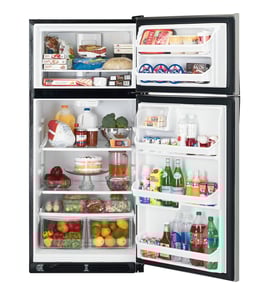




What are the disadvantages of a top mount fridge?
A top-mount refrigerator like the Frigidaire FRT18S6AQ7 puts the freezer at eye level and the fresh-food section below, so the biggest drawbacks are bending more for everyday items, fewer premium convenience features, and less flexible organization than many bottom-freezer designs.
- More bending for fresh food: the refrigerator compartment is lower, so you reach down more often for produce, drinks, and leftovers.
- Less “premium” feature availability: many top-mount models are less likely to include built-in water and ice dispensing features.
- Organization can feel simpler: fewer specialized bins and layout options compared with many bottom-mount or French door models.
- Freezer access is convenient, fridge access is not: great for frozen foods, less convenient for daily fresh-food use.
- Door swing and placement limits: you may need extra side clearance if the hinge side is near a wall.
Your model’s setup and clearances affect day-to-day usability. We recommend confirming these details in the FRT18S6AQ7 use and care manual.
Key items to verify:
- Recommended installation clearances (sides, top, and back)
- Door opening space needed if the hinge side is against a wall
- Temperature control locations and normal operating expectations
- Any optional ice maker and water supply considerations
| Feature | Top-mount refrigerator | Bottom-freezer refrigerator |
|---|---|---|
| Fresh-food access | Lower, more bending | Higher, easier daily access |
| Freezer access | Higher, easier | Lower, more bending |
| Typical organization | Simpler layouts | Often more flexible |
| Common convenience features | Fewer | More common |
Most households open the fresh-food door far more often than the freezer. If you use produce drawers, deli items, and beverages daily, the lower refrigerator section in a top-mount design can feel less ergonomic over time.
Last updated: January 2026
Which is better, top mount or bottom mount refrigerator?
A top-mount refrigerator like the Frigidaire FRT18S6AQ7 is usually the better pick if you want lower cost, simpler repairs, and strong efficiency; a bottom-mount is usually better if you want fresh-food items at eye level and easier access to the refrigerator section. Use the FRT18S6AQ7 owner's manual to confirm features and setup details for your exact unit.
| Feature | Top mount (freezer on top) | Bottom mount (freezer on bottom) |
|---|---|---|
| Everyday access | Freezer is easiest to reach | Refrigerator section is easiest to reach |
| Typical cost | Lower | Higher |
| Repair complexity | Often simpler (fewer specialty parts) | Often more complex (more drawers, rails, sometimes more electronics) |
| Organization | Basic shelves and bins | Often better fresh-food organization |
| Best for | Budget, reliability, smaller kitchens | Frequent fresh-food use, less bending |
- If you use the refrigerator section far more than the freezer, a bottom-mount usually feels more convenient day to day.
- If you want a straightforward, proven layout with fewer “extras” to maintain, a top-mount is usually the better long-term value.
- If you have limited space, check door swing and clearance needs before choosing either style.
- If you store lots of frozen foods, a top-mount can be easier because the freezer is at chest height.
- If bending is a concern, a bottom-mount reduces how often you crouch for fresh foods.
Good installation and airflow help any refrigerator run efficiently and cool correctly.
- Keep the toe grille area clear for airflow.
- Plan for typical clearances (sides/top and back) so the compressor can maintain temperature.
- Level the refrigerator using the front rollers so doors seal and close properly.
- Allow extra space on the hinge side if the refrigerator sits against a wall.
Choosing the right mount style affects comfort (how often you bend), food organization, and long-term ownership costs (purchase price and typical repair complexity). Even a “better” style can feel wrong if door clearance, leveling, and airflow are not handled correctly.
Last updated: January 2026
What is the upper part of a fridge called?
In a Frigidaire top-mount refrigerator like model FRT18S6AQ7, the upper section is the freezer compartment. It is designed to keep foods frozen, and it often houses freezer shelves, door bins, and (on some models) an automatic ice maker.
Common freezer-area components include:
- Freezer shelves or racks for frozen foods
- Freezer door bins for smaller items (temperature varies more at the door)
- Air vents that circulate cold air between the freezer and fresh food section
- A defrost system (heater, thermostat, timer) that prevents heavy frost buildup
- An ice maker and ice bin on models equipped for automatic ice production
For model-specific features and normal operation details (including defrost-cycle behavior), use the FRT18S6AQ7 owner's manual.
The freezer compartment is the cold source for the whole appliance. In many top-mount designs, cold air is produced in the freezer and then routed to the fresh food section through vents and controls. That is why freezer issues often show up as “both sections are warm.”
These basics help the freezer hold temperature and reduce freezer burn:
- Leave space between packages so cold air can circulate
- Avoid overloading the freezer with warm food all at once
- Store hard-to-freeze items (like ice cream) toward the interior, not in the door
- Use airtight containers or freezer wrap to reduce moisture loss and off-flavors
- Keep the refrigerator level so doors close tightly
| Term you hear | What it usually means | Where it is |
|---|---|---|
| Freezer compartment | The upper frozen-food section | Top of a top-mount refrigerator |
| Freezer door bins | Storage bins on the freezer door | Inside the freezer door |
| Evaporator area | Where cooling happens and frost forms | Behind the rear freezer panel |
When you are ordering parts, following troubleshooting steps, or reading diagrams, using the correct term (freezer compartment) helps you match the right section and avoid replacing the wrong components.
Last updated: January 2026
What is the most common problem with a Frigidaire refrigerator?
Cooling problems are the most common issue we see on Frigidaire refrigerators, including model FRT18S6AQ7: the refrigerator or freezer runs too warm, temperatures swing, or frost builds up and blocks airflow. Many fixes start with airflow, cleaning, and door sealing before sealed-system work.
- Refrigerator section warm but freezer cold
- Freezer warm and ice cream soft
- Frost build-up on the freezer back wall
- Loud fan noise or rattling
- Moisture, condensation, or doors not sealing
- Dirty condenser coils or restricted airflow around the cabinet
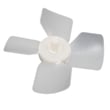
- Evaporator fan airflow problems (ice blockage, fan issues, or damaged blade)
- Defrost system failure leading to frost-packed evaporator coils
- Door gasket leaks letting warm, moist air in
- Temperature control set to OFF (compressor stops even though lights may still work)
For model-specific operating and troubleshooting steps, use the FRT18S6AQ7 owner's manual.
- Verify the temperature control is not set to OFF; allow 24 hours after changes
- Listen for the evaporator fan running when the door switch is pressed
- Check that vents inside the refrigerator and freezer are not blocked by food
- Inspect door gaskets for gaps, tears, or areas that do not grip paper
| Symptom | Most likely cause | What to do next |
|---|---|---|
| Fridge warm, freezer OK | Airflow restriction or frost on evaporator | Clear vents; check for heavy frost behind freezer panel |
| Frost on freezer back wall | Defrost system problem | Inspect defrost components; address frost buildup |
| Moisture/condensation | Door not sealing | Clean gasket, level cabinet, reduce door openings |
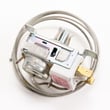
- Heavy frost and defrost failures: refrigerator defrost bi-metal thermostat 5303918202
- Fan noise or poor circulation: refrigerator evaporator fan blade 5308000010
Cooling issues can spoil food and force the compressor to run longer. Fixing airflow, frost buildup, and door sealing early improves temperature stability and efficiency.
Last updated: January 2026