Owner’s manual



How to find ice maker model number?
For a Kenmore freestanding ice maker, the model number is printed on the appliance’s rating label. On model 10689489998, check inside the cabinet area first; if you do not see it there, check the back panel or near the lower front (kick plate) area.
Most freestanding ice makers place the rating label in one of these spots:
- Inside the cabinet, along a side wall near the storage bin opening
- On the back exterior panel
- Behind or just above the lower front kick plate
- Along the door frame area (with the door open)
- Near the bottom edge of the cabinet (front or side)
If you are working around the lower front or rear of the unit (for example, adjusting leveling legs), that is also a good time to check for the label location shown in the 10689489998 owner's manual.
The rating label typically includes:
- Model number (example: 10689489998)
- Serial number
- Electrical rating (volts/amps)
- Sometimes a manufacturing date code
Use this checklist so we match parts correctly:
- Copy the full model number exactly as printed (include all digits)
- Record the serial number too (helps with version changes)
- Take a clear photo of the label for reference
- Match the model number on the label to the model number on your parts list
| Appliance type | Most common model tag locations |
|---|---|
| Freestanding ice maker | Inside cabinet wall, back panel, behind kick plate |
| Refrigerator ice maker (built-in) | Inside fresh food section, inside freezer, door frame |
Kenmore model numbers can look similar, but internal parts like the water tube, bin thermostat, or cutter grid can vary by model and production series. Using the exact model number helps ensure the correct fit and avoids repeat repairs.
Last updated: January 2026
What is the average lifespan of an ice maker?
A freestanding ice maker like Kenmore model 10689489998 typically lasts 5 to 10 years. Units that get regular cleaning, have good water quality (filtered or treated), and run in rooms above 55°F usually reach the longer end of that range; poor water quality shortens life.
- Water quality: hard water causes mineral scale that stresses the water system and freezing components.
- Cleaning frequency: routine cleaning prevents buildup that reduces ice production and strains the compressor.
- Room temperature: higher ambient temps reduce ice production and increase run time; below 55°F the unit may not operate correctly.
- Usage pattern: “Twice Ice” style high-output cycles increase run time and wear.
- Airflow and dust: restricted airflow around the condenser area increases heat and workload.
Follow the cleaning and care schedule in the 10689489998 owner's manual. For this model, the manual also notes the machine is designed to make clear ice from most water sources, but unsatisfactory results often mean the water needs filtering or treatment.
- Clean the system on schedule (use the unit’s clean cycle when applicable).
- Discard the first three batches after first start-up (helps with taste and initial residue).
- Keep the condenser area clear so heat can dissipate.
- If you have a drain pump setup, drain standing water as directed before storage or extended downtime.
| Condition | Typical lifespan | What you’ll notice first |
|---|---|---|
| Filtered/treated water + regular cleaning | 8 to 10 years | Slower production over time |
| Average water + occasional cleaning | 5 to 8 years | Cloudy ice, scale, longer cycles |
| Hard water + little cleaning | 3 to 6 years | Poor ice quality, frequent issues |
Ice makers fail early most often from mineral buildup and excess run time. Keeping water quality high and following the care steps reduces strain on key components like the recirculation system, cutter grid, and compressor.
Last updated: January 2026
Why is my free standing ice maker not making ice?
If your Kenmore freestanding ice maker model 10689489998 runs but makes no ice, the most common causes are the control being OFF, the water supply being turned off or restricted, mineral scale buildup, or a drain issue that empties the water pan. Use the checks below, then follow the 10689489998 owner's manual for model-specific steps.
- Confirm the ice maker control is set to ON.
- Verify the household water supply valve is connected and fully turned on.
- Check for mineral scale buildup in the water/freezing system; scale can stop ice production.
- Make sure the drain cap is tight; a loose cap can let the water pan empty, causing thin ice or no ice.
- Inspect the drain tube and drain hose for debris, kinks, or twisting; if water cannot drain correctly, the ice maker may not work.
| What you observe | What it usually means | What to do next |
|---|---|---|
| Water pan is not filling | Water supply problem | Open the supply valve; check for a pinched line or blockage |
| Water pan fills but no ice forms | Scale or circulation problem | Clean/descale; if water is not circulating, suspect the recirculation pump |
| Very little ice | Hot room, dirty condenser, or scale | Keep room under about 90°F; clean condenser; descale |
| Ice sheet forms but does not cut | Cutter grid connection issue | Unplug unit; check cutter grid harness connection |
These parts are often involved when water is not moving correctly or ice is not being processed:
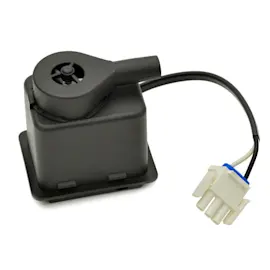
- Ice maker recirculation pump assembly WP2217220 (circulates water over the freezing plate)
- Water tube W10823511 (routes water where it needs to go)
- Freestanding ice maker cleaner W11179302 (helps remove mineral scale that can stop production)
This ice maker circulates water over a freezing plate and drains mineral-heavy water after each cycle. If water cannot enter, circulate, or stay in the water pan (drain cap/drain issues), the unit can run but never build a proper ice sheet.
Last updated: January 2026
Is it worth replacing the ice maker on a refrigerator?
Replacing a refrigerator ice maker is usually worth it when the refrigerator is in good shape and the fix is limited to a serviceable part (like a thermostat, cutter grid, or water tube). If the repair points to sealed-system parts or repeated water leaks, replacement value drops quickly; use the 10689489998 owner's manual to compare symptoms and shutdown steps before spending on parts.
- Replace the ice maker (or repair it) when the refrigerator cools normally and the issue is isolated to ice production.
- Consider replacement when the repair involves major refrigeration components or the problem keeps returning.
- If you rarely use ice, a repair often does not pay back.
Before buying parts, we recommend these checks because they often identify a simple, low-cost fix:
- Confirm the control is set to ON and power is connected.
- Verify room temperature is warm enough for operation (many units need above 55°F).
- Inspect for water loss from the water pan area; a loose drain cap can cause thin ice or no ice.
- Clean condenser fins and the unit compartment (lint and dust reduce performance).
- If you need to service internal components, disconnect power first.
| Symptom | Likely area | Typical “worth it” signal |
|---|---|---|
| No ice or thin ice | Water system or drain cap/water pan | Often a setup, cleaning, or minor part issue |
| Ice forms but does not cut or cubes are irregular | Cutter grid area | Usually repairable with a targeted part |
| Intermittent operation | Bin sensing/controls | Often repairable if cooling is otherwise normal |
| Poor cooling plus no ice | Sealed system (compressor/evaporator) | Usually not cost-effective compared to replacement |
On Kenmore model 10689489998, these are examples of repairable components that commonly address ice quality or production issues:
- Ice maker bin thermostat WPW10503764 (helps regulate bin temperature and cycling)
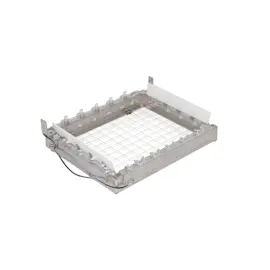
- Ice maker cutter grid WP2313637 (cuts the ice slab into cubes)
- Water tube W10823511 (feeds water to the distribution area)
Ice makers fail in different ways: some problems are maintenance-related (dirty condenser fins, water not draining correctly), while others point to expensive refrigeration work. Doing the quick checks first helps you avoid buying parts when the real issue is airflow, drainage, or a sealed-system failure.
Last updated: January 2026