 Owner’s manual

What are common problems with a Bosch washing machine series 4?
On the Bosch WFMC3301UC washer (Nexxt 500 Series), the most common problems we see are no-spin or no-drain symptoms, fill problems, leaks at the door or hoses, and excessive vibration or noise during spin. Many issues trace back to loading, leveling, or a restricted drain path; the WFMC3301UC owner's manual covers operating and care basics.
Common symptoms and what they usually mean
- Drum not spinning / won’t finish spin: Unbalanced load, too much suds, or a drain problem preventing high-speed spin.
- Washer won’t fill or fills slowly: Closed supply valves, kinked hoses, clogged inlet screens, or low water pressure.
- Leaks: Door boot/gasket damage, loose hose connections, or detergent oversudsing.
- Loud banging or walking: Washer not level, weak shock absorption, or shipping hardware still installed.
- Error codes: The control is detecting a condition such as drain, fill, door lock, or motor feedback issues.
Quick checks we recommend first (safe, no tools)
- Confirm both hot and cold water valves are fully open and hoses are not kinked.
- Reduce detergent to HE amounts; oversudsing can cause poor draining and spin issues.
- Rebalance the load (mix large and small items) and rerun a spin.
- Verify the washer is level and firmly on the floor; adjust feet if needed.
- Run a maintenance clean cycle and wipe the door boot folds dry after use.
Parts that commonly relate to these problems
| Symptom | Common area | Example part for this model |
|---|---|---|
| Leaking at the door | Door seal/boot | Boot gasket 00667489 |
| Excessive vibration | Suspension/shock control | Washer damper 00642112 |
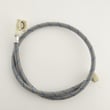
| Slow fill or hose seepage | Water supply connection | Washer hot water inlet hose 00422245 |
Why it matters
Ignoring fill, drain, leak, or vibration symptoms can lead to poor cleaning, repeated cycle failures, and water damage. Catching the cause early often prevents a bigger repair like tub, bearing, or control issues.
When an error code is showing
Use the Bosch nexxt front load washer error codes reference to match the code to the most likely cause, then follow the checks above before replacing parts.
Last updated: January 2026
Are Bosch washing machines worth the money?
Yes, Bosch washers are worth the money when you want long-term reliability, strong wash performance, and efficient operation. For the Bosch WFMC3301UC, the Nexxt 500 Series design focuses on optimizing the wash process using sensors that adjust for load size, water level, and temperature for consistent results.
What you get for the price
Bosch front-load washers like the WFMC3301UC typically justify their cost through performance, efficiency, and build quality.
- Efficient water and energy use compared with many older top-load designs
- Strong cleaning and fabric care due to sensor-based cycle control
- High spin speeds that remove more water, helping reduce dryer time
- Solid door and hinge design that supports frequent use
- Good long-term serviceability when you use model-correct replacement parts
When a Bosch washer is the best value (and when it is not)
Bosch is usually the best value for households that run frequent loads and care about fabric care and efficiency.
| If you prioritize... | Bosch WFMC3301UC is a good fit when... | Consider another option when... |
|---|---|---|
| Efficiency | You want lower water use and strong extraction | You prefer very short cycles above all else |
| Fabric care | You wash mixed fabrics, delicates, and everyday loads | You mainly wash heavily soiled workwear only |
| Longevity | You plan to keep the washer 10+ years | You expect to replace appliances often |
Ownership costs: what to plan for
Even a premium washer can need maintenance parts over time. Planning for normal wear items helps keep total cost of ownership low.
- Keep fill hoses in good condition; replace at the first sign of bulging, cracking, or leaking
- Address vibration early by checking leveling and suspension components
- Prevent door seal odors and leaks by cleaning and drying the boot area
- Use the correct detergent amount to reduce residue and service calls
Helpful model-matched examples include the washer hot water inlet hose 00422245 and the washer damper 00642112.
Why it matters
A washer is “worth it” when it delivers consistent cleaning while protecting fabrics and keeping utility use reasonable. The WFMC3301UC’s sensor-driven cycle control is designed to do exactly that, which is why many owners see strong long-term value.
For cycle features, care recommendations, and operating tips, follow the WFMC3301UC owner's manual.
Last updated: January 2026
What is the lifespan of a Bosch washing machine?
A Bosch washing machine typically lasts 10 to 15 years. For your Bosch WFMC3301UC front-load washer, reaching the longer end of that range depends most on correct installation, avoiding chronic overloading, and routine care such as keeping the door seal and dispenser area clean.
Typical lifespan and what affects it
Most washers wear out from vibration stress, water leaks, and drain or fill issues over time. These factors have the biggest impact:
- Load size and frequency: daily heavy loads shorten life compared to moderate use
- Detergent habits: too much detergent can cause residue, odors, and extra strain
- Moisture management: leaving the door closed traps moisture and speeds gasket wear
- Water quality: hard water can increase scale and reduce valve and hose life
- Leveling and stability: an unlevel washer increases vibration and suspension wear
Maintenance that helps you hit 10 to 15 years
We recommend these habits for Bosch front-load washers:
- Wipe the door boot after laundry day and leave the door slightly open to dry
- Run a monthly cleaning cycle (or hot wash) to reduce residue and odor
- Check fill hoses for bulges, cracking, or seepage; replace at the first sign of wear
- Keep the washer level on the floor to reduce spin vibration
- Use the correct detergent type and amount for a front-load washer
Parts that commonly limit service life
These parts do not set the washer’s “expiration date,” but they are common wear items as the machine ages.
| Wear area | What you may notice | Example part for WFMC3301UC |
|---|---|---|
| Fill hoses | Slow fill, leaks at the faucet or washer | Washer hot water inlet hose 00422245 |
| Door seal area | Water at the front, musty odor | Boot gasket 00667489 |
| Vibration control | Banging, walking during spin | Washer damper 00642112 |
Why it matters
Knowing the typical lifespan helps you decide whether to maintain and repair (often cost-effective in the mid-life years) or plan for replacement when multiple major issues stack up, such as repeated leaks plus excessive vibration.
For model-specific operating and care guidance, use the WFMC3301UC manual.
Last updated: January 2026
What is the capacity of the wfmc3301uc?
The Bosch WFMC3301UC is a front-load washer; its capacity is the drum volume (in cubic feet) used to size loads and choose cycles. For the exact capacity for your unit, use the model’s WFMC3301UC owner's manual and the rating label on the washer to match the correct specification.
How to confirm the correct capacity for your washer
- Check the rating label (commonly around the door opening or cabinet edge) for the full model identifier.
- Open the WFMC3301UC owner's manual and look for a section labeled Specifications, Technical data, or Features.
- If the manual covers multiple Bosch Nexxt 500 Series variants, match the spec line to WFMC3301UC.
- Use the capacity number as a loading guide; do not pack the drum to the top.
Practical loading guidance (works for this Bosch front-load design)
Front-load washers clean best when laundry can tumble freely.
| Load size | What you see in the drum | What to expect |
|---|---|---|
| Small | Items cover the bottom, loose | Efficient for quick loads |
| Medium | About 1/2 full, loose | Best balance of cleaning and rinsing |
| Large | About 3/4 full, loose | Good cleaning if items still tumble |
| Overloaded | Packed tight, little movement | Poor cleaning, suds issues, vibration |
Why it matters
Correct capacity and loading reduce out-of-balance spinning, improve rinsing, and help prevent excess vibration that can wear suspension components such as the washer damper 00642112.
Last updated: January 2026


