Owner’s manual
 Error Codes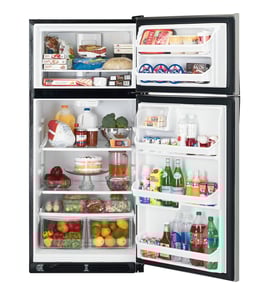





Is 18 cubic feet a normal refrigerator?
Yes. An 18 cubic foot refrigerator is a normal, common size, especially for a top-mount style like the Roper RT18AKXKQ08; it typically fits standard kitchens while offering enough space for many households. For model-specific features and setup guidance, use the owner's manual.
How 18 cu. ft. compares to other common sizes
Most household refrigerators fall into a few broad capacity ranges:
- Small: about 11 to 13 cu. ft.
- Medium: about 18 to 21 cu. ft.
- Large: about 22 to 30+ cu. ft.
Quick comparison table
| Capacity range | Typical fit | Best for |
|---|---|---|
| 11 to 13 cu. ft. | apartments, tight spaces | 1 to 2 people, secondary fridge |
| 18 to 21 cu. ft. | standard kitchens | many households, everyday use |
| 22 to 30+ cu. ft. | larger kitchens | big families, bulk shopping |
Why it matters
Capacity affects how efficiently you can store food and how often the doors get opened. Frequent door openings and heavy loads can make a refrigerator run longer; that is normal behavior for modern, efficient compressors and fans.
Tips to get the most from an 18 cu. ft. top-mount
We recommend these practical habits for steady temperatures and good airflow:
- Keep air vents inside the fresh food and freezer sections unblocked.
- Use the factory mid-settings when you first start the refrigerator, then fine-tune after temperatures stabilize.
- Allow 24 hours after installation for the refrigerator to cool completely before fully loading it.
- Avoid placing the refrigerator where room temperature drops below 55°F (13°C).
- Leave ventilation clearance around the cabinet (commonly about 1/2 inch at the sides and top).
Last updated: February 2026
What are the disadvantages of a top mount fridge?
A top-mount refrigerator like the Roper RT18AKXKQ08 puts the freezer at eye level and the fresh-food section below, so the biggest disadvantages are bending more to reach everyday items, fewer organization features than many newer layouts, and fewer built-in dispenser options.
Common disadvantages (what you will notice day to day)
- More bending for fresh food: produce drawers, deli items, and drinks are lower.
- Less flexible organization: many top-mount designs have fewer adjustable bins and specialty zones.
- Fewer convenience features: external water and ice dispensers are less common on this style.
- Door swing clearance matters: you often need extra side clearance to fully open doors and drawers.
- Can feel smaller in the fridge section: the most-used space is not at chest height.
Space and access considerations
Your RT18AKXKQ08 needs breathing room for ventilation and door swing. We recommend planning for the clearances listed in the owner's manual.
| Consideration | Top-mount impact | What to do |
|---|---|---|
| Fresh-food access | Lower, requires bending | Store daily items on upper shelves |
| Freezer access | Higher, easier reach | Use bins to prevent “pile-ups” |
| Door clearance | Can be tight near walls | Leave room for full door swing |
| Features | Often simpler | Add organizers, keep airflow paths clear |
Why it matters
If you cook often and use the refrigerator section more than the freezer, a top-mount layout can feel less convenient over time because the most frequently used items sit lower. On the other hand, the simpler design can be easier to maintain and typically has fewer feature-related failures.
Last updated: February 2026
What is the top part of a refrigerator called?
In a Roper top-mount refrigerator like model RT18AKXKQ08, the top section is the freezer compartment. It’s the colder compartment designed to keep foods frozen, and it typically houses the evaporator area that supports cooling for both the freezer and fresh-food sections.
What you’ll find in the top (freezer) compartment
Common components and features in the top section include:
- Freezer shelves or racks for frozen food storage
- The freezer door and door gasket that seal in cold air
- Air vents that route cold air to the refrigerator section
- The defrost system components (depending on design)
- An ice maker (if your unit is equipped and plumbed)
For your model’s specific compartment layout and features, use the owner's manual.
Freezer vs. refrigerator section: quick comparison
| Section | Typical temperature range | Main purpose |
|---|---|---|
| Freezer (top) | 0°F to 5°F | Long-term frozen storage, ice production (if equipped) |
| Refrigerator (bottom) | 34°F to 40°F | Fresh-food storage and short-term cooling |
Why it matters
Knowing the correct name helps when you’re troubleshooting symptoms (like frost buildup, warm temperatures, or door sealing issues) and when you’re ordering the right replacement parts for your RT18AKXKQ08.
Related parts that can affect freezer performance
If the freezer is too warm, frosting up, or not circulating air well, these model-matched parts are commonly involved:
- Refrigerator defrost timer W10822278 (controls defrost cycling)
- Defrost bi-metal WP4387503 (helps protect the system during defrost)
- Evaporator motor WPW10189703 (moves cold air through the compartments)
Last updated: February 2026
What is the top mount refrigerator?
A top-mount refrigerator is a classic refrigerator layout with the freezer compartment on top and the fresh-food (refrigerator) compartment below. Your Roper RT18AKXKQ08 uses this design to keep everyday refrigerated items at eye level while storing frozen foods above.
How a top-mount refrigerator is set up
- Freezer section is on the top; refrigerator section is on the bottom.
- Cold air is produced at the evaporator and circulated to both sections.
- Temperature controls are typically set to mid-settings after installation.
- Doors and hinges are designed so the freezer door opens separately from the refrigerator door.
What to expect on RT18AKXKQ08 (common operating basics)
Our RT18AKXKQ08 manual describes typical setup and use items you will see on many top-mount models:
| Feature or task | What it means for you | Where to confirm details |
|---|---|---|
| Ventilation clearance | Leave about 1/2 inch on sides and top for airflow | Owner's manual |
| Door swing clearance | Leave about 2 inches minimum at the side near a wall (varies by setup) | Owner's manual |
| Initial control settings | Controls are usually preset to mid-settings from the factory | Owner's manual |
| Door closing/leveling | Front rollers and leveling screws help doors close properly | Owner's manual |
Why it matters
Knowing you have a top-mount design helps with everyday troubleshooting and maintenance. For example, airflow and door sealing are critical for stable temperatures in both compartments, and proper leveling helps the doors close fully so the refrigerator does not warm up.
Quick tips for best performance
- Keep the refrigerator level and slightly tilted back so doors close easily.
- Do not block air vents inside either compartment.
- Allow the recommended clearance around the cabinet for ventilation.
- Keep the doors closed as much as possible to maintain consistent cooling.
Last updated: February 2026