
What is the most common cause of air compressor failure?
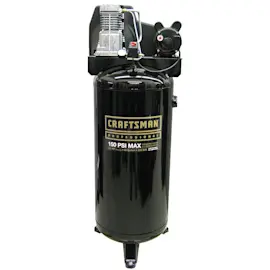
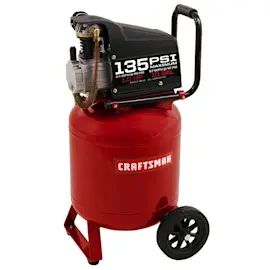
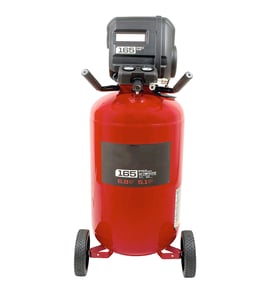
The most common cause of failure on a Craftsman air compressor like model 919175960 is poor maintenance that leads to overheating and accelerated wear. Dirty intake filtration, restricted cooling airflow, and neglected wear items (seals, valves, gaskets) commonly trigger hard starting, low pressure, and premature pump damage.
Most common failure drivers (what we see most often)
- Overheating from blocked cooling fins, poor ventilation, or long run times
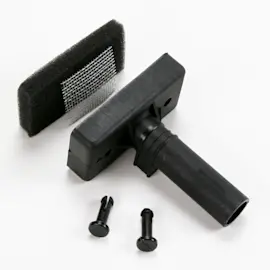
- Restricted intake air from a dirty or clogged air filter
- Air leaks at fittings, regulator, drain valve, or tank connections that force longer run time
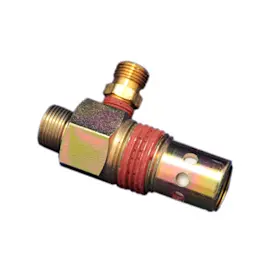
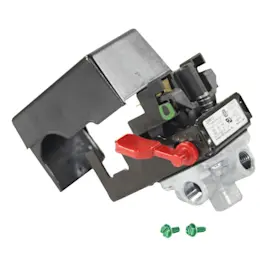
- Pressure switch or check valve issues that cause repeated cycling or hard starts
- Moisture and corrosion from not draining the tank regularly
- Electrical problems such as a weak capacitor, damaged cord, or poor outlet power
Quick symptom-to-cause guide
| What you notice | Most likely cause | What to check first |
|---|---|---|
| Won’t start | Power supply, pressure switch, capacitor | Outlet, cord, reset, switch wiring |
| Starts then trips breaker | Overload, failing motor/capacitor, tight pump | Unloader action, motor heat, pump drag |
| Won’t build tank pressure | Leaks, reed valves, gasket | Listen for leaks, inspect pump output |
| Runs but pressure is low at tool | Regulator/gauge issue, restriction | Regulator setting, hose, quick-connect |
What to do to prevent failures
- Keep it cool: maintain clear airflow around the pump and motor; clean dust from cooling surfaces.
- Reduce run time: fix leaks promptly so the compressor does not run longer than necessary.
- Drain the tank: release moisture after use to reduce internal rust and valve problems.
- Check controls: verify the pressure switch and unloader function so the motor can restart easily.
- Use the right duty cycle: avoid continuous operation; let the unit rest between long fills.
Why it matters
Most “sudden” air compressor failures are really heat and wear problems that build up over time. When the unit runs hot or runs too long because of leaks or restrictions, the pump and motor work harder, parts wear faster, and starting problems become more frequent.
For step-by-step troubleshooting and repair paths, use our DIY resources like air compressor won't start. For model-specific replacement parts, start with the parts list for 919175960 and search by model on Sears PartsDirect.
Last updated: February 2026
Is it worth fixing the compressor on an AC unit?
Fixing an AC unit compressor is usually worth it when the system is relatively new and the rest of the equipment is in good shape; if the system is older (typically 10 to 15 years) or the repair cost is close to replacing the unit, replacement is the better long-term value. For Craftsman model 919175960, we treat this as an air compressor repair decision: compare repair cost to the tool’s age, duty cycle, and overall condition.
Quick decision checklist
- Age of the system: Under ~10 years often favors repair; 10 to 15+ years often favors replacement.
- Total repair cost: If the compressor repair is near 50% of replacement cost, replacement usually makes more sense.
- Overall condition: Rust, repeated breaker trips, burned wiring, or multiple failing components push toward replacement.
- Performance needs: If you need higher CFM, quieter operation, or better efficiency, replacement can be an upgrade.
- Cause of failure: A one-time electrical issue is different than internal mechanical damage.
Repair vs. replace: what to compare
| Factor | Usually points to repair | Usually points to replace |
|---|---|---|
| System age | Newer equipment | 10 to 15+ years old |
| Repair cost | Minor to moderate | Near half the cost of replacement |
| Failure type | Electrical/control issue | Mechanical compressor damage, repeated failures |
| Other issues | No other major problems | Multiple components failing |
Why it matters
A compressor is one of the most expensive components to repair. If the underlying cause is not corrected (airflow problems, electrical issues, pressure control problems), the new compressor can fail early, which increases total cost.
If you are troubleshooting an air compressor (like Craftsman 919175960)
These checks often help you decide whether you are dealing with a fixable control issue or a major pump/motor problem:
- Verify the outlet and extension cord are adequate for the motor load.
- Listen for a hum or click (often points to start components or pressure switch issues).
- Check for air leaks and a stuck check valve that can make restarting difficult.
- Confirm the pressure switch is cutting in and out normally.
- If it runs but will not build pressure, suspect valves, seals, or pump wear.
For step-by-step troubleshooting and common causes, use our DIY guides like air compressor won't start. For parts lookup by model number and broader repair help, search on Sears PartsDirect.
Last updated: February 2026
What are the 4 types of compressors?
The four main compressor types are reciprocating (piston), rotary screw, centrifugal, and axial. For a Craftsman air compressor like model 919175960, the most common style you will run into is a reciprocating (piston) design used for powering air tools and general shop tasks.
The 4 compressor types (and what they’re best for)
- Reciprocating (piston): Uses a piston and cylinder to compress air; common in portable and small shop compressors.
- Rotary screw: Uses two intermeshing screws for continuous airflow; common in commercial and industrial settings.
- Centrifugal: Uses a high-speed impeller to add velocity and convert it to pressure; used for high-volume applications.
- Axial: Uses multiple rotating and stationary blade rows; typically found in turbines and specialized high-flow systems.
Positive displacement vs dynamic compressors
Most “air compressor” discussions group these four into two families:
| Family | Types included | How pressure is created | Typical use case |
|---|---|---|---|
| Positive displacement | Reciprocating, rotary screw | Traps air, then reduces its volume | Tools, shops, plants |
| Dynamic | Centrifugal, axial | Adds velocity to air, then converts it to pressure | High-volume industrial systems |
Why it matters when troubleshooting or buying parts
Knowing the compressor type helps narrow down what usually fails and what to inspect first.
- Piston units often involve valves, piston seals, connecting rod, and check valve issues.
- Screw units often involve air-oil separation and inlet control components.
- Centrifugal and axial units are more about impellers, blades, and high-speed bearings.
For common DIY symptom-based help on typical home and shop compressors, use our air compressor common questions resource. If you’re shopping by model number, start with the parts list for Craftsman 919175960, or search by model on Sears PartsDirect.
Last updated: February 2026
What company makes Craftsman air compressors?
Craftsman is a brand, so Craftsman air compressors (including model 919175960) have been built by different original equipment manufacturers over the years. The exact maker depends on the model and production run; you can usually identify it from the data plate and the parts breakdown for your specific unit.
How to identify who built your Craftsman 919175960
Check the compressor’s data plate (often on the tank or shroud) and compare what you see to the parts listing for model 919175960.
Look for these clues:
- A manufacturer name or logo (sometimes small print)
- A model or “type” code in addition to 919175960
- A serial number format that includes a plant or maker code
- A label that lists an address for the manufacturer
- Any prefix/suffix codes near the model number on the tag
Common OEMs you may see across Craftsman air compressors
Different Craftsman compressors have been sourced from different OEMs depending on the era and design. Here are common names customers run into when researching Craftsman compressors:
| What you see | What it usually means | What to do next |
|---|---|---|
| Craftsman only | Branding, not the actual factory | Use the model number to match parts and diagrams |
| DeVilbiss / DeVilbiss Air Power | Common on many older units | Match pump and valve parts by model-specific breakdown |
| Campbell Hausfeld | Seen on some older Craftsman compressors | Verify by tag details and parts layout |
| MAT Holdings / Alton Industries | Common on many newer Craftsman air tools | Use the exact model and serial to confirm fit |
Why it matters
The OEM affects which pressure switch, check valve, regulator, gauges, and pump components fit. Using the correct model-specific parts list helps prevent mismatched fittings, incorrect cut-in/cut-out pressure ranges, and air leaks.
Helpful next steps for repairs and parts
- Use the parts list for Craftsman 919175960 first; then broaden your search by model number on Sears PartsDirect
- If the unit won’t run, follow air compressor won't start
- If it runs but won’t build pressure, use air compressor won't build tank pressure
- If it struggles to restart with pressure in the tank, use air compressor won't start with a full air tank
- If you suspect a control issue, use how to replace an air compressor pressure switch
Last updated: February 2026
Are air compressor parts interchangeable?
Most air compressor parts are not interchangeable across brands or even across different models of the same brand. For Craftsman air compressor model 919175960, internal components must match the exact design and ratings to fit correctly and control pressure safely.
What’s usually model-specific (not interchangeable)
These parts are engineered around the pump design, pressure range, and mounting pattern; swapping “similar-looking” parts often causes leaks, poor performance, or no-start problems.
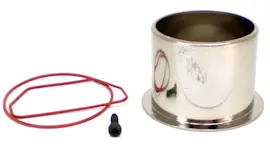
- Pump head parts (valve plate, reed valves, head gasket)
- Piston ring or seal parts (oil-free designs are especially specific)
- Connecting rod and crank parts
- Motor and start parts (capacitor, start switch where used)
- Pressure switch and unloader setup (cut-in/cut-out and port layout)
- Check valve style and tube connection sizes
What’s sometimes interchangeable (only with careful matching)
Some external items can work across compressors when you match connection type and ratings.
- Quick-connect couplers and plugs (industrial, automotive, ARO styles)
- Hose fittings and adapters (thread type and size)
- Air hose (rated for the compressor’s PSI)
- Tank drain valve (thread size and sealing style)
Quick reference
| Part type | Often interchangeable? | What must match |
|---|---|---|
| Pump internals | No | Exact pump design and gasket/valve layout |
| Pressure switch | Sometimes | PSI range, port size, unloader compatibility |
| Check valve | Sometimes | Thread size, tube size, flow direction |
| Couplers/plugs | Often | Coupler style, thread type, thread size |
How we recommend choosing the right replacement
- Search using model number 919175960
- Match thread type and size (measure before ordering)
- Match PSI and electrical ratings where applicable
- Compare mounting hole pattern and port orientation
For troubleshooting that helps confirm the failed component before ordering, use air compressor won't start. For broader part searching by model number, use Sears PartsDirect.
Why it matters
Air compressors rely on tight sealing and correct pressure control. A mismatched valve, gasket, pressure switch, or check valve can cause air leaks, rapid cycling, or hard starting under load.
Last updated: February 2026