Owner’s manual
 Error Codes


What is the most common problem with Samsung refrigerators?
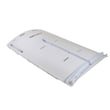
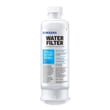
The most common issues we see on Samsung refrigerators like model RF25HMEDBSR are cooling problems and ice maker troubles. These often trace back to airflow failures (evaporator fan), defrost/drain icing, or sensor and ice-room components that cause warm temperatures, frost buildup, or no ice.
Most common symptoms customers notice
- Fresh food section warms up while the freezer seems OK
- Frost or ice buildup on the back wall or around the ice room
- Ice maker stops producing ice or makes small/hollow cubes
- Water leaks or puddles under the crisper or freezer drawer
- Unusual fan noise, buzzing, or intermittent clicking
Common causes and the parts that often fix them
On RF25HMEDBSR, these are frequent culprits when cooling or ice production is inconsistent:
| Problem area | What it affects | Example part for this model |
|---|---|---|
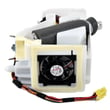
| Evaporator airflow | Weak cooling, warm fridge, frost patterns | Refrigerator ice maker evaporator fan DA97-12540A |
| Temperature sensing | Erratic temps, overcooling or warming | Refrigerator temperature sensor DA32-10104N |
| Defrost protection | Heavy frost, airflow blocked by ice | Refrigerator protector DA47-00243B |
| Drain/defrost water path | Leaks, ice sheet in freezer, recurring icing | Refrigerator drain tube kit DA97-04049E |
| Ice room hardware | Ice clumps, chute icing, dispensing issues | Refrigerator dispenser ice chute cap and gasket assembly DA97-12594A |
Quick checks we recommend before replacing parts
- Confirm temperature settings: about 37°F for the refrigerator and 0°F for the freezer.
- Check for blocked vents: avoid packing food tightly against air returns.
- Look for frost buildup: heavy frost usually points to a defrost or airflow issue.
- Inspect for leaks: check for ice or debris around the drain area.
- Reset and test ice maker: dump old ice, confirm the ice bin seats fully.
Why it matters
Cooling and ice maker problems usually get worse over time. A weak evaporator fan, a drifting temperature sensor, or a drain that keeps icing over can lead to food spoilage, repeated frost buildup, and recurring “no ice” complaints.
Helpful model-specific guidance
For control settings, error indications, and component locations on RF25HMEDBSR, use the RF25HMEDBSR owner's manual. For step-by-step ice maker troubleshooting, follow why your Samsung fridge stopped making ice and how to fix it.
Last updated: February 2026
What are the dimensions of the Samsung RF25HMEDBSR?
The Samsung RF25HMEDBSR refrigerator measures 32 3/4 in. wide and about 70 in. tall with hinges, handles, and doors installed; depth varies by configuration (roughly 30 in. to 36 1/2 in. depending on hinges/handles/doors). For the exact configuration you need, confirm in the RF25HMEDBSR owner's manual.
Dimensions by configuration
Use these common measurement sets when planning a cutout, doorway clearance, or cabinet depth:
- With hinges, handles, and doors: 32 3/4" W x 70" H x 36 1/2" D
- Without hinges and door: 32 3/4" W x 68 7/8" H x 30" D
- With hinge and door, no handle: 32 3/4" W x 70" H x 34" D
| Configuration | Width | Height | Depth |
|---|---|---|---|
| With hinges, handles, and doors | 32 3/4" | 70" | 36 1/2" |
| Without hinges and door | 32 3/4" | 68 7/8" | 30" |
| With hinge and door, no handle | 32 3/4" | 70" | 34" |
What to measure before delivery or moving
To avoid fit issues, we recommend checking these items:
- Doorway width (including trim) and any tight hallway turns
- Depth to the wall (baseboards and water line clearance can change the real depth)
- Overhead clearance for leveling legs and hinge area
- Cabinet cutout width (leave a little side clearance for airflow)
- Handle clearance if the refrigerator sits near an island or wall
Why it matters
Depth changes the most between configurations. If you plan using the “without hinges and door” depth but install with handles, the refrigerator can stick out several inches and affect door swing, ice dispenser access, and traffic flow.
Last updated: February 2026
What is the difference between force defrost RD and FD?
On Samsung refrigerator model RF25HMEDBSR, RD (refrigerator defrost) runs a defrost cycle focused on the fresh food (refrigerator) evaporator, while FD (forced defrost) runs a broader, service-style defrost intended to clear heavier frost conditions that can affect multiple cooling and ice-making areas. For the exact button sequence and display behavior, use the RF25HMEDBSR owner's manual.
What each mode is used for
- RD (refrigerator defrost): Use when the refrigerator section has frost buildup symptoms (warm fresh food temps, restricted airflow from the refrigerator vents).
- FD (forced defrost): Use when you need a more aggressive defrost to help clear system-wide frost issues, including problems that show up as ice maker or freezer airflow trouble.
- Both modes are typically used for diagnostics and service, not everyday operation.
Quick symptom guide (RD vs FD)
| Symptom you see | Start with | Why |
|---|---|---|
| Fresh food section warming, freezer seems OK | RD | Targets the refrigerator evaporator area first |
| Ice maker area icing up, ice clumping, or no ice | FD | More comprehensive defrost helps clear ice around ice-making airflow paths |
| Fan noise that changes after doors close, airflow seems blocked | FD | Helps clear frost that can interfere with evaporator airflow |
| You already cleared vents and temps still drift | FD | Deeper reset of frost conditions before parts testing |
Before you run forced defrost
- Move perishables to a cooler if temperatures are already unsafe.
- Expect water to drain; keep towels handy and make sure the drain path is clear.
- After the cycle, allow several hours for temperatures to stabilize before judging results.
- If icing returns quickly, inspect likely causes such as a failed sensor, airflow restriction, or defrost control issue.
Parts that commonly relate to frost and temperature problems
If defrosting helps temporarily but the problem returns, these model-compatible parts are common suspects:
- Refrigerator temperature sensor DA32-10104N (temperature feedback issues)
- Refrigerator temperature sensor DA32-00033C (temperature feedback issues)
- Refrigerator protector DA47-00243B (defrost protection/thermostat function)
- Refrigerator drain tube kit DA97-04049E (drain restrictions that can lead to refreezing)
Why it matters
Choosing RD vs FD saves time: RD is a targeted defrost for the refrigerator section, while FD is the better choice when frost is affecting cooling performance and ice production across the appliance.
Last updated: February 2026