Owner’s manual
 Error Codes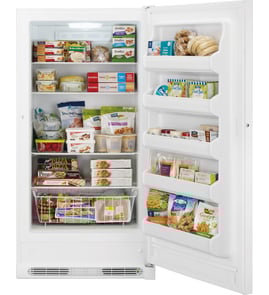


What does H mean on a Frigidaire freezer?
On the Frigidaire LFFH21F7HWJ upright freezer, H (or HI) indicates a high temperature alarm. It means the freezer temperature has been too warm (commonly after the door was left open or not sealing) and the alarm may sound until the temperature drops again; see the LFFH21F7HWJ use & care manual.
What to do right away
- Make sure the door is fully closed and not blocked by food packages.
- Check the door seal for gaps, tears, or areas that are not contacting the cabinet.
- Press Alarm Reset (if your control has it) to silence the buzzer after closing the door.
- Give the freezer time to recover; temperature can take hours to stabilize after a warm event.
- Avoid repeated door openings while it pulls back down.
What “H/HI” usually means on this model
The LFFH21F7HWJ manual describes a HI TEMP indicator and alarm behavior on electronic-control versions: the indicator can light and the buzzer can sound when the freezer is first plugged in, and it can also activate if the inside temperature rises above the alarm threshold.
Common causes vs. what you’ll notice
| Likely cause | What you’ll notice | What helps most |
|---|---|---|
| Door left open or not sealing | Frost, warm spots, alarm returns | Clean/inspect gasket, reduce door openings |
| Warm food load | Alarm after loading groceries | Let food cool, load in smaller batches |
| Power interruption | Alarm after outage | Keep door closed, allow recovery time |
| Door seal problem | Condensation or heavy frost near door | Inspect gasket; consider replacing |
Parts that matter if the alarm keeps coming back
If the door is closing but warm air is still leaking in, the door gasket is a common fix on upright freezers.
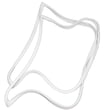
- Freezer door gasket 5304507199: helps seal the door to prevent warm air leaks that can trigger high-temp alarms.
Why it matters
A high-temp condition can lead to softening, refreezing, and freezer burn. Catching the cause early (door seal, loading habits, or a cooling issue) helps protect food quality and reduces compressor run time.
Last updated: January 2026
Are Frigidaire upright freezers good?
Frigidaire upright freezers, including model LFFH21F7HWJ, are generally a good choice when you want easy organization, quick access to frozen food, and dependable everyday freezing. Long-term satisfaction usually comes down to correct installation, keeping the door sealing well, and maintaining stable temperatures (see the LFFH21F7HWJ owner’s manual).
What “good” typically means for an upright freezer
Most owners judge an upright freezer by how well it holds temperature, how easy it is to use daily, and how much maintenance it needs.
Common strengths we see with Frigidaire uprights:
- Upright shelves and bins make food easier to find than in a chest freezer
- Frost-free convenience on many models (less manual defrosting)
- Bright interior lighting and straightforward controls
- Good capacity for bulk shopping and meal prep
- Practical features like door alarms on some versions
What to watch for (and how to prevent problems)
Some complaints across upright freezers are usually tied to setup or sealing issues.
Key checks that help performance:
- Level the cabinet so the door closes and seals consistently
- Leave airflow clearance around the freezer (the manual calls for space on all sides)
- Avoid frequent, long door openings; warm air drives frost and temperature swings
- Keep packages from sticking past shelf fronts so the door fully closes
- Clean the door gasket if you see frost, moisture, or the door feels “hard to open”
If your door seal is torn, warped, or leaking, replacing the gasket can restore efficiency; use the exact-fit freezer door gasket 5304507199.
Quick comparison: upright vs chest freezer
| Feature | Upright freezer | Chest freezer |
|---|---|---|
| Access/organization | Easier (shelves/bins) | Harder (stacking) |
| Footprint | Taller, smaller floor space | Wider, more floor space |
| Defrosting | Often frost-free | Often manual defrost |
| Cold retention during outage | Good | Often better |
Why it matters
A freezer that seals tightly and runs at a stable temperature protects food quality, reduces frost buildup, and helps control energy use. Many “brand quality” complaints are really door-seal, leveling, or airflow issues that are fixable.
Last updated: January 2026
How old is my Frigidaire freezer by serial number?
To estimate the age of your Frigidaire upright freezer model LFFH21F7HWJ, we use the serial number date code on the unit’s serial plate. On many Frigidaire-built units, the 3rd character indicates the year, and the 4th and 5th characters indicate the week it was manufactured (for example, week 05). For serial plate location and recording details, see the LFFH21F7HWJ use & care manual.
Where to find the serial number on LFFH21F7HWJ
We typically see the model and serial information on a serial plate inside the cabinet.
- Check the inside wall near the top or side
- Check near the door opening (cabinet frame)
- Look for a label that lists Model No. and Serial No.
- Write the serial number exactly as shown (letters and numbers)
- Do not remove or cover the serial plate
How to decode the serial number (year and week)
Once you have the serial number, focus on the early characters.
- 3rd character: manufacturing year code
- 4th and 5th characters: manufacturing week (01 to 52)
- The remaining characters are typically production sequence and plant information
Quick decoding table
| Serial number characters | What they mean | Example result |
|---|---|---|
| 3rd character | Year of manufacture | “8” = a year ending in 8 |
| 4th to 5th characters | Week of manufacture | “05” = 5th week |
Why it matters
Knowing the manufacture week and year helps us narrow down the correct parts and troubleshooting path for your LFFH21F7HWJ, especially for items that can change over a production run (like a control, door gasket, or light components).
If your code seems ambiguous
A single digit year code (like “8”) can match more than one decade. We usually confirm the correct decade by comparing it to the freezer’s styling/features and the parts used on the model.
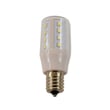
- If the freezer has an interior light issue, compare parts such as the freezer light bulb 5304517886
- If you see heavy frost or poor sealing, compare the door seal such as the freezer door gasket 5304507199
- Use the model number LFFH21F7HWJ when matching parts
Last updated: January 2026
Why is my Frigidaire upright freezer not freezing?
If your Frigidaire LFFH21F7HWJ upright freezer isn’t freezing, the most common causes are a control setting issue, warm air leaking in at the door seal, restricted airflow, or a cooling-system/defrost problem. We recommend checking the basics first, then testing likely parts.
Quick checks we recommend first
- Confirm the temperature control is set cold enough and give it time to stabilize between adjustments (several hours); see the LFFH21F7HWJ use & care manual.
- Allow a full cool-down period after plugging in or after a long door-open event; many freezers need about 4 hours to cool down.
- Make sure the door closes and seals fully; packages sticking past shelf fronts can prevent sealing.
- Reduce door openings and verify the freezer is not overloaded, which can block cold-air circulation.
- Verify the freezer has proper clearance for airflow around the cabinet (commonly about 3 inches on sides).
Parts that commonly cause “not freezing” on this model
If the quick checks don’t help, these model-compatible parts are common suspects:
- Door seal leak: inspect the gasket for gaps, tears, or stiffness; consider the freezer door gasket 5304507199.
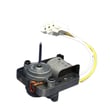
- Evaporator fan not moving air: listen for the fan when running; a failed motor can stop circulation; consider the freezer evaporator fan motor 297309000.
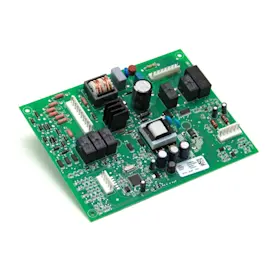
- Temperature sensing/control issue: if temperatures swing or don’t respond to setting changes, the sensor or control board may be involved.
- Defrost system issue (frost buildup on the evaporator): heavy frost can block airflow and stop cooling.
What to look for (symptom-to-cause guide)
| What you notice | Most likely direction | What we do next |
|---|---|---|
| Freezer runs but is warm | Airflow or sealed-system cooling problem | Check fan operation, frost pattern, and door seal |
| Heavy frost on back wall/inside | Defrost problem or door leak | Inspect gasket, then evaluate defrost components |
| Door doesn’t “grab” when closing | Door seal or leveling issue | Check gasket condition and leveling |
| Control shows an error (if equipped) | Electronic control issue | Use the error code guide for next steps |
Why it matters
A freezer that isn’t freezing can be as simple as a door not sealing or a blocked airflow path, but it can also point to a failing evaporator fan, defrost system, or electronic control. Catching the cause early helps prevent food loss and avoids extra strain on the compressor.
Helpful DIY references
Last updated: January 2026