Owner’s manual
 Error Codes


What size is a Kenmore Elite washer?
For Kenmore Elite washer model 79629278000, the cabinet size is 27 in. wide x 28 3/8 in. deep x 45 3/8 in. high; with the lid open, overall height is 55 3/4 in. We recommend confirming your space and hookups using the 79629278000 owner's manual.
Dimensions and space you need
Use these measurements when planning a laundry room fit, doorway clearance, or a tight alcove install.
- Width: 27 in. (68.6 cm)
- Depth: 28 3/8 in. (72.1 cm)
- Height (lid closed): 45 3/8 in. (115.3 cm)
- Height (lid open): 55 3/4 in. (141.7 cm)
- Minimum overhead clearance: 56 in.
Recommended clearances (for hoses and airflow)
Even if the washer fits “on paper,” we plan for working room behind and beside the cabinet.
| Location around washer | Minimum clearance |
|---|---|
| Each side | 1 in. (2.5 cm) |
| Behind washer | 4 in. (10 cm) |
| Overhead (shelves/cabinets/ceiling) | 56 in. |
Why it matters
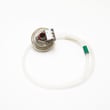
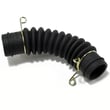
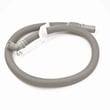
Correct sizing prevents installation headaches like kinked drain hoses, crushed water lines, lid interference, and excess vibration. It also helps protect parts such as the water inlet valve and pressure switch system from strain caused by tight routing.
Quick measuring checklist
- Measure the opening width at the narrowest point (trim can reduce clearance).
- Measure depth to the wall, then subtract space needed for hoses and the drain.
- Confirm overhead clearance if you have cabinets or shelving.
- Plan a path for delivery: doorways, hall turns, and stair rails.
Last updated: January 2026
How to hard reset a Kenmore Elite washer?
To hard reset a Kenmore Elite washer model 79629278000, we power the washer off, then reset the control by turning it back on and reselecting the cycle. This clears many “won’t start” and control glitches without replacing parts.
Quick reset steps (most common)
- Press POWER to turn the washer off.
- Wait 30 seconds.
- Press POWER to turn the washer on.
- Reselect your cycle and options.
- Press START/PAUSE.
If the control panel seems “asleep,” pressing POWER is the normal wake-up step.
If the controls are locked (CL on display)
This model uses a Control Lock feature that can look like a “frozen” washer.
- Turn the washer on with POWER.
- Press and hold DRAIN & SPIN for 5 seconds to toggle CONTROL LOCK off.
- Try starting a normal cycle again.
For the exact button sequence and display behavior, use the 79629278000 owner's manual.
When a deeper reset helps
Use these checks if the washer still will not run after the quick reset:
- Confirm the washer is plugged into a working outlet.
- Reset the home breaker or replace the fuse (dedicated circuit recommended).
- Make sure both hot and cold water faucets are fully open.
- Close the lid firmly; the washer will not fill or run with the lid open.
- If the tub has water and the washer is paused or shut off, allow time for the safety drain feature to run.
What you should see after a successful reset
| Symptom before reset | What changes after reset | What to try next |
|---|---|---|
| No response from buttons | Display wakes when POWER is pressed | Reselect cycle, press START/PAUSE |
| CL shows on display | Controls unlock | Hold DRAIN & SPIN 5 seconds |
| Won’t start a cycle | Cycle begins after reselecting | Check lid lock and water supply |
Why it matters
A proper reset restores normal control logic and helps you avoid unnecessary part replacement. If the washer still will not start and the lid will not lock, the lid lock assembly can be the next item to check, such as the washer lid lock EBF61674802.
Last updated: January 2026
What is the life expectancy of a Kenmore washer?
Most Kenmore washers last 10 to 15 years with normal household use and basic maintenance. For the Kenmore Elite 79629278000, keeping water flow, detergent use, and vibration under control does the most to extend service life; see the 79629278000 owner's manual for model-specific care steps.
Typical lifespan ranges (what to expect)
Lifespan depends on load size, weekly cycles, and how well the washer is maintained.
- 10 to 15 years is the typical range for modern washers
- Heavy use (large families, daily loads) shortens life
- Overloading and chronic out-of-balance spinning accelerates wear on the suspension and drive system
- Hard water can shorten life by restricting fill flow and stressing the inlet valve
- Using the correct HE detergent amount reduces oversudsing and residue buildup
| Usage pattern | What it looks like | Typical outcome |
|---|---|---|
| Light | 2 to 4 loads/week | Often reaches the high end of the range |
| Average | 5 to 8 loads/week | Usually lands in the middle |
| Heavy | 9+ loads/week | More repairs sooner; life trends lower |
Maintenance that adds years
These are the highest-impact habits for the 79629278000.
- Clean the water inlet filters periodically (especially with hard water)
- Use HE, low-sudsing detergent and avoid “extra” detergent
- Keep loads balanced; mix items to prevent repeated off-balance spin events
- Leave the lid open between loads when possible to reduce odor and moisture
- Address new noises early (rubbing, grinding, loud thumping) before secondary damage occurs
Parts that commonly affect longevity
When performance changes, these parts are often involved in fill, spin, and safety-related operation.
- Lg washer water inlet valve AJU75152601 (slow fill, no fill, or intermittent filling)
- Lg washer water-level pressure switch 6501EA1001R (overfilling, underfilling, level sensing issues)
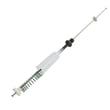
- Washer suspension rod and spring assembly 4902FA1665W (excessive vibration, banging, off-balance)
- Washer lid lock EBF61674802 (won’t start or stops mid-cycle)
Why it matters
A washer near the end of its expected life can still be worth repairing if the issue is isolated (like a valve, lid lock, or suspension). Consistent maintenance and quick fixes prevent small problems from turning into tub, motor, or control damage.
Last updated: January 2026
Does my Kenmore top load washer have a filter?
Yes. Your Kenmore Elite washer model 79629278000 uses small water inlet filters (screen filters) where the hot and cold fill hoses connect at the back of the washer; it does not use a typical front-access drain pump filter like many front-load washers. See the 79629278000 owner's manual for the exact cleaning steps.
Where the “filter” is on this washer
On this top-load design, the filters are built into the water inlet ports to catch grit and mineral debris before it reaches the inlet valve.
- Located at the hot and cold water inlet connections on the rear of the washer
- Look like small mesh screens inside the inlet openings
- Help prevent slow fill, no fill, and valve sticking
- Should stay installed during operation
How to clean the water inlet filters (safe DIY steps)
- Turn off both water faucets.
- Unscrew the hot and cold fill hoses from the washer.
- Carefully pull out the inlet screens and soak them in white vinegar or a lime scale remover.
- Rinse thoroughly, reinstall the screens, then reconnect hoses and turn water back on.
Tips that prevent leaks and repeat clogs:
- Open the faucets fully after reconnecting hoses
- Check hoses for kinks and crushed sections
- If you have hard water, clean the screens on a regular schedule
- Replace damaged screens or a sticking valve instead of running the washer without filters
Symptoms that point to clogged inlet filters
| What you notice | What it usually means | What to do next |
|---|---|---|
| Washer fills very slowly | Screens restricted by sediment | Clean inlet filters |
| Fill error or no water entering | Screens clogged or supply issue | Clean filters, verify faucet flow |
| Hot or cold side fills poorly | One inlet screen more clogged | Clean the affected side first |
Parts that are commonly involved when filling problems continue
If cleaning the screens does not restore normal filling, the issue is often in the fill system.
- Lg washer water inlet valve AJU75152601 (valve not opening correctly)
- Lg washer water-level pressure switch 6501EA1001R (incorrect water level sensing)
- Washer water-level pressure switch hose 5210FA3427J (hose pinched, loose, or leaking air)
Why it matters
Clean inlet filters protect the inlet valve and help your 79629278000 maintain proper water flow, cycle timing, and wash performance; clogged screens are a common cause of fill-related errors and poor cleaning.
Last updated: January 2026