Owner’s manual
 Error Codes


What is the most common problem with Samsung refrigerators?
The most common Samsung refrigerator problem is a cooling issue caused by airflow restriction from frost or a failed defrost-related component. On a side-by-side like model RH25H5611SR, this often shows up as the fresh food section warming up, noisy fans, or temperature swings.
What you typically see first
- Refrigerator side gets warm while the freezer seems closer to normal
- Frost or ice buildup on the evaporator cover area
- Fan noise, rattling, or a “whirring” that changes when doors open
- Water leaking or puddling from a clogged/iced drain path
- Ice maker or dispenser performance drops when temps are off
Most common causes (and the parts that usually fix them)
Cooling complaints usually trace back to one of these systems:
| Symptom | Most likely system | Common fix direction |
|---|---|---|
| Warm fridge, frost buildup | Defrost system | Test/replace defrost heater or sensor; clear ice |
| Warm temps, weak airflow | Evaporator airflow | Check fan operation and ice blockage |
| Runs a lot, poor cooling | Heat rejection | Clean condenser area; verify condenser fan |
| No ice or slow ice | Water supply or ice maker | Check valve flow, filter, ice maker function |
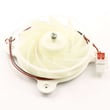
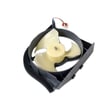
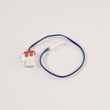
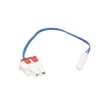
For RH25H5611SR, the most frequently involved components in these scenarios include the refrigerator defrost heater DA47-00322J, refrigerator temperature sensor DA32-10109W, and the evaporator fan motor.
Quick checks we recommend before ordering parts
- Confirm settings: freezer about 0°F, refrigerator about 37°F.
- Look for heavy frost behind the rear panel inside the freezer.
- Listen for the evaporator fan; it should run when cooling is needed.
- Clean dust from the condenser area and make sure the condenser fan runs.
- If ice maker is affected, verify household water supply and inspect for frozen lines.
Why it matters
A defrost or airflow problem does not just warm food; it forces longer run times, increases ice buildup, and can lead to secondary issues like water leaks and ice maker failures.
For model-specific operating details and temperature setting guidance, use the RH25H5611SR owner's manual.
Last updated: February 2026
What is the difference between force defrost FD and RD?
On the Samsung RH25H5611SR side-by-side refrigerator, RD is a targeted defrost for the refrigerator (fresh food) section, while FD (force defrost) is a broader manual defrost used to clear heavier frost buildup across the cooling system. Use the mode that matches where the icing problem is happening; confirm the exact key sequence in the RH25H5611SR owner's manual.
What RD vs. FD does (practical meaning)
- RD (refrigerator defrost): Focuses on defrosting the refrigerator-side evaporator area to restore airflow and temperature control.
- FD (force defrost): Runs a more aggressive defrost routine intended to clear widespread frost that can affect overall cooling.
- Both modes are typically used after symptoms like warm temps, restricted airflow, or recurring frost.
| Mode | What it targets | When it helps most |
|---|---|---|
| RD | Refrigerator section | Fresh food side frosting, weak fridge airflow |
| FD | Whole cooling system | Heavy icing, repeated frost issues affecting cooling |
When to use each mode
Use these quick checks to pick the right option:
- Choose RD if:
- The refrigerator side is warm but the freezer is closer to normal.
- You hear the evaporator fan struggling or airflow seems blocked on the fridge side.
- Frost is concentrated behind the refrigerator-side rear panel.
- Choose FD if:
- Frost buildup is severe or recurring and cooling performance is broadly affected.
- You recently had a door left ajar and now both sections are struggling.
- You want a full manual defrost routine before deeper troubleshooting.
Why it matters
Using the correct defrost mode saves time and helps you confirm the real problem. If RD temporarily fixes temperatures, the issue often relates to refrigerator-side frost buildup (defrost heater, sensor, airflow). If FD is needed repeatedly, look for root causes like door seal leaks, fan issues, or defrost system faults.
If you suspect a defrost-system failure, a common related part is the refrigerator defrost heater DA47-00322J.
Last updated: February 2026
Is there a reset button on a Samsung refrigerator?
Most Samsung refrigerators, including model RH25H5611SR, do not use a single universal “reset button” for everything; resets are typically done from the control panel (or by power-cycling). Some units also have a small reset for the ice maker, but it is separate from the main temperature and display controls.
Common reset options that work on many Samsung side-by-side models
- Control panel reset: Press and hold Power Cool and Power Freeze together for 5 to 10 seconds to reset the display or clear a minor control glitch.
- Hard reset (power cycle): Unplug the refrigerator (or switch off the breaker) for 5 to 10 minutes, then restore power.
- Filter indicator reset: After replacing the water filter, press and hold the Filter Reset button (or the filter reset function on the panel) for about 3 seconds.
- Ice maker reset (if equipped): Some Samsung ice makers have a small test or reset button near the ice maker assembly (not the same as a full refrigerator reset).
Step-by-step: the safest “reset” sequence we recommend
- Note your current temperature settings.
- Try the Power Cool + Power Freeze hold first.
- If the issue continues, do a 5 to 10 minute power cycle.
- Recheck temps after power returns; allow 24 hours for temperatures to fully stabilize.
- If the problem is ice-related, follow the ice maker troubleshooting steps in the RH25H5611SR manual.
What a reset can and cannot fix
| Symptom | Reset often helps? | What usually fixes it instead |
|---|---|---|
| Display frozen or beeping after a power flicker | Yes | Control panel reset or power cycle |
| Filter light stays on after filter change | Yes | Filter reset procedure |
| Not making ice | Sometimes | Water supply checks, ice maker troubleshooting |
| Warm refrigerator or freezer | Rarely | Airflow, fans, defrost system, sealed system diagnosis |
Why it matters
Using the right reset saves time and prevents unnecessary part replacement. For example, an ice issue can be water-supply related, while a warm cabinet can point to airflow problems (evaporator fan) or a defrost failure.
Related DIY help
For ice maker problems that a reset does not solve, use why your Samsung fridge stopped making ice and how to fix it to walk through the most common causes.
Last updated: February 2026
What is the common problem with Samsung fridge ice maker?
The most common ice maker problems we see on Samsung side-by-side refrigerators like model RH25H5611SR are the ice maker freezing up, not producing ice, or dispensing poorly. These issues usually trace back to water supply problems, airflow or temperature settings, or frost buildup that blocks the ice maker mechanism; the RH25H5611SR owner's manual helps confirm the correct settings and reset steps.
Most common symptoms (and what they usually mean)
- Ice maker freezes up or clumps: moisture or frost buildup around the ice room or chute
- No ice production: water not filling the ice maker, or the ice maker is turned off
- Small or hollow cubes: restricted water flow (often filter related) or low water pressure
- Ice won’t dispense: jammed ice bucket, frozen chute, or auger drive issue
- Slow ice production: freezer temperature too warm or frequent door openings
Quick checks we recommend first
- Confirm the freezer is set cold enough (most side-by-sides run best near 0°F).
- Make sure the ice maker is ON and the ice bucket is seated correctly.
- Check for a kinked water line behind the refrigerator.
- Replace the water filter on schedule and flush several cups of water after replacement.
- Look for frost or ice buildup around the ice maker area; thawing can restore operation.
Parts that commonly cause ice maker trouble on this model
If the quick checks do not fix it, these parts are frequent culprits:
| Problem you notice | Likely part to inspect | What it affects |
|---|---|---|
| No water entering ice maker | Water inlet valve | Water fill to ice maker and dispenser |
| Ice maker cycles but no ice | Ice maker assembly | Harvest and fill cycle |
| Dispense motor runs but no ice moves | Auger motor | Pushes ice from bucket to chute |
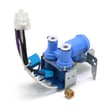
Model RH25H5611SR has a listed refrigerator ice maker DA97-14253A and refrigerator water inlet valve DA62-02360B, both of which can be involved when ice production stops.
Why it matters
Ice maker issues are often a symptom of restricted water flow or frost buildup. Fixing the root cause helps prevent repeat freezing, protects the dispenser system, and restores normal cube size and output.
Related DIY help
For step-by-step troubleshooting, we use the same process outlined in why your Samsung fridge stopped making ice and how to fix it.
Last updated: February 2026
What is the average lifespan of a Samsung refrigerator?
Most Samsung refrigerators average 10 to 14 years of service life. For your Samsung RH25H5611SR, consistent maintenance (cleaning coils, keeping doors sealed, and staying on top of ice and water system care) is what most often determines whether you land closer to 10 years or closer to 14.
Typical lifespan and what to expect
Here is a practical range we use for modern side-by-side refrigerators like the RH25H5611SR:
| Lifespan range | What it usually means | What you typically see |
|---|---|---|
| 0 to 5 years | Early-life period | Minor adjustments, filter changes, occasional ice issues |
| 6 to 10 years | Mid-life | Higher chance of fan, sensor, or defrost-related repairs |
| 10 to 14 years | Common replacement window | More frequent cooling or ice/water problems, higher repair costs |
| 15+ years | Above average | Usually requires excellent upkeep and timely repairs |
What extends the life of a Samsung refrigerator
These steps have the biggest payoff for long-term reliability:
- Keep condenser areas clean so heat can dissipate efficiently.
- Maintain strong door sealing; warm air leaks force longer run times.
- Keep vents inside the fresh food and freezer sections unblocked.
- Replace water filters on schedule and flush the dispenser after changes.
- Address unusual noises quickly (often a fan or ice buildup issue).
- Keep temperatures stable; avoid frequent wide setting changes.
For model-specific care and cleaning guidance, follow the RH25H5611SR owner's manual.
Repairs that commonly impact lifespan (and cost)
When a refrigerator starts warming, running constantly, or making loud noises, these are common “life-limiting” systems:
- Sealed system cooling (compressor and related components)
- Airflow (evaporator fan, condenser fan)
- Defrost system (heater, sensors)
- Ice and water delivery (ice maker, inlet valve)
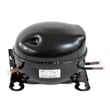
If you are troubleshooting a cooling failure that points to the sealed system, the refrigerator compressor NC1MV90ALPASH is one of the key components used on this model.
Why it matters
A refrigerator that is nearing the 10 to 14 year range can still be a great candidate for repair if the issue is a fan, sensor, or defrost component. When the problem is sealed-system related, comparing repair cost versus remaining expected life helps you make a smarter decision.
Last updated: February 2026