Installation guide
 Owner’s manual


How many cubic feet is my Kenmore Elite washer?
The exact tub capacity (cubic feet) for Kenmore Elite washer model 11026942502 is listed in the product specifications section of the 11026942502 owner's manual. If you are comparing washers, most full-size Kenmore top-load washers of this style typically fall in the 3.2 to 3.6 cu. ft. range.
How to find the capacity for model 11026942502
We recommend using the model-specific documentation because “Elite” washers were sold in multiple sizes.
- Open the 11026942502 owner's manual and look for Specifications, Features, or Capacity.
- If the manual lists basket or tub dimensions instead of cubic feet, use those values to calculate volume.
- If you only see “super capacity” or “extra large capacity,” use the cubic-feet spec for accurate comparisons.
- Keep your full model number (11026942502) handy; similar Kenmore 110 models can have different capacities.
Typical capacity ranges (for quick comparison)
| Washer type | Typical capacity range |
|---|---|
| Standard top-load (agitator) | 2.9 to 3.3 cu. ft. |
| Large-capacity top-load (agitator) | 3.2 to 3.6 cu. ft. |
| High-capacity top-load (impeller) | 4.0 to 5.5 cu. ft. |
Why it matters
Capacity affects how much you can wash per load, how freely items can move during agitation, and how well the washer balances. Overloading can reduce cleaning performance and contribute to vibration or out-of-balance conditions.
Last updated: January 2026
Is Kenmore Elite high end?
Yes. Kenmore Elite is Kenmore’s premium appliance line, and the Kenmore Elite washer model 11026942502 is positioned as a higher-end option compared with standard Kenmore washers, typically offering stronger performance features and longer warranty coverage on key components.
What “high end” means for Kenmore Elite
Kenmore Elite generally sits above the base Kenmore lineup because it is built around upgraded materials, better wash performance, and more robust component coverage.
Common “premium” indicators include:
- More specialized cycles and better fabric care options
- Higher-capacity or more durable wash basket and tub designs (varies by model)
- Better vibration control and spin performance (varies by model)
- More serviceable, repairable design with widely available replacement parts
- Stronger warranty coverage on major components
Model 11026942502 warranty highlights
Your 11026942502 manual includes extended coverage on major washer components, which is a typical “premium line” signal.
| Covered item | Coverage type | Coverage window |
|---|---|---|
| White porcelain basket | Limited lifetime | From purchase date (labor after year 1) |
| Plastic tub | Limited 10-year | Years 2 through 10 (labor after year 1) |
| Gearcase parts | Limited 5-year | Years 2 through 5 (labor after year 1) |
For the exact terms and exclusions, use the 11026942502 owner's manual.
Why it matters when you’re choosing parts or repairs
A “high-end” washer is often worth repairing because major components are designed for long service life, and many wear items are replaceable.
If you’re troubleshooting performance issues, these common repair parts are available for this model:
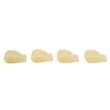
- Agitator dog 80040 (helps the agitator “grab” and move clothes)
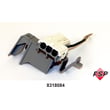
- Washer lid switch assembly (a no-spin/no-drain culprit on many top-load designs)
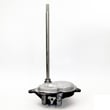
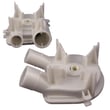
- Washer drain pump (common if the washer won’t drain)
Quick reality check: “Elite” vs other Kenmore tiers
| Kenmore tier | Typical positioning |
|---|---|
| Kenmore | Core, value-focused |
| Kenmore Elite | Premium features and coverage |
| Kenmore PRO | Pro-style, top-tier styling and features |
Last updated: January 2026
What is the average lifespan of a Kenmore washer?
A Kenmore washer typically lasts 10 to 15 years with normal household use. For the Kenmore Elite washer model 11026942502, consistent preventive maintenance and avoiding overloads helps you reach the higher end of that range; the warranty section in the 11026942502 owner's manual also highlights long-term coverage on key components.
Typical lifespan by washer type
Most washers fall into these ranges when installed correctly and maintained:
- Top-load washers: 12 to 15 years
- Front-load washers: 10 to 12 years
- High-use households (multiple loads daily): closer to the low end of the range
| Washer type | Typical lifespan | What usually ends life first |
|---|---|---|
| Top-load (agitator) | 12 to 15 years | Drive system wear, leaks, timer issues |
| Front-load | 10 to 12 years | Bearings, drain issues, door seal problems |
What helps your 11026942502 last longer
The manual emphasizes load care and avoiding conditions that strain the washer. These habits reduce wear on the drive system, basket, and tub:
- Keep loads balanced and do not overload; clothes should move freely
- Tie strings and sashes to prevent tangling and seam strain
- Add chlorine bleach correctly; do not pour it directly on fabrics
- Wipe up spills and follow garment care labels
- Level the washer and use correct drain standpipe height (see the 11026942502 installation guide)
Parts that commonly affect washer life
When a washer starts to struggle with agitating, spinning, or draining, these are common wear items to check on this model:
- Agitator dog 80040 (worn dogs can cause weak or no agitation)
- Washer drain pump WP3363394 (clogs or a failing pump can prevent draining)
- Washer lid switch assembly WP8318084 (a failed switch can stop spin/agitate for safety)
Why it matters
A washer that is overloaded, unlevel, or not draining correctly runs hotter and works harder. That extra strain shortens the life of the motor, coupling, gearcase, and suspension, even if the washer still “runs.”
Last updated: January 2026
How to do a hard reset on a Kenmore washer?
For the Kenmore Elite washer model 11026942502, a hard reset is done by disconnecting power long enough to fully clear the control and then restarting the cycle normally. Unplug the washer (or switch off the breaker) for 2 minutes, restore power, close the lid, then pull the cycle control knob out to start.
Hard reset steps (safe and effective)
- Turn the washer OFF by pushing in the cycle control knob.
- Unplug the power cord (or turn the breaker OFF).
- Wait 2 minutes.
- Restore power.
- Make sure the lid is closed.
- Select a cycle and pull the cycle control knob out to start.
For model-specific operating and stop/restart details, use the 11026942502 owner's manual.
If it still will not run after a reset
A reset clears many “stuck” conditions, but it will not bypass a real safety or mechanical problem. Check these common causes next:
- Lid not sensing closed: the washer may not start or may stop mid-cycle.
- Not draining: the washer can stall before spin if water cannot pump out.
- Out of balance or vibrating: the washer may stop or perform poorly if it is not level.
- Timer or selector issue: the cycle may not advance correctly.
Quick checks you can do in 5 minutes
| What to check | What to look for | What to do |
|---|---|---|
| Power | No lights or no motor sound | Confirm outlet and breaker, then retry reset |
| Lid closure | Lid does not “click” or feels loose | Close firmly; inspect lid strike area |
| Drain path | Standing water after cancel/drain | Check drain hose for kinks; listen for pump |
| Level | Washer rocks or walks | Level the feet and tighten the locknuts |
Parts that commonly relate to “won’t start” or “won’t drain”
If troubleshooting points to a failed component, these are common on this Kenmore 110-series platform:
- Washer lid switch assembly WP8318084 (start and safety interlock)
- Washer drain pump WP3363394 (draining before spin)
- Washer timer WP8541110 (cycle advancing and power routing)
Why it matters
A true hard reset is a fast way to clear a paused timer position or a temporary electrical glitch. If the washer still will not run, the next step is identifying whether the issue is lid sensing, draining, or level/vibration, since those conditions stop the cycle by design.
Last updated: January 2026