Error Codes



What is the life expectancy of a Thermador oven?
A Thermador wall oven like model PODM301-01 typically lasts 15 years. With steady care (keeping airflow clear, avoiding repeated high-heat self-clean cycles, and repairing heat-related failures early), it commonly reaches 12 to 20 years.
Most wall ovens fall into these practical ranges:
| Appliance type | Typical life expectancy |
|---|---|
| Standard electric wall oven | 10 to 15 years |
| Thermador wall oven (premium build) | 12 to 20 years |
| Replace-or-major-rebuild point | Around 15 years |
These are the most common longevity killers we see with electric wall ovens:
- Repeated self-clean use (extreme heat stresses wiring, fuses, and controls)
- Overheating from blocked ventilation or a failing cooling fan
- Power surges affecting the display/control electronics
- Running with a weak heating circuit (slow preheat, uneven baking) that overheats components
- Ignoring error codes and continuing to cook through faults
If your oven is showing codes, use our Thermador masterpiece wall oven error codes guide to match the symptom to the most likely circuit.
On a Thermador PODM301-01, these parts commonly determine whether a repair is straightforward:
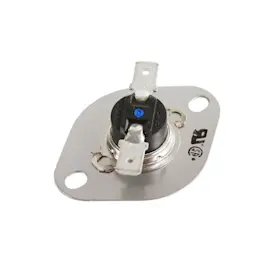
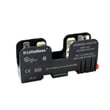
- If the oven goes dead or trips power: check the Thermador fuse 00413608 and the high-limit circuit
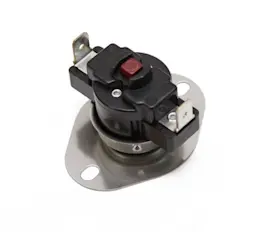
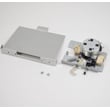
- If it overheats or shuts down mid-cycle: the Thermador temperature limit 00617877 is a frequent suspect
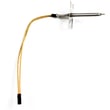
- If temperatures are inaccurate: the Thermador sensor 00642855 is a common fix
- If broil is weak or uneven: the Thermador element 00144648 can be the cause
Knowing the expected lifespan helps you decide when a repair is worth it. If your PODM301-01 is under about 15 years old, fixing a single failed part (sensor, fuse, thermostat, element) usually restores reliable performance and extends service life.
Last updated: February 2026
Are wall ovens hardwired or plug-in?
Most electric wall ovens, including Thermador wall ovens like model PODM301-01, are designed to be hardwired (direct-wired) to a dedicated circuit through an approved junction box, not plugged into a standard receptacle.
In typical installations, the oven’s power supply cable is routed into a junction box and connected with approved wire connectors. A plug-in cord is uncommon for built-in wall ovens because of the higher amperage requirements.
- Hardwired connection to a junction box is the standard setup
- A dedicated circuit is normally required (no sharing with other major loads)
- Correct wire gauge and breaker size must match the oven’s electrical rating
- The junction box must remain accessible after installation
- If your home has a receptacle behind the oven, it often indicates a prior nonstandard setup
| Connection type | Common for wall ovens? | Typical use case | Key note |
|---|---|---|---|
| Hardwired (junction box) | Yes | Built-in electric wall ovens | Most common and expected |
| Plug-in (cord and receptacle) | Rare | Some specialty or older setups | Must match the oven’s rated amperage |
A wall oven draws significant current; using the correct connection method helps prevent nuisance tripping, overheating at connections, and damage to components such as the control/display and high-limit safety devices.
If power is present at the breaker but the oven is dead, common electrical-related suspects include a blown thermal fuse or an open high-limit device.
- Check the house breaker and verify proper voltage at the junction box (power off before touching wiring)
- Inspect for loose or overheated wire connections in the junction box
- If the oven overheated previously, check the Thermador fuse 00413608
- If overheating is recurring, check the Thermador temperature limit 00617877
- For fault codes and what they mean, use Thermador masterpiece wall oven error codes
Last updated: February 2026
How to tell if a wall oven is gas or electric?
Your Thermador PODM301-01 is an electric wall oven, so it uses a 240-volt electrical supply and heats with electric elements rather than a gas burner and flame. In general, you can confirm gas vs. electric by checking the power connection, the presence of a gas line, and how the oven produces heat.
- Look behind/under the oven (or in the cabinet cutout): a gas line with a shutoff valve indicates gas; a heavy electrical whip/conduit indicates electric.
- Check the breaker panel: electric wall ovens typically have a double-pole breaker (often 30A to 50A); gas ovens usually use a standard 120V circuit.
- Watch how it heats: gas ovens use a burner flame; electric ovens use glowing elements (broil) and a hidden bake element in many designs.
- Smell and ignition: gas models may have a brief gas odor at ignition; electric models do not.
- Model labeling: the model tag often lists voltage for electric units and may list gas type (natural gas/LP) for gas units.
Because PODM301-01 is an electric wall oven, common “electric” clues include:
- No gas shutoff valve or flexible gas connector
- A dedicated 240V circuit at the home electrical panel
- Electric heating components such as a broil element and temperature sensor
If you are troubleshooting heat issues on this model, the parts list commonly involved includes the Thermador element 00144648 (broil element) and the Thermador sensor 00642855 (oven temperature sensor).
Gas vs. electric changes the most likely causes of “won’t heat” problems and the safe first checks. Electric ovens often point to elements, fuses, or high-limit protection; gas ovens more often involve igniters, gas valves, or flame sensing.
| Symptom | More common on | Typical direction |
|---|---|---|
| No heat at all | Electric | Check breaker, fuses, high-limit protection |
| Broil works, bake doesn’t | Electric | Bake element or control issue |
| Clicking/trying to ignite | Gas | Igniter or gas supply issue |
For additional troubleshooting patterns (especially if you see a fault code), use Thermador masterpiece wall oven error codes.
Last updated: February 2026
What is the most reliable wall oven brand?
The most reliable wall oven brand is the one with a strong service record and readily available replacement parts; in the premium category, Thermador models like PODM301-01 are built for performance, but long-term reliability still depends heavily on proper installation, ventilation, and avoiding repeated high-heat events such as frequent self-clean cycles.
Reliability is usually a mix of fewer failures and easier, faster repairs when something does fail.
- Consistent temperature control (sensor and control stability)
- Fewer heat-related shutdowns (high-limit protection trips less often)
- Durable door and glass assembly (less heat loss, fewer cracks)
- Strong cooling airflow (fan and motor health)
- Parts availability for common wear items (fuses, sensors, elements)
Instead of chasing a single “best” brand, we recommend comparing brands using the same checklist.
| What to compare | Why it matters | What to look for |
|---|---|---|
| Service history | Predicts downtime | Fewer service calls over time |
| Parts support | Determines repairability | Common parts stocked and identifiable |
| Heat management | Prevents nuisance shutdowns | Robust cooling fan and high-limit design |
| Controls | Reduces expensive failures | Stable display and control response |
Even high-end wall ovens can look “unreliable” if a single heat-protection part starts opening under load. If your oven intermittently shuts off, shows error codes, or stops heating, the most common reliability-related culprits are heat protection and temperature sensing.
- Check for repeated overheating symptoms; a failing temperature limit 00617877 can cut power when temperatures get too high.
- If the oven is dead (no display, no heat), a blown fuse 00413608 is a common starting point.
- If temperatures swing or baking is inconsistent, the sensor 00642855 is a frequent suspect.
- Keep vents clear and do not block airflow around the oven trim.
- Use self-clean sparingly; extreme heat accelerates failures in fuses, thermostats, and electronics.
- Avoid slamming the door; it stresses hinges and glass panels.
- If you see an error code, use a brand-specific guide to narrow the failure quickly.
For Thermador-specific code meanings and next steps, use Thermador masterpiece wall oven error codes.
Last updated: February 2026