 Installation guide
 Owner’s manual




What is the most common problem with GE dishwashers?
For the GE GDT635HSJ6SS dishwasher, the most common issues we see are “won’t start,” “won’t drain,” and “not cleaning well.” Many of these trace back to power being off at a wall switch or breaker, a door that is not fully latched, or a drain or wash system restriction.
Most common symptoms and what to check first
- Dishwasher won’t run: confirm the breaker is on and any nearby wall switch (often by the disposer switch) is on.
- Seems dead or unresponsive: if power was turned off between cycles, wait 5 to 10 seconds after turning it back on before pressing Start so the control can initialize.
- Won’t start: make sure the door closes firmly and the latch engages; a failing latch can prevent operation.
- Not draining: check for a kinked or restricted drain path and verify the sink/disposer connection is clear.
- Not cleaning: look for blocked spray arms, loading that blocks water flow, or detergent cup obstruction.
Quick part-related pointers (common fixes)
If basic checks do not resolve the symptom, these model-matched parts are frequent culprits:
| Symptom | Common part to inspect | What it affects |
|---|---|---|
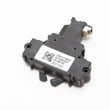
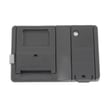
| Won’t start or stops mid-cycle | GE dishwasher door latch lock WD21X10490 | Confirms the door is closed so the control will run |
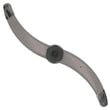
| Not cleaning, poor spray | Dishwasher spray arm, lower WD22X33499 | Wash water coverage on the lower rack |
| Not drying or water not heating | Dishwasher heating element WD05X30818 | Water heating and drying performance |
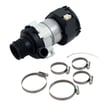
| Won’t drain | Dishwasher drain pump WD19X25187 | Pumps water out through the drain hose |
Why it matters
Start and drain problems can look like a “bad control,” but they are often caused by simple power, latch, or flow issues. Cleaning performance problems are frequently tied to spray coverage, loading, and heating, which are all fixable with targeted troubleshooting.
Helpful model-specific references
- Use the owner's manual for cycle selection notes, control behavior after power loss, and troubleshooting steps.
- If you’re seeing a code or blinking pattern, use our GE electronic dishwasher error codes guide to narrow the failure to a system like draining, heating, or door sensing.
Last updated: February 2026
What is the average lifespan of a GE dishwasher?
A GE dishwasher typically lasts 10 to 12 years. With consistent care (cleaning, correct detergent use, and avoiding chronic overloading), many units reach 12 to 15 years before major repairs like a pump, heater, or control issue become more common.
Typical lifespan ranges
Most homeowners see these timeframes for a GE dishwasher like model GDT635HSJ6SS:
| Usage and care level | Typical lifespan | What usually fails first |
|---|---|---|
| Heavy use, minimal cleaning | 6 to 9 years | Drain issues, wash performance, leaks |
| Average use, basic maintenance | 10 to 12 years | Heater, pumps, door latch, UI |
| Light to average use, strong maintenance | 12 to 15 years | Wear items, seals, electronics |
What extends the life of your dishwasher
We recommend focusing on the items that prevent strain on the circulation system and seals:
- Clean the filter and sump area regularly (prevents pump strain and poor cleaning)
- Run a dishwasher cleaner periodically to reduce hard-water film and odors
- Load so spray arms can spin freely; avoid blocking the lower and middle spray paths
- Use the right amount of detergent for your water hardness (too much can leave residue)
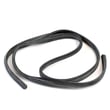
- Fix small leaks early; a worn gasket can turn into cabinet or floor damage
For model-specific care steps and cleaning guidance, follow the owner's manual.
Parts that commonly affect lifespan (and symptoms)
If performance drops, these are frequent wear or failure points on many GE dishwashers:
- Poor cleaning or gritty dishes: check the dishwasher spray arm, lower WD22X33499 for clogs or damage
- Not drying well or water stays cool: the heating circuit may involve the dishwasher heating element WD05X30818
- Won’t start or won’t latch: inspect the GE dishwasher door latch lock WD21X10490
- Weak wash action or loud humming: circulation issues can point to the dishwasher circulation pump WD26X23258
- Water left in the tub: draining problems can involve the dishwasher drain pump WD19X25187 or the dishwasher drain hose WD24X10062
Why it matters
Knowing the expected lifespan helps you decide when maintenance is worth it versus when a major repair (pump, heater, or control) is approaching end-of-life economics. Keeping spray paths clear and the wash system clean is the simplest way to protect the motor and seals.
Last updated: February 2026
Which dishwasher to stay away from?
If you are trying to “stay away” from a dishwasher, we recommend focusing less on brand lists and more on the specific model’s service history, parts availability, and common failure points. For a GE dishwasher like model GDT635HSJ6SS, reliability usually comes down to installation, water quality, and maintaining key wash and drain components.
What to look for instead of “brands to avoid”
A single brand can have both great and problematic models. These checks help you avoid the most common ownership headaches:
- Parts availability for wear items (spray arms, pumps, heating element, door latch)
- Leak risk areas (door seals, tub gasket, drain hose routing)
- Drying performance expectations (heated dry vs. condensation dry, rinse aid use)
- Control issues (intermittent keypad, random beeping, dead panel)
- Noise and wash quality (circulation pump health, spray arm clogs)
Common “avoid” red flags when shopping or diagnosing
If you see these patterns repeatedly in reviews or in-person testing, it is a practical reason to pass on that specific unit:
- Door does not close smoothly or latch feels inconsistent
- Standing water after cycles or frequent drain errors
- Dishes stay gritty (wash pressure problems, clogged spray arms)
- Persistent wet dishes even with rinse aid and heated options
- Repeated error codes or a control panel that resets
Quick part-based reality check (GE GDT635HSJ6SS)
For this GE model, these parts are typical indicators of long-term serviceability and repair cost:
| Symptom | Often involved part | Example part for this model |
|---|---|---|
| Not cleaning well | Spray arm clog or wear | Dishwasher spray arm, lower WD22X33499 |
| Not drying | Heater circuit issue | Dishwasher heating element WD05X30818 |
| Won’t start or won’t latch | Door latch/lock problem | GE dishwasher door latch lock WD21X10490 |
| Not draining | Drain restriction or pump issue | Dishwasher drain pump WD19X25187 |
Why it matters
“Worst brand” lists are usually based on anecdotes, not your water conditions, installation quality, or how the dishwasher is used. A model with strong parts support and straightforward repairs is typically the safer choice long-term. For safe use and maintenance basics (including detergent guidance and electrical safety), follow the owner's manual.
Last updated: February 2026





