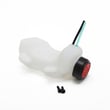


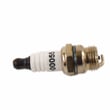

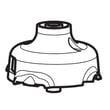
How to replace line on Craftsman gas trimmer?
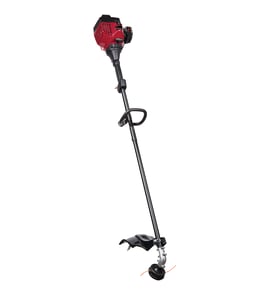
To replace the cutting line on a Craftsman CMXGTAMD25CC gas line trimmer, feed new trimmer line into the bump head and wind it evenly so about 5 inches of line sticks out on each side when you finish. Do not press the bump knob while turning.
Before you start (safety and setup)
- Shut the engine off and let the muffler cool completely.
- Disconnect the spark plug wire to prevent accidental starting.
- Wear gloves and eye protection; trimmer line can snap back.
- Clean grass and debris off the trimmer head so the line seats correctly.
Reloading the bump head (typical Easy Wind style)
- Cut a fresh piece of trimmer line (use the diameter recommended for your head; many Craftsman heads use 0.080 in or 0.095 in, but the exact size can vary by head).
- Align the head’s eyelets and feed the line through until both sides are equal length.
- Turn the spool or winding knob in the direction shown on the head.
- Do not push in on the bump knob while turning.
- Stop when roughly 5 in of line remains on each side.
If the line will not feed or keeps tangling
- Make sure you wound in the correct direction (arrow on the head).
- Keep tension on both line ends while winding.
- Replace line that is brittle, flattened, or fused from heat.
- Inspect the spool for cracks or melted spots.
- Check that the eyelets are not worn sharp (they can cut the line).
Quick checks: symptoms and likely causes
| What you notice | Most common cause | What to do |
|---|---|---|
| Line will not advance when bumping | Line wound too tight or crossed | Rewind with even tension |
| Line breaks constantly | Wrong diameter or old line | Use correct size, replace line |
| Head jams while winding | Debris in spool or damaged spool | Clean head, inspect spool |
Why it matters
Correctly loaded line reduces vibration, improves cutting performance, and prevents premature wear on the trimmer head, spool, and drive components.
For more cutting-line troubleshooting and head performance tips, see solving common problems with line trimmer cutting lines.
Last updated: January 2026
Which is better, .080 or .095 trimmer line?
For the Craftsman CMXGTAMD25CC gas line trimmer, .095 inch trimmer line is the better default choice because it matches the typical line size used on this class of gas trimmer and holds up better in weeds. Use .080 inch line when you want lighter cutting and easier feeding for routine edging.
Quick comparison: .080 vs .095
| Line size | Best for | What you’ll notice | Watch-outs |
|---|---|---|---|
| .080 in | Light grass, edging, detail trimming | Easier feeding, less drag on the engine | Breaks faster in thick weeds, more frequent reloading |
| .095 in | Mixed grass and weeds, heavier trimming | Better durability, faster knockdown, fewer breaks | More drag, may not feed well if your head is designed for thinner line |
How we recommend choosing for CMXGTAMD25CC
Start with .095 inch line for everyday trimming. Move to .080 inch only if your cutting head consistently has feed issues or you mainly do light edging.
- Choose .095 for thicker weeds, fence lines, and overgrown areas.
- Choose .080 for maintained lawns and precision trimming.
- If the line will not advance smoothly, reduce diameter before assuming the head is bad.
- If the line keeps snapping, increase diameter or switch to a more durable line shape.
- Keep line length correct; the guard’s cutter sets the proper length for safe RPM.
Line shape tips (round vs twisted vs serrated)
- Round: longest wear, best all-around.
- Twisted: often quieter, good for grass.
- Serrated or square: more aggressive on weeds, can wear faster on hard surfaces.
Why it matters
Line diameter affects cutting power, fuel use, and how reliably the bump-feed (or fixed-line head) advances line. Too thin wastes time with breakage; too thick can bog the engine and cause feed jams.
For performance issues that feel like “weak cutting” even with the right line, use how to tune up a grass line trimmer video to check the air filter, spark plug, and fuel condition.
Last updated: January 2026
How do I find the model number on my CMXGTAMD25CC?
The model number on your Craftsman gas line trimmer is printed on the product ID label; on CMXGTAMD25CC units, it’s typically on the shaft near the engine, on the rear housing, or close to the handle. Match that label exactly to ensure correct parts fit.
Where to look on a Craftsman gas line trimmer
Check these common label locations first:
- On the trimmer shaft tube near the engine (often above the fuel tank area)
- On the engine housing or rear shroud
- Near the throttle handle or trigger housing
- On the underside of the guard area (less common)
- On a sticker or metal plate with both model and serial information
What the label usually shows
Most ID labels include more than just the model number. Use the model number for parts lookup and the serial number for manufacturing details.
| Label item | What it’s used for | Example format |
|---|---|---|
| Model number | Finding correct diagrams and replacement parts | CMXGTAMD25CC |
| Serial number | Identifying production run | Letters and numbers |
| Engine family info | Service reference | Varies |
Tips to avoid ordering the wrong part
- Copy the model number exactly, including letters and numbers
- If the label is dirty, wipe it with a damp cloth and mild soap, then dry it
- If the sticker is scratched, use a flashlight at an angle to read the imprint
- Compare your trimmer’s assemblies to the diagrams before ordering (fuel system, cutting head, ignition)
Why it matters
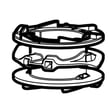
Craftsman trimmers can look similar across model families, but parts like a carburetor, fuel tank, or spool can differ by model. Using the exact CMXGTAMD25CC model number helps ensure the right fit for items like the mtd line trimmer carburetor 753-06190 or mtd line trimmer spool 731-12545A-1.
Last updated: March 2026