

How to force a Kenmore Elite washer to drain?
To force-drain a Kenmore washer model 11092578210, we first cut power, then manually remove water through the drain system and clear the most common blockage points (hose and pump). On this style of washer, a clogged pump or kinked drain hose is the usual reason it will not drain.
- Unplug the washer (or switch off the breaker) before touching hoses or the pump.
- Turn off both water supply valves to prevent accidental filling.
- Bail or siphon water from the tub into a bucket if the tub is full.
- Access the drain pump area and prepare towels and a shallow pan.
- Remove the drain hose from the standpipe or sink and lower it into a bucket to gravity-drain (if possible).
- If water will not flow, check the pump inlet and outlet for debris; the pump may need replacement such as the washer drain pump WP3363394.
Most no-drain problems come down to a restriction or a failed pump.
- Drain hose kinked, crushed, or frozen
- Standpipe or sink drain clogged (washer water has nowhere to go)
- Small item stuck at the pump inlet (sock, coin, lint)
- Pump impeller jammed or worn
- Lid switch not allowing drain/spin; check the switch 285671
| What you see | Most likely cause | What we do next |
|---|---|---|
| Hums but no water moves | Pump jammed | Inspect pump ports; replace pump if damaged |
| Drains slowly | Partial clog | Clear hose, standpipe, and pump inlet |
| Won’t drain and won’t spin | Lid switch issue | Test/replace lid switch |
| Drains only when hose is lowered | Standpipe restriction | Clear household drain/standpipe |
Forcing a drain the right way prevents flooding and protects the drive system. Running a washer that cannot drain can overheat the drain pump and leave clothes soaking wet at the end of the cycle.
Last updated: February 2026
How to read Kenmore washer model numbers?
Kenmore washer model numbers are read left to right: the first 3 digits identify the manufacturer behind the Kenmore brand, the next set of digits identifies the base design, and the final digits show the specific version or feature variation. For your Kenmore washer model 11092578210, the 110 prefix is the key starting point.
Most Kenmore washer model numbers follow this pattern:
- Prefix (first 3 digits): manufacturer code (who built it)
- Middle digits: base model platform or series
- Ending digits: engineering revision, color, feature package, or production variation
| Section | Example digits | What it tells you |
|---|---|---|
| Manufacturer prefix | 110 | Who built the washer for Kenmore |
| Base model | 92578 | Core design family |
| Variation/revision | 210 | Specific version details |
The prefix helps us match the washer to the correct parts design. Two Kenmore washers can look similar but use different drive systems, pumps, or timers depending on the prefix and series.
Common parts that vary by model family include:
- Drive system components (motor coupling, clutch, gear case)
- Drain components (pump, hoses)
- Agitation components (agitator, agitator dogs)
- Controls (timer, switches)
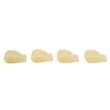
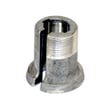
If you are troubleshooting agitation issues on this model family, a common wear item is the agitator dog 80040.
On most Kenmore top-load washers, the model number is typically found:
- Under the lid near the tub opening
- On the rim of the washer cabinet
- On the back panel
- Sometimes behind the control panel area
Reading the model number correctly prevents ordering the wrong Kenmore parts and speeds up diagnosis, especially for drive and drain problems where similar-looking washers use different internal assemblies.
Last updated: February 2026
What is an OE code?
An OE code means your Kenmore washer model 11092578210 is not draining the water out within the expected time. The most common causes are a drain restriction (hose or pump), a clogged pump, or a drain pump that is failing.
- Unplug the washer for safety.
- Make sure the drain hose is not kinked, crushed, or pushed too far down the standpipe.
- Confirm the standpipe or laundry sink is draining freely (a slow household drain can trigger OE).
- Run a Drain/Spin cycle with the tub empty to see if the symptom changes.
- Listen for the drain pump: a steady hum with little or no water flow usually points to a blockage.
If the hose and household drain are clear, the next most common fix is servicing or replacing the drain pump.
| Symptom during drain | Most likely cause | What usually fixes it |
|---|---|---|
| Hums but drains slowly | Debris in pump or hose | Clear obstruction; inspect pump inlet/outlet |
| Silent, no drain | Pump not running or no power to pump | Check wiring; replace pump if failed |
| Drains but leaves water | Partial clog or weak pump | Clear clog; replace pump if weak |
Model-matched part to consider:
When the washer cannot remove water, it may stop mid-cycle, leave clothes soaking wet, or prevent a high-speed spin. Fixing the drain issue protects the drive system and helps prevent leaks caused by water backing up.
Last updated: February 2026
What is the life expectancy of a Kenmore washer?
A Kenmore washer typically lasts 10 to 15 years. For your Kenmore model 11092578210, lifespan depends most on load size, how well the washer stays balanced, and whether wear items (like the drive system and drain pump) are replaced when symptoms start.
| Washer type | Typical life expectancy | What shortens life fastest |
|---|---|---|
| Top-load, direct-drive style (common in Kenmore 110 models) | 10 to 15 years | Overloading, chronic out-of-balance spinning |
| Front-load | 8 to 12 years | Over-sudsing, poor door gasket care |
- Keep loads medium sized; avoid packing the basket tight.
- Level the washer so it does not walk or bang during spin.
- Use the right amount of detergent; too much causes residue and extra strain.
- Check pockets and remove coins, screws, and small items before washing.
- Fix small problems early (slow drain, slipping agitation, burning smell) before they damage major components.
If the washer is otherwise in good shape, replacing a few high-wear parts often restores performance:
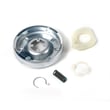
- Coupling 285753A (connects the motor to the transmission drive)
- Washer drain pump WP3363394 (moves water out during drain and spin)
- Clutch 285785 (helps the basket reach full spin speed)
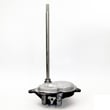
- Gear case 3360629 (drivetrain that powers agitation and spin)
- Agitates weakly or not at all, but the motor runs
- Spins slowly, leaves clothes wet, or smells hot during spin
- Leaks from underneath or drains very slowly
- Loud grinding, repeated banging, or metal-on-metal noises
A washer can run for years with minor wear, but ignoring early symptoms often turns a simple fix (like a coupling or pump) into a larger repair (like a gear case). Catching problems early usually costs less and reduces downtime.
Last updated: February 2026