


Are gas lawn mowers being phased out?
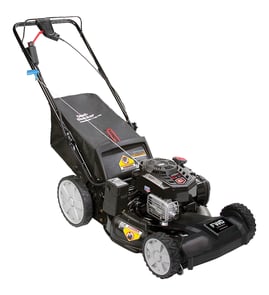
Gas walk-behind mowers like the MTD 12AGB2MP791 are not being “phased out” everywhere at once; what’s changing is that some states and cities are restricting the sale or use of certain gasoline-powered outdoor equipment, while many areas still allow gas mowers. The right choice depends on your local rules and how you use your mower.
What’s happening (and what it means for you)
Restrictions typically focus on new sales, commercial use, or government fleet purchases, and they vary by location. Even where rules exist, you can usually keep using an existing gas mower for years.
- Check your state and city regulations for outdoor power equipment
- Ask whether the rule targets sales, use, or commercial landscaping
- Keep your mower running cleanly with routine maintenance (air filter, blade, belt)
- Plan ahead if you expect to replace your mower soon
- If you switch to battery, compare runtime and battery cost before buying
Quick comparison: gas vs battery walk-behind mowers
| Feature | Gas mower | Battery mower |
|---|---|---|
| Runtime | As long as you have fuel | Limited by battery capacity |
| Maintenance | More (fuel system, air filter, oil) | Less (battery care, blade) |
| Power for thick grass | Typically stronger | Varies by model |
| Storage | Fuel stabilization matters | Battery storage/charging matters |
If you keep your gas mower, focus on these wear items
Good maintenance reduces smoke, hard starting, and poor cut quality.
- Replace a dirty air filter (common cause of rich running)
- Keep a sharp blade for cleaner cuts (mulching blades wear faster)
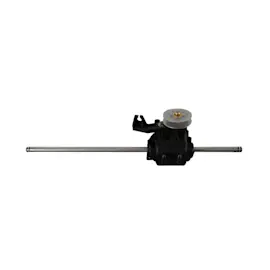
- Inspect the drive system if self-propel feels weak
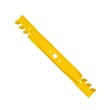
Helpful model-matched parts include the MTD lawn & garden equipment engine air filter 951-15245 and a correct-fit blade such as the lawn mower 21-in deck xtreme mulching blade 742p0741-x.
Why it matters
Local restrictions can affect what you can buy next, not necessarily what you can use today. Knowing your area’s rules helps you decide whether to maintain your current MTD 12AGB2MP791 or plan a battery transition.
Last updated: February 2026
How do I find MTD replacement parts?
For your MTD gas walk-behind mower model 12AGB2MP791, we find the right replacement parts by matching the exact model number first, then selecting the correct part by name and fit (wheel, blade, belt, cable, bagging parts). This prevents ordering look-alike parts that do not mount or route correctly.
Step-by-step: how we match the correct part
- Confirm the model number is 12AGB2MP791 on the mower’s ID label.
- Identify the system you’re repairing (drive, cutting, bagging, deck, controls).
- Match by part name and part number (not just size or a photo).
- If multiple versions exist, match mounting details (bolt pattern, hub style, cable ends).
- Replace worn fasteners when needed so the new part seats correctly.
Common replacement parts for model 12AGB2MP791
These are examples of parts we commonly see customers replace on this model:
| What you need | Example part on this model | What it fixes |
|---|---|---|
| Grass collection | Lawn mower grass bag 664P05322A | Torn bag, poor collection |
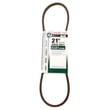
| Drive system | Ground drive belt (part number 954-04260) | Slipping or no self-propel |
| Cutting system | 21-in mulching blade (part number 942-0741-X) | Poor cut, vibration |
| Engine maintenance | Engine air filter (part number 951-15245) | Hard starting, rich running |
Quick checks before you order
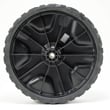
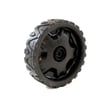
- Wheel issues: confirm wheel diameter and hub style; some wheels look identical but mount differently.
- Blade issues: confirm deck size (21-in) and center hole pattern; use the correct blade adapter if needed.
- Self-propel issues: inspect belt wear and cable tension before replacing parts.
Why it matters
Walk-behind mower parts are highly model-specific. Using the exact MTD 12AGB2MP791 model match helps ensure the blade, belt, wheels, and cables fit the deck and controls correctly the first time.
Last updated: February 2026
How do I tell what year my MTD mower is?
To identify the year on your MTD walk-behind mower model 12AGB2MP791, we use the model and serial number tag on the mower and decode the date information from that tag. On many MTD-built products, the serial number contains the build date (often as a date code). For worn tags, replacing missing hardware or controls can help you safely access and read the label.
Where to find the model and serial number
Most MTD walk-behind mowers place the ID tag in one of these spots:
- On the rear of the deck near the discharge opening
- On the back panel behind the engine
- Near the height adjustment area on the deck
- On the frame near the rear wheels
If the tag is dirty or faded, wipe it with a damp rag and mild soap; avoid harsh solvents that can remove printing.
How the “year” is typically encoded
MTD commonly uses the serial number (not just the model number) to indicate the manufacturing date. Depending on the tag format, you may see:
- A clearly printed manufacture date (month/day/year)
- A date code embedded in the serial number
- A week and year style code (for example, week 23 of a given year)
Quick decode checklist
- Write down the full model number and full serial number exactly as shown.
- Look for any label text such as “MFG DATE”, “DATE”, “DOM”, or “Manufactured”.
- If the serial begins with numbers that resemble a date (for example, MMDDYY or YYMMDD), treat that as the build date.
Common tag examples (what to look for)
| What you see on the tag | What it usually means | What to record |
|---|---|---|
| “MFG DATE: 06/15/2019” | Direct manufacture date | The full date |
| Serial includes “19235…” | Often year + day-of-year or week code | Entire serial |
| “DOM” followed by digits | Date of manufacture code | DOM digits |
Why it matters
Knowing the build year helps us match the correct blade, belt, wheel, and control cable revisions for your exact production run, especially when MTD updates deck and drive systems mid-series.
If you are already replacing wear items while you confirm the year, match parts by model number 12AGB2MP791; for example, the lawn mower grass bag 664P05322A is a model-matched bag option for this mower.
Last updated: February 2026
Is it cheaper to repair or replace a lawnmower?
For an MTD gas lawn mower model 12AGB2MP791, it’s cheaper to repair when the fix is a normal wear item (blade, belt, cable, wheel). Replace the mower when repair costs reach about 50% or more of the price of a comparable new mower, or when the engine has major internal damage.
Quick decision checklist
- Repair if the mower still starts reliably and cuts well after basic maintenance.
- Repair if the problem is a bolt-on part (blade, wheel, bag, cable, belt).
- Replace if the engine has low compression, heavy smoke, or metal noise.
- Replace if the deck is rusted through or cracked near key mounting points.
- Replace if multiple systems are failing at once (drive + deck + controls).
Common repairs that are usually worth it (12AGB2MP791)
These are typical, cost-effective fixes because they restore performance without major teardown:
| Symptom | Likely fix | Example part for this model |
|---|---|---|
| Poor cut, tearing grass | Replace blade | Lawn mower 21-in deck xtreme mulching blade 742p0741-x |
| Self-propel won’t pull | Replace drive belt | Lawn & garden equipment belt 954-04260 |
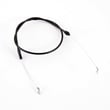
| Drive won’t engage smoothly | Replace drive control cable | Lawn mower drive control cable 946-04655A |
| Bagging issues | Replace bag | Lawn mower grass bag 664P05322A |
When replacement makes more sense
We recommend replacing the mower when you’re facing high-cost, high-risk repairs that don’t reliably extend life:
- Major engine failure (seized crankshaft, thrown rod, severe oil consumption)
- Repeated carburetion/fuel issues after cleaning and fresh fuel
- Structural deck damage (cracks, severe corrosion, bent blade area)
- Repair estimate approaches half the cost of a new mower with similar features
Why it matters
A walk-behind mower’s best value comes from predictable wear-part maintenance. Once the engine or deck becomes the limiting factor, money spent on parts often won’t restore long-term reliability.
Last updated: February 2026
Should I use 87 or 91 gas for lawn mower?
For the MTD 12AGB2MP791 gas lawn mower, we recommend using fresh regular unleaded gasoline (87 octane) for normal mowing. Using 91 octane does not add power or improve reliability in typical small engines; fuel freshness and correct ethanol content matter more than octane.
What to use (and what to avoid)
- Use: 87 octane, fresh, clean unleaded gasoline
- Avoid: old gas (more than 30 days in the tank), contaminated fuel, and high-ethanol blends
- Best practice: choose fuel with 10% ethanol or less (E10) when available
- Do not mix: never mix oil into the gas unless your mower is a 2-cycle engine (most walk-behind mowers are 4-cycle)
Why 91 octane usually is not better
Octane is mainly about preventing knock in high-compression engines. Most walk-behind mower engines are designed to run correctly on regular fuel, so higher octane typically does not improve starting, cutting performance, or engine life.
Quick fuel checklist for hard starting or rough running
If your mower starts hard, surges, or stalls, fuel quality is a top suspect. Check these items first:
- Drain and replace old fuel with fresh 87 octane
- Inspect the air filter; a clogged filter can mimic fuel problems (see engine air filter 951-15245)
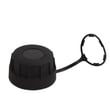
- Make sure the fuel cap vents properly; a bad cap can restrict flow (see fuel tank cap 951-15255)
- Confirm the blade spins freely and the deck is clear of packed grass
- If equipped with a drive system, check for belt wear or slipping (see lawn & garden equipment belt 954-04260)
When fuel choice actually matters
| Situation | What we use | Why |
|---|---|---|
| Normal mowing | 87 octane | Matches typical small-engine requirements |
| Storage coming up | Fresh 87 octane (run briefly) | Reduces varnish and starting issues |
| Ethanol concerns | E10 or less | Helps protect fuel system components |
Why it matters
Using the right fuel helps prevent carburetor varnish, poor starting, and surging. In most cases, fresh 87 octane and basic maintenance (air filter, fuel cap venting, clean deck) do more for performance than stepping up to 91.
Last updated: February 2026