Owner’s manual


What is the life expectancy of a Whirlpool dryer?
A Whirlpool electric dryer like model WED5010LW1 typically lasts about 10 years with normal household use. With consistent venting and lint maintenance, many dryers reach 12 to 15 years before major repairs (motor, drum support, or heat system) become more likely.
What affects lifespan the most
- Vent airflow: crushed, long, or clogged venting makes the dryer run hotter and longer
- Lint control: a clogged lint screen or lint buildup inside the cabinet increases heat stress
- Load size and frequency: heavy weekly volume wears belts, rollers, and the drive motor faster
- Installation quality: correct electrical connection and stable leveling reduce vibration and wear
- Heat system cycling: frequent overheating can shorten the life of thermostats and fuses
For model-specific maintenance intervals and venting requirements, follow the WED5010LW1 owner’s manual.
Typical lifespan by usage pattern
| Usage pattern | What we commonly see | What usually wears first |
|---|---|---|
| Light (1 to 3 loads/week) | 12 to 15 years | Belt, drum support parts |
| Average (4 to 7 loads/week) | About 10 years | Belt, rollers, motor |
| Heavy (8+ loads/week) | 7 to 10 years | Heat-related parts, motor, drum support |
Maintenance that helps your dryer last longer
- Clean the lint screen every load
- Clean the vent system end-to-end about every 2 years (more often with heavy use)
- Keep the area around the dryer clear so intake airflow is not blocked
- Avoid overloading; it strains the belt and drum support system
- If drying times increase, correct airflow issues before continuing regular use
Parts that commonly extend service life
If your WED5010LW1 starts squealing, thumping, or the drum stops turning, these are common wear items:
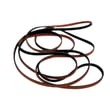
- Belt 341241 (drives the drum)
- Drum support components (often serviced as a kit on many Whirlpool designs)
Why it matters
A dryer that is forced to run with poor airflow or heavy lint buildup often takes longer to dry, uses more electricity, and runs hotter. That combination accelerates wear on the drive system and heat safety components.
Last updated: January 2026
What brand of dryer has the least problems?
There is no model-specific way to name one “least problems” dryer brand based on the Whirlpool WED5010LW1 documentation; the owner’s manual focuses on safe use, installation, and maintenance, not brand reliability rankings. In practice, correct venting and routine lint removal prevent many of the most common dryer issues.
What we can say for Whirlpool WED5010LW1
The WED5010LW1 is a Whirlpool electric dryer. The most reliable results typically come from following the airflow, venting, and cleaning guidance in the WED5010LW1 owner’s manual.
Key maintenance points called out for this model include:
- Clean the lint screen before or after each load.
- Use 4-inch heavy metal venting (avoid plastic and foil vent).
- Keep the vent path as short and straight as possible.
- Remove lint from the exhaust vent periodically (the manual notes every 2 years, or more often with heavy use).
- Keep the area around the exhaust opening clear of lint, dust, and debris.
If you are choosing a brand: what to compare
Instead of relying on a single “least problems” claim, we recommend comparing factors that directly affect service calls:
- Warranty terms and local service availability
- Dryer type (electric vs gas), cycle features, and controls
- Venting setup requirements for your home
- Parts availability for common wear items
- Ease of routine cleaning (lint screen access, vent access)
Common “problem” symptoms and likely causes
| Symptom | Often related to | First thing to check |
|---|---|---|
| Long dry times | Restricted airflow | Lint screen and venting |
| No heat | Heating circuit or safety devices | Airflow and power supply |
| Drum not turning | Drive system wear | Belt and rollers |
| Overheating or shutdowns | Vent restriction | Vent material and clogs |
If your dryer is not tumbling, a worn belt is a common repair item; the compatible replacement for this model is the belt 341241.
Why it matters
Most dryer “problems” are airflow-related; poor venting increases drying time, energy use, and heat stress on components. Keeping the WED5010LW1 vented correctly and lint-free is one of the best ways to reduce breakdowns regardless of brand.
Last updated: January 2026
What is the most common problem with whirlpool dryers?
For Whirlpool electric dryers like model WED5010LW1, the most common issue we see is the dryer will not start. Many no-start problems are caused by a simple power, door, or control setting issue, but a failed safety or start-circuit part can also stop operation.
Quick checks first (no parts needed)
Start with these basics before any disassembly:
- Confirm the dryer has full power; electric dryers need a proper 240V supply, and a tripped breaker can leave the dryer dead.
- Make sure the door closes fully and latches.
- Press and hold Start (some cycles require a longer press).
- Check for Control Lock or similar control features being enabled.
- Clean the lint screen and verify strong airflow at the outside vent hood.
For model-specific safety, venting, and airflow guidance, use the WED5010LW1 owner's manual.
Parts commonly involved in a “won’t start” complaint
If the checks above look good, these are common components to test next on many Whirlpool electric dryers:
- Door switch (dryer thinks the door is open)
- Thermal fuse or high-limit safety device (opens if overheating occurs)
- Drive motor or motor circuit (may hum or stop intermittently)
- Electronic control (less common than door switch or safety devices)
Examples of compatible parts for WED5010LW1
| Symptom | What to check | Example compatible part |
|---|---|---|
| No response when pressing Start, door shuts but may not be “seen” as closed | Door switch circuit | Dryer door switch WP3406107 |
| Dryer overheated previously, then won’t run | High-limit safety device | Dryer high-limit thermostat WP3977767 |
Why it matters
A no-start condition is sometimes the dryer protecting itself from overheating caused by restricted venting or lint buildup. Fixing airflow issues helps prevent repeat shutdowns and improves drying time and energy use.
Last updated: January 2026