Owner’s manual
 Error Codes


Is GE PFE28KYNGFS a good refrigerator?
Yes. The GE PFE28KYNGFS is a solid, feature-forward GE bottom-mount (French door) refrigerator when it is installed level, doors seal well, and temperatures are kept at the recommended setpoints (37°F fresh food, 0°F freezer). We use the PFE28KYNGFS owner's manual for setup, controls, and maintenance.
What “good” looks like on this model
A “good” refrigerator holds stable temperatures, maintains airflow, and keeps the ice and water system dependable.
- Fresh food stays near 37°F after temperatures stabilize
- Freezer stays near 0°F
- Food packages do not block air vents (prevents warm spots)
- Doors close fully; the door alarm is not constantly sounding
- Water flow stays strong with on-time filter changes
Quick performance checklist
Use these steps to judge day-to-day performance:
- Allow 24 hours after a temperature change for stabilization
- Keep items away from the air tower vents to maintain airflow
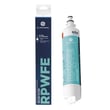
- Replace the RPWFE water filter every 6 months, or sooner if flow drops
- If you hear frequent beeping, check door closure and gasket contact
Pros and tradeoffs (typical expectations)
| Area | Typically good | Possible drawback |
|---|---|---|
| Temperature control | Recommended presets are a strong baseline | Varies with door openings and blocked vents |
| Storage | Easy access to fresh food | Door bins can run warmer than center shelves |
| Water and ice | Convenient when maintained | Flow drops when the filter is overdue |
Why it matters
Stable temperatures and good airflow protect food quality and safety; on PFE28KYNGFS, staying near the recommended setpoints also helps reduce frosting and keeps dispenser performance consistent.
Helpful DIY guides we use
- How to reset the door alarm on a GE refrigerator
- How to replace the water filter in a GE refrigerator
For diagrams and replacement items, use the model parts list first; you can also search by model number on Sears PartsDirect.
Last updated: February 2026
Is a top mount or bottom mount fridge better?
A bottom-mount refrigerator like the GE PFE28KYNGFS is better when you want fresh-food items at eye level and more freezer organization; a top-mount is better when you want the lowest upfront cost and the simplest layout. For most households, bottom-mount wins on day-to-day convenience.
Quick comparison
| Feature | Top-mount (freezer on top) | Bottom-mount (freezer drawer) |
|---|---|---|
| Fresh-food access | More bending | Easier access at eye level |
| Freezer organization | Basic shelf/bin | Better drawer and basket access |
| Space for wide items | Often tighter | Often easier to fit trays and platters |
| Typical cost | Lower | Higher |
| Energy use | Often slightly lower | Often slightly higher |
How to choose for your kitchen and habits
- Choose bottom-mount if you use the refrigerator section most and want less bending for daily items.
- Choose top-mount if you want a simpler design and usually store more in the freezer than the fresh-food section.
- If you entertain often, bottom-mount layouts typically make it easier to organize deli trays, produce, and beverages.
- If you have limited doorway clearance, check the depth and door-removal steps in the PFE28KYNGFS owner's manual before moving any refrigerator into place.
- If door alignment and sealing matter to you (they should), bottom-mount French door styles can be adjusted and maintained; keeping doors aligned helps temperatures stay stable.
Why it matters
The “better” choice is the one that matches how you actually use the appliance. Most people open the fresh-food doors far more than the freezer, so putting the refrigerator compartment at eye level reduces bending, speeds up meal prep, and helps you keep food organized and visible.
Parts and support
For model-specific diagrams and replacement components for the GE PFE28KYNGFS, start with the parts list for this model, or search by model number on Sears PartsDirect.
Last updated: February 2026
What is the life expectancy of a GE refrigerator?
A GE refrigerator like model PFE28KYNGFS has a typical life expectancy of 12 to 15 years with normal household use. Routine care (clean condenser coils, good door sealing, and correct temperatures) is what keeps you at the high end of that range.
Typical lifespan (quick guide)
| What you have | Typical life expectancy | What most often shortens it |
|---|---|---|
| Full-size GE refrigerator (standard home use) | 12 to 15 years | Dirty coils, restricted airflow, gasket leaks |
| Heavy-use household (frequent openings, large loads) | 10 to 13 years | Longer compressor run time, ice maker wear |
| Well-maintained unit | 15 years | Fewer overheating and moisture issues |
Maintenance that extends refrigerator life
These are the highest-impact steps we recommend for GE bottom-mount and French door designs:
- Clean condenser coils regularly to prevent compressor overheating.
- Keep airflow clear around the cabinet and interior vents.
- Check door gaskets for gaps, tears, or sticky spots that prevent a tight seal.
- Keep temperatures steady (avoid frequent setting changes).
- Replace the water filter on schedule; the PFE28KYNGFS manual calls for about every 6 months, or sooner if flow drops.
For model-specific care intervals and locations (coils, filter housing, alarms), use the PFE28KYNGFS owner's manual.
Signs the refrigerator is nearing a major repair decision
- Fridge or freezer temperatures drift even after adjustments
- Compressor runs nearly all the time
- Repeated frost buildup or warm spots from poor airflow
- Water dispenser flow stays weak even after a filter change
- Recurring error codes
A fast way to narrow down what is failing is to look up the code and symptom pattern in GE refrigerator error codes.
Why it matters
Most early refrigerator failures come from heat and moisture stress. Clean coils and a tight door seal reduce run time, protect the sealed system (compressor, condenser, evaporator), and help food stay at safe temperatures.
If you decide to repair, use model number PFE28KYNGFS to match parts accurately; you can also search by model on Sears PartsDirect.
Last updated: February 2026
What is the most common problem with GE profile refrigerators?
The most common problems we see on GE Profile refrigerators like model PFE28KYNGFS are ice maker and water dispenser issues, followed closely by temperature and airflow problems (fresh food too warm, freezer too warm, or uneven cooling). Use the PFE28KYNGFS owner's manual to confirm feature settings and alarm meanings.
Most common issues (and what they usually point to)
- Ice maker not making ice or slow ice production: water supply restriction, clogged water filter, frozen fill tube, or a weak water inlet valve.
- Water dispenser slow or not dispensing: air in the line, a restricted filter, low house water pressure, or a failing inlet valve.
- Fresh food section warm but freezer cold: evaporator fan problem, blocked vents, or frost buildup from a defrost issue.
- Freezer warm or soft ice cream: condenser airflow problem (dirty coils), door not sealing, or sealed system performance concerns.
- Door alarm beeping: door not fully closing, misaligned doors, or a gasket not sealing.
Quick checks we recommend first
- Check temperatures: setpoint is typically around 37°F for fresh food and 0°F for freezer.
- Confirm doors seal and close: look for gaps, torn gasket areas, or a door that “springs” open.
- Inspect airflow: do not block return vents with food packages.
- If you have an ice/water issue: replace the filter on schedule and purge air after filter changes.
- If there is an alarm: reset and retest after confirming the door is fully shut.
Symptom-to-likely-cause table
| Symptom | Most likely cause | Best first action |
|---|---|---|
| No ice | Filter restriction, inlet valve, ice maker issue | Replace filter, verify water supply, then test fill |
| Warm fridge, cold freezer | Evaporator fan or airflow blockage | Listen for fan, clear vents, check for frost |
| Door alarm keeps sounding | Door not sealing or not closing | Inspect gasket, align doors, reset alarm |
| Slow water dispensing | Air in line or restricted filter | Purge dispenser, replace filter |
Why it matters
Ice maker, dispenser, and cooling complaints often share the same root causes: restricted water flow, poor airflow, or sensor/control inputs. Catching a door seal or airflow problem early prevents temperature swings that lead to food spoilage and heavy frost.
Helpful DIY guides
- How to reset the door alarm on a GE refrigerator
- GE refrigerator error codes
- How to replace the water filter in a GE refrigerator
For model-specific replacement parts, start with the parts list for PFE28KYNGFS, or search by model number on Sears PartsDirect.
Last updated: February 2026