Owner’s manual

Is a 70-pint dehumidifier good?
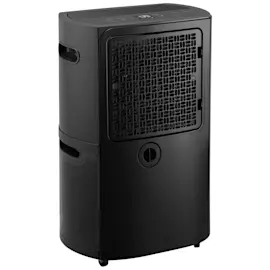
Yes. A 70-pint dehumidifier is a strong, “whole-basement” size for most homes; it’s a good choice when you have a large, damp area, higher humidity, or frequent water intrusion. For your GE APEL70LTL1, use the owner's manual to confirm recommended room conditions and drainage setup.
When a 70-pint unit is the right fit
A 70-pint class dehumidifier is typically the best match when you need faster moisture removal and longer run times.
- Large basements and finished lower levels
- Spaces that stay above about 60% relative humidity
- Musty odors, damp walls, or visible condensation
- Seasonal humidity spikes (spring and summer)
- You want fewer bucket-emptying cycles (or you plan to use a drain hose)
Quick sizing guide (typical home use)
Use this as a practical rule-of-thumb; your actual need depends on humidity level, temperature, and air leakage.
| Pint class | Best for (typical) | What you’ll notice |
|---|---|---|
| 30-pint | Small rooms, mild dampness | Slower drying, fewer gallons removed |
| 50-pint | Medium basements, moderate dampness | Steadier humidity control |
| 70-pint | Large basements, heavy dampness | Faster pull-down, longer cycles |
Why it matters
If the dehumidifier is undersized, it runs constantly and still struggles to reach your humidity setpoint. If it’s oversized, it cycles more often, which can be noisier and less comfortable in living spaces.
Tips to get the best performance from your APEL70LTL1
- Set a realistic target: 45% to 55% RH is a common comfort range.
- Keep doors and windows closed while it’s running.
- Clean the air filter regularly; restricted airflow reduces moisture removal.
- Make sure the bucket seats fully; a mis-seated bucket can stop collection.
- If the “bucket full” function acts up, inspect the float; the dehumidifier water bucket float WK11X10007 controls the full-bucket shutoff.
Last updated: February 2026
How many square feet will a 70-pint dehumidifier take care of?
A 70-pint dehumidifier (like the GE APEL70LTL1) typically handles about 1,800 to 4,500 sq. ft. Coverage depends most on how damp the space is, how warm it stays, and how well it’s sealed; wetter basements land on the lower end, drier living areas on the higher end. See the APEL70LTL1 owner's manual for the recommended application and operating conditions.
Quick sizing guide (real-world)
Use these ranges to match capacity to conditions:
- Very damp basement or crawlspace: ~1,800 to 2,200 sq. ft.
- Damp finished basement: ~2,200 to 3,000 sq. ft.
- Average living space (moderate humidity): ~3,000 to 4,500 sq. ft.
- Multiple rooms: plan on open doors and good airflow between areas
- Cool spaces (below ~65°F): expect reduced water removal and smaller effective coverage
What changes the square-foot rating most
A “70-pint” rating is based on lab conditions; in homes, these factors drive performance:
- Humidity level (higher humidity = more water removed, but coverage feels smaller)
- Temperature (cooler air reduces moisture removal)
- Air leaks (unsealed basements pull in humid outdoor air)
- Airflow (blocked intake/exhaust reduces capacity)
- Drain setup (bucket use vs. continuous drain affects run time and convenience)
Coverage vs. conditions (simple comparison)
| Space condition | Typical effective coverage for a 70-pint unit | What to do for best results |
|---|---|---|
| Very damp, musty basement | 1,800 to 2,200 sq. ft. | Seal leaks, keep doors open, clean filter |
| Moderately damp area | 2,200 to 3,000 sq. ft. | Improve airflow, set RH 45% to 55% |
| Light humidity control | 3,000 to 4,500 sq. ft. | Run on auto, keep vents clear |
Why it matters
Right-sizing prevents short cycling (too large) and nonstop running (too small). It also helps you hit a stable indoor relative humidity target, usually 45% to 55%, which reduces odors and condensation.
Related maintenance tip
If the bucket-full light stays on or the unit shuts off early, the bucket float can be the cause. For this model, the Dehumidifier Water Bucket Float is dehumidifier water bucket float WK11X10007.
Last updated: February 2026
How many hours a day should you run a dehumidifier?
For your GE APEL70LTL1 dehumidifier, run it as long as needed to maintain your target humidity, typically 30% to 50% RH. Many homes see about 8 to 12 hours per day, but damp basements and crawlspaces often require much longer run times with normal on and off cycling.
Practical run-time guide
- Normal living areas: 6 to 12 hours/day
- Humid basements: 10 to 20 hours/day
- After water intrusion: near-continuous until RH stabilizes
- Chronically damp spaces: long run times are normal
- Cooler rooms (below about 65°F): longer run times and less water collected
Settings and habits that reduce run time
- Start at 45% RH, then adjust for comfort and odor control
- Keep doors and windows closed while running
- Maintain clear airflow at the intake and exhaust
- Clean the air filter regularly
- Empty the bucket before it overfills; confirm it seats fully
Quick reference table
| Goal | Suggested RH | Typical behavior |
|---|---|---|
| Comfort and musty-odor control | 45% to 50% | Cycles through the day |
| Damp-area control | 35% to 45% | Longer run times |
| Energy savings | 50% | Shorter run times |
If it runs constantly or shuts off early
- Constant running: room is too large, humidity is very high, or moisture is entering (leaks, seepage)
- Short cycling or “bucket full” issues: bucket not seated or float sticking; the dehumidifier water bucket float WK11X10007 helps signal bucket level
Why it matters
Running to a humidity target prevents musty odors and moisture damage without over-drying the space.
For control settings and operating details, use the owner's manual.
Last updated: February 2026