Error Codes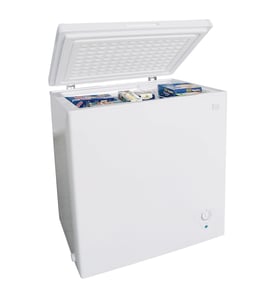



Where is the model number on a Kenmore chest freezer?
On a Kenmore chest freezer like model 2539108180, the model number is printed on a rating label that’s usually inside the cabinet near the top rim, or on an exterior side or back panel. We use that model number to match the correct Kenmore parts.
Common places to check
Look for a paper or foil rating label in these spots:
- Inside the freezer, on an inner side wall
- Inside the freezer, near the top edge (rim) where the lid seals
- On the outside of the cabinet, on a side panel
- On the outside of the cabinet, on the back panel near the power cord
- Near the hinge area under the lid (less common)
What the label looks like
The label typically includes the model number and other identifiers.
| What you may see | What it’s used for |
|---|---|
| Model number (example: 2539108180) | Finding the correct parts list and diagrams |
| Serial number | Identifying production run and age |
| Electrical ratings (volts/amps) | Verifying power requirements |
Tips to find it faster
- Use a flashlight and check along the top rim inside the cabinet first.
- Wipe frost, dust, or condensation off the surface so the print is readable.
- If the label is scratched, take a photo and zoom in to read the characters.
Why it matters
Kenmore model numbers can look similar across different chest freezers, but small differences change which lid parts, temperature controls, and electrical components fit. Using the exact model number helps you avoid ordering the wrong part.
If you need a replacement key for the lock on this model, we list the compatible key 297147700 for Kenmore 2539108180.
Last updated: February 2026
How to reset freezer sensor?
On Kenmore chest freezer model 2539108180, a “sensor” reset is usually a power reset: unplug the freezer for 30 seconds, then plug it back in and confirm the lid is fully closed and the freezer is cooling normally.
Quick reset steps (safe and effective)
- Make sure the lid is fully closed and sealing all the way around.
- Unplug the freezer (or switch off the breaker).
- Wait 30 seconds.
- Plug back in (or turn breaker on).
- Wait 10 to 15 minutes to see if the alarm/light behavior changes.
- If you have a temperature alarm, confirm food is freezing again.
If the alarm or light comes back
A recurring alarm or warning light is usually caused by a real condition (warm temperature, lid not sealing, or a control issue), not a “memory” that needs clearing.
Common checks:
- Warm load: recently added unfrozen food can keep temps high for hours.
- Lid seal: frost, debris, or a warped lid can leak air.
- Room conditions: very hot garage temps can slow pull-down.
- Control problem: a failing thermostat/control can misread temperature.
Parts that relate to temperature control
If the freezer is not regulating temperature correctly after a reset, these model-matched parts are commonly involved:
| Symptom | What it often points to | Model-matched part to consider |
|---|---|---|
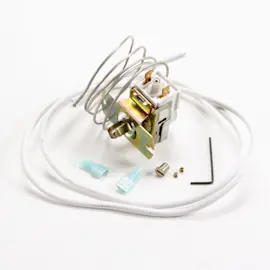
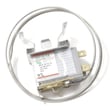
| Freezer runs too warm or too cold | Temperature control issue | Cold control 5304496560 |
| Intermittent power to controls/lights | Wiring connection issue | Harness 5303206808 |
| Warning light behavior is abnormal | Indicator circuit/light issue | Signal light 3200895 |
Why it matters
Resetting power clears minor control glitches, but it also helps you confirm whether the issue is a one-time event or an ongoing cooling or electrical problem that needs a part replacement.
Last updated: February 2026
What is the cubic foot of my Kenmore refrigerator model 2539108180?
Kenmore model 2539108180 is a chest freezer, not a refrigerator; its exact cubic-foot capacity depends on the specific product data for that freezer series. For most Kenmore chest freezers in this style, capacity commonly falls in the 10 to 20 cu. ft. range; use your model’s rating label to confirm the exact number.
How to find the exact cubic feet on your freezer
Check the rating label (data plate). On chest freezers, it’s commonly located:
- On the inside wall near the top rim
- On the back exterior panel
- Near the hinge area under the lid
- Occasionally behind the front lower panel
Look for wording like “Capacity”, “Total volume”, or “cu. ft.”.
Quick capacity estimate (if the label is missing)
If you can measure the usable interior (not the outside cabinet), you can estimate capacity.
- Measure interior length, width, height in inches
- Multiply to get cubic inches
- Divide by 1,728 to convert to cubic feet
Conversion table
| What you have | Convert to | How |
|---|---|---|
| Interior volume (in³) | Cubic feet (ft³) | in³ ÷ 1,728 |
| Cubic feet (ft³) | Cubic inches (in³) | ft³ × 1,728 |
Why it matters
Knowing the correct cubic feet helps us match parts and performance expectations, especially for temperature control and lid sealing. If your freezer is not holding temperature, a failing thermostat can cause warm temps or over-freezing.
Parts that relate to temperature control and lid security
If you’re troubleshooting cooling or access issues on model 2539108180, these model-matched parts are commonly involved:
- Cold control 5304496560 (thermostat that cycles the compressor)
- Lock 5303284902 (lid lock assembly)
- Key 297147700 (replacement key for the lock)
Last updated: February 2026
How often should you defrost a chest freezer?
For a Kenmore chest freezer model 2539108180, we recommend defrosting at least once a year, and sooner anytime frost buildup reaches about 1/4 inch thick. More frequent defrosting helps the freezer run efficiently and keeps storage space from shrinking.
Best timing guidelines
- Defrost yearly as routine maintenance
- Defrost immediately if frost is around 1/4 inch thick or more
- Defrost more often if you notice:
- The lid is harder to close or seal
- Freezer temperatures swing more than usual
- The compressor seems to run longer than normal
- Interior space is being reduced by ice
Quick defrost checklist (safe and effective)
- Move food to a cooler or another freezer
- Unplug the freezer
- Open the lid and let ice melt naturally (use towels to catch water)
- Never chip ice with sharp tools; you can puncture the liner or refrigerant tubing
- Dry the interior completely before restarting
What to check if frost returns quickly
Fast frost buildup usually points to warm, moist air getting inside.
| What to check | What it can cause | What to do |
|---|---|---|
| Lid not fully closing | Constant moisture entry | Re-level the freezer, rearrange items near the rim |
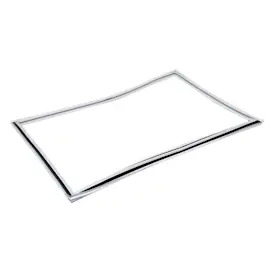
| Dirty or damaged lid seal area | Air leaks | Clean the sealing surfaces; inspect for gaps |
| Frequent openings | Moisture load increases | Consolidate trips; close lid promptly |
Why it matters
Heavy frost acts like insulation on the inside surfaces, which reduces cooling efficiency, increases run time, and can shorten the life of electrical parts such as the thermostat (cold control).
Related parts that may help
If temperature control seems inconsistent after defrosting, the thermostat may be a factor. For this model, we list the cold control 5304496560.
Last updated: February 2026
Can a chest freezer be repaired?
Yes. A Kenmore chest freezer like model 2539108180 can usually be repaired when the problem is isolated to a serviceable part (thermostat, wiring, lid/lock hardware, or indicator light) rather than a sealed-system failure. Many common issues are fixable with basic troubleshooting and the right replacement part.
What problems are commonly repairable?
- Freezer will not start or cycles incorrectly (often a temperature control issue)
- Power light is out but the freezer still runs (indicator light issue)
- Lid will not lock or key is missing (lock and key hardware)
- Intermittent operation from a loose or damaged wire connection (harness or grommet)
- Lid/trim hardware is loose (clips and screws)
Quick checks before replacing parts
- Confirm the outlet has power and the cord is firmly seated.
- Set the temperature control colder and wait 20 to 30 minutes for a response.
- Listen for the compressor hum and check for normal vibration.
- Inspect the lid seal area for gaps, damage, or misalignment.
- If you are comfortable testing, use a meter to check continuity on suspect electrical parts.
Parts that often solve common symptoms (model 2539108180)
| Symptom | Likely part to check | Example part on this model |
|---|---|---|
| Temperature swings, won’t regulate | Cold control (thermostat) | Cold control 5304496560 |
| No indicator light | Signal light | Signal light 3200895 |
| Lid won’t lock, key missing | Lock or key | Lock 5303284902, key 297147700 |
| Intermittent power, damaged wiring | Harness or wire pass-through | Harness 5303206808, grommet 08016808 |
When repair is less practical
Some failures are more complex and typically require a sealed-system diagnosis (compressor, refrigerant leak, internal restriction). If the freezer runs constantly but never gets cold, or you hear repeated clicking with no sustained run, professional service is usually the next step.
Why it matters
Repairing a chest freezer early (especially temperature control, lid sealing, and wiring issues) helps prevent food loss, reduces run time, and avoids secondary damage to electrical components.
Last updated: February 2026