Owner’s manual
 View engine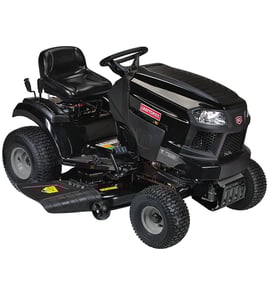


What model number is the Craftsman 42 riding mower?
For the Craftsman front-engine lawn tractor with a 42-inch mower deck shown here, the model number is 917.270910 (often written without the dot as 917270910). You can confirm it on the model label and in the owner's manual.
Where to find the model number on the tractor
Check these common locations first (wipe dirt and grass off the label so it is readable):
- Under the seat on the fender pan or seat bracket area
- On the frame rail near the engine compartment
- Near the rear axle or transaxle area
- Inside the hood area on the chassis
- On the first pages of the manual (model identification section)
Why the exact model number matters
Craftsman tractors can share the same deck size (42-inch) but use different belts, blades, mandrel parts, and steering components. Using the exact model number helps us match the correct parts diagrams and avoid ordering the wrong replacement.
Quick check: deck size vs. model number
| What you know | What it tells you | What to use for parts |
|---|---|---|
| “42-inch deck” | Deck cutting width only | Not enough by itself |
| Model number 917.270910 | Exact tractor configuration | Best identifier |
| Model number 917270910 | Same model, alternate formatting | Also acceptable |
Parts examples that commonly depend on the model
If you are shopping for maintenance or repair parts, these are model-specific on many 42-inch Craftsman tractors:
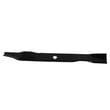
- Blades (example: husqvarna lawn tractor mulching blade, 21-in 532134149)
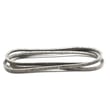
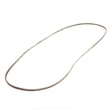
- Ground drive belt (example: v-belt 532138255)
- Mandrel components (example: husqvarna lawn tractor mandrel assembly 532130794)
- Wheels and tires (example: hub cap 532104757)
Why it matters
The model number is the fastest way to get the right diagrams, the right part numbers, and the right fit the first time, especially for deck drive, mandrel, and transaxle related repairs.
Last updated: February 2026
What year was Craftsman 917270910 made?
The Craftsman lawn tractor model 917270910 was made across multiple production runs, not as a single one-year model. We use the tractor’s serial number/date code on the ID plate (commonly under the seat or on the frame) to match your exact build year; the 917270910 owner's manual confirms the model identification but not a single manufacture year.
How to find the exact year on your tractor
Check these common locations for the model and serial label:
- Under the seat pan (lift the seat and look on the fender pan area)
- On the frame rail near the engine
- Near the rear hitch plate or drawbar area
- Under the hood on the chassis (less common)
- On a decal near the footrest area
Write down:
- Model number: 917270910
- Serial number (all digits)
- Any date code printed near the serial
What the manual tells us (and what it does not)
The manual identifies this unit as a Craftsman 19.5 HP, electric start, 42-inch mower, 6-speed transaxle lawn tractor and lists repair parts by model number 917.270910. That confirms you have the correct model family, but the build year is determined from the serial/date code on your specific tractor.
Quick reference: model info vs. build year
| Item | What it confirms | Where to get it |
|---|---|---|
| Model number (917270910) | Correct parts and diagrams | ID plate; 917270910 owner's manual |
| Serial number/date code | Exact manufacture year | ID plate on tractor |
| Deck size (42-inch) | Mower deck configuration | Manual specs and deck labeling |
Why it matters
The exact year affects small but important fit details, especially for wear items like belts, steering parts, and deck hardware. For example, if you are replacing a ground drive belt, matching by model and serial helps ensure the correct belt length and routing; a common replacement on this model is the v-belt 532138255.
Last updated: February 2026
How do I troubleshoot my 917270910?
For Craftsman model 917270910, start troubleshooting by matching the symptom (no crank, no lights, poor cutting, or drive issues) to the correct system: electrical, mower deck, steering, or ground drive. Use the wiring schematic and parts diagrams in the 917270910 owner's manual to pinpoint checks in the right order.
Quick safety and setup
- Park on level ground, set parking brake, and remove the key.
- Disconnect the spark plug wire before working near blades or belts.
- Let the engine cool before inspecting wiring, pulleys, or the transaxle.
- Keep hands clear of rotating parts; never test the deck with guards removed.
Symptom-based checks (most common)
1) Engine will not crank
- Confirm the clutch or brake pedal is fully depressed (interlock must be engaged).
- Check battery terminals for corrosion and tightness.
- Inspect the fuse and wiring connections shown in the electrical section of the manual.
- If lights are dim at idle, that is normal on this model (brightness changes with engine speed).
2) No headlights or intermittent lights
This tractor uses a special alternator lighting source; lights are not powered directly by the battery.
- Increase engine speed to verify brightness change.
- Check bulb and light switch.
- Check wiring and connectors; reinstall any wiring insulated cups if removed.
3) Poor cut quality or deck vibration
- Inspect blades for damage and correct installation.
- Check for debris buildup around mandrels and open vent holes.
- If you suspect a worn spindle area, inspect the mandrel components; common wear items include the husqvarna lawn tractor mandrel assembly 532130794 and the lawn tractor mandrel pulley 532173436.
4) Tractor will not move or drive feels weak
- Inspect the drive belt for glazing, cracking, or stretching.
- Check idler pulleys and springs for binding or loss of tension.
What to check first (fast triage)
| Symptom | Start with | Next check |
|---|---|---|
| No crank | Interlock/brake pedal | Battery connections, fuse |
| Dim lights at idle | Engine speed | Bulb, switch, wiring |
| Deck won’t engage/cuts poorly | Blade condition | Mandrel area, belt routing |
| Weak/no drive | Belt condition | Idlers, transaxle linkage |
Why it matters
Following the manual’s symptom-to-system approach prevents unnecessary parts replacement and helps you find simple issues first (loose connections, blown fuse, debris around mandrels, or a worn belt).
Last updated: March 2026