Owner’s manual
 View engine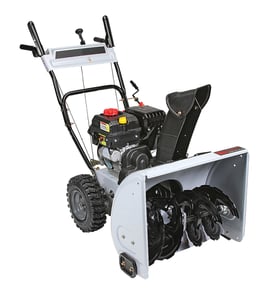






How to find snowblower model number?
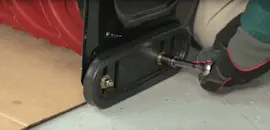
For your Husqvarna gas snowthrower, the model number is printed on the product ID label (data plate) attached to the machine. On many snowblowers, that label is easiest to spot on the rear of the unit near the axle area between the wheels; confirm the exact label location in the ST224-96193009602 owner's manual.
Where to look on the snowblower
Check these common label locations first:
- Rear of the snowblower frame between the wheels (near the axle)
- Back of the housing behind the engine
- Side of the frame near the wheel height adjustment area
- Under the handle panel or on the dash support bracket
- Near the auger housing frame (lower front area)
What to write down (so you get the right parts)
We recommend recording the full identification details exactly as shown on the label.
- Model number (for this unit: ST224-96193009602)
- Product number or ID number (if listed)
- Serial number
- Engine model and type (helpful for engine parts like spark plug, carburetor, recoil starter)
| Label item | Why it matters when ordering parts |
|---|---|
| Model number | Matches the correct parts diagrams for your snowblower |
| Serial number | Helps confirm production version and running changes |
| Engine model/type | Ensures correct engine-specific parts and tune-up items |
Why it matters
Snowblower parts like the auger drive belt, drive belt, chute components, and gearbox parts can vary by model and production run. Using the exact model number from the label prevents ordering a belt length, cable, or housing part that will not fit.
Last updated: January 2026
What engine is on a Husqvarna ST224?
The Husqvarna ST224 model ST224-96193009602 is commonly equipped with an LCT Storm Force 208cc OHV gas engine. For the exact engine identification (engine model and spec numbers) used on your unit, match the engine label information to the details in the ST224-96193009602 owner's manual.
How to confirm the exact engine on your ST224
We recommend verifying the engine by reading the engine ID label, then cross-checking it with the manual and parts diagrams.
- Look for an engine label on the recoil starter housing, valve cover area, or blower housing
- Record the engine model and spec/type numbers exactly as printed
- Compare those numbers to the engine information section in the manual
- Use your full snowblower model number ST224-96193009602 when ordering engine-related parts
- If you are replacing the complete engine, confirm mounting pattern and crankshaft specs before ordering
Engine details you will typically see for this model
Most ST224 units in this series are built around a 208cc class OHV winter engine designed for cold starts and steady torque.
| Item | What to look for | Why it matters |
|---|---|---|
| Displacement | 208cc class | Helps match tune-up parts and service specs |
| Valve design | OHV | Affects valve clearance and maintenance steps |
| Engine ID | Model + spec/type | Ensures correct carburetor and ignition parts |
Related parts that connect to engine performance
If the engine runs but the snowblower does not move or throw snow well, the issue is often in the drive system, not the engine.
- Worn auger belt can stop the auger from engaging
- Worn drive belt can stop the wheels from driving
- Fuel restriction can cause surging or stalling
Helpful model-matched examples include the snowblower auger drive belt 501818201 and the snowblower drive belt 584216102.
Why it matters
The ST224 platform can use different engine spec versions over time; the engine model and spec/type numbers are what keep tune-up parts, carburetor parts, and service settings accurate.
Last updated: January 2026
What kind of gas does a Husqvarna ST224 snowblower take?
For the Husqvarna ST224-96193009602 gas snowthrower, we recommend fresh unleaded gasoline with up to 10% ethanol (E10). Avoid fuel blends above 10% ethanol (such as many E15 or higher blends) because they can cause hard starting, poor performance, and fuel-system damage.
Fuel type and what to avoid
- Use fresh, clean unleaded gasoline (regular grade is typical for small engines).
- Use E10 or less (up to 10% ethanol).
- Avoid E15, E20, E85, or any blend over 10% ethanol.
- Avoid old gas (especially fuel that has been sitting for more than 30 days without stabilizer).
- Do not mix oil into the gas unless your engine specifically requires it (most 4-cycle snowblower engines use straight gasoline).
Quick checklist before you fill the tank
- Shut the engine off and let it cool.
- Fill outdoors, away from open flames or heaters.
- Use a clean fuel can dedicated to gasoline.
- Wipe up spills before starting.
- Tighten the fuel cap fully.
Fuel storage guidance (best practices)
| Situation | What we recommend | Why |
|---|---|---|
| Fuel used within 30 days | Fresh E10 or less | Best starting and power |
| Fuel stored longer than 30 days | Add fuel stabilizer and run engine briefly | Helps reduce varnish and gum |
| End of season storage | Treat fuel or drain per ST224-96193009602 owner's manual | Prevents carburetor clogging |
Why it matters
Using the right gasoline helps protect the carburetor, fuel strainer, and fuel tank from deposits and corrosion. It also improves cold-weather starting and keeps the auger and drive systems working consistently under load.
Last updated: January 2026
What kind of snow is the ST224 best for?
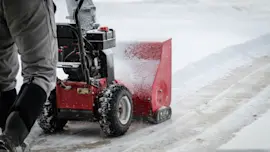
The Husqvarna ST224-96193009602 two-stage gas snowthrower is best for typical residential snowfalls, including light, dry snow and heavier, wetter snow, especially in the 6 to 18 inch range. For the cleanest results, we recommend matching ground clearance and speed to the snow depth and density using the settings in the ST224-96193009602 owner's manual.
What you can expect in different snow conditions
- Light, powdery snow: Use a faster ground speed; the auger and impeller clear efficiently.
- Wet, heavy snow: Use a slower ground speed to prevent clogging and belt slip.
- Deep snow (near the upper range): Take partial-width passes and keep the chute aimed to avoid blowback.
- Packed snow at the end of the driveway: Break it up in layers; avoid forcing the housing into hard piles.
- Icy crust: Let the auger shave gradually; don’t ram the drift.
Quick setup tips that make a big difference
Skid shoes and scraper bar adjustment control how well the machine rides over gravel, pavers, and uneven concrete.
| Surface | Typical goal | Practical tip |
|---|---|---|
| Smooth concrete/asphalt | Clean scrape | Set skid shoes lower for a tighter scrape |
| Pavers/uneven concrete | Avoid catching edges | Raise skid shoes slightly |
| Gravel/loose stone | Avoid throwing rocks | Raise skid shoes more and go slower |
If performance drops in heavy or wet snow
Wet snow is where most two-stage machines show issues first. These checks usually restore throwing distance and prevent clogging:
- Confirm the auger and drive controls fully engage (cable tension matters).
- Inspect belts for glazing, cracking, or stretching; replace if worn.
- If the wheels drive poorly, reduce speed and check traction and drive engagement.
- If the auger stalls or chatters, inspect the auger drive system and gearbox.
Helpful model-matched parts we stock include the snowblower auger drive belt 501818201 and the snowblower drive belt, 38.2-in 584216102.
Why it matters
Snow density changes the load on the auger, impeller, and belts. Using the right ground speed and skid shoe height helps the ST224-96193009602 throw farther, clog less, and reduce wear on key drive components.
Last updated: January 2026