Owner’s manual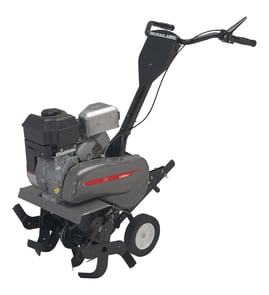



Who builds Craftsman tillers?
For Craftsman model 917292480, the tiller was built for Craftsman by AYP (American Yard Products), a manufacturer historically associated with the Husqvarna group. You can confirm the exact model identification and specs in the 917292480 owner's manual.
How to identify who built your Craftsman tiller
We use the model number prefix and the product labeling to identify the original manufacturer behind many Craftsman outdoor power tools.
- Look at the full model number on the ID tag (not just “Craftsman”).
- For many Craftsman tillers, a 917 prefix is commonly tied to AYP-built equipment.
- Match the model number on the tag to the model number on the manual cover.
- Use the illustrated parts list in the manual to cross-check assemblies and hardware.
- When ordering parts, always use the full model number to avoid fit issues.
Quick reference: what the model number tells us
| What you see | What it typically indicates | Why it helps |
|---|---|---|
| Model starts with 917 | Built for Craftsman by AYP | Points to shared designs and parts families |
| Model is 917292480 | Specific front-tine tiller configuration | Ensures correct parts lookup and diagrams |
Why it matters
Knowing the original builder helps when you are comparing designs, troubleshooting common issues (belts, tines, controls), and selecting compatible replacement parts. It also makes it easier to use the correct diagrams and adjustment procedures from the manual.
Helpful next step
If you are servicing the tine drive or controls, the tiller common questions guide is a good starting point for maintenance and operating tips.
Last updated: February 2026
Where is the model number on a Craftsman tiller?
On a Craftsman tiller, the model number is printed on the product ID label; on model 917292480, it’s typically on the tine shield/guard area or on the fuel tank, and some units place it on the front of the frame. Use the 917292480 owner's manual to match the label to the correct parts list.
Where to look first (fast checks)
- Check the tine shield/guard near the tines (often easiest to spot)
- Look on or near the fuel tank
- Inspect the front of the frame (common on larger tillers)
- Check the handle column area for a label or tag
- Wipe dirt and oil off the frame; labels can be hidden by grime
What the label usually looks like
Most Craftsman tillers use a small sticker or metal tag that includes the model number and sometimes an engine model.
| What you see on the label | What it means | What to do with it |
|---|---|---|
| 917292480 | Tiller model number (the machine) | Use it to find the correct Craftsman parts diagrams |
| Engine model info (often Briggs & Stratton) | Engine identification | Use it for engine-specific tune-up parts |
Tips to avoid mix-ups when ordering parts
- Write the model number exactly as shown (include all digits)
- If the label is worn, take a clear photo in good light
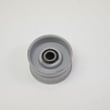
- Use the tiller model number for chassis parts like the control lever 584447601 or idler pulley 532161806
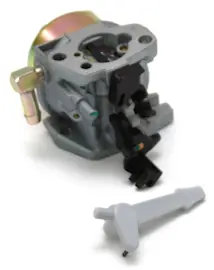
- Use the engine model (if listed) for carburetor and ignition parts
Why it matters
Craftsman tillers can look similar across years, but parts like belts, pulleys, and tine-control hardware vary by model. Using 917292480 ensures you get the right diagrams and the right replacement parts the first time.
Last updated: February 2026
What kind of engine is on a CRAFTSMAN tiller?
The Craftsman front-tine tiller model 917292480 uses a Briggs & Stratton engine, specifically model 110402, type 0206-E1. This is a low-emission small gas engine; we recommend using the exact maintenance and tune-up specs listed in the 917292480 owner's manual.
How to identify the engine on your tiller
Use these quick checks to confirm you are matching parts and service steps to the correct engine:
- Check the engine shroud or emissions label for the Briggs & Stratton model and type
- Match the tiller model tag to 917292480
- Use the engine model and type when ordering carburetor, ignition, and gasket parts
- Follow the manual for oil type, spark plug, and air filter service intervals
- If the engine has been replaced, rely on the engine tag, not the tiller model
Engine details at a glance
| Item | What you should use |
|---|---|
| Tiller model | 917292480 |
| Engine brand | Briggs & Stratton |
| Engine model | 110402 |
| Engine type | 0206-E1 |
| Engine style | Low-emission small gas engine |
Why it matters
Briggs & Stratton engines often share similar-looking parts across families, but the model and type number control the exact carburetor, gasket set, and ignition components. Using the correct engine ID helps prevent hard-starting, rough running, and parts that do not fit.
Related parts you may replace during engine service
These are common service-related items shown in the engine parts listing in the manual (exact selection depends on symptoms):
- Spark plug
- Air cleaner cartridge
- Carburetor or carburetor overhaul kit
- Engine gasket set
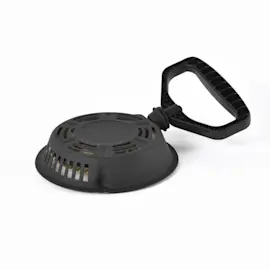
- Starter rope and rewind starter screw
Last updated: February 2026
Are front tine tillers any good?
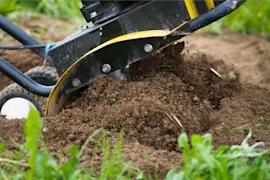
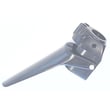
Yes. A front-tine tiller like the Craftsman 917292480 is a strong choice for small to medium gardens and for maintaining existing beds; it’s designed to break up soil efficiently with a 24-inch tine width and controlled digging depth using the depth stake. See the 917292480 owner's manual for operating and safety details.
What front-tine tillers do best
Front-tine tillers are “good” when your work matches their strengths:
- Loosening moderately soft soil for planting and seasonal bed prep
- Mixing in compost, fertilizer, and soil amendments
- Working in tighter spaces where a larger rear-tine unit is overkill
- Making multiple shallow passes to gradually reach your target depth
- Controlling forward speed and bite using the depth stake and handle pressure
When a front-tine tiller is not the best fit
If you regularly face these conditions, a heavier-duty design may perform better:
- Hard-packed clay that causes the tines to grab and lunge forward
- Rocky soil where impacts are frequent
- Deep, first-time ground breaking where slow, high-torque digging is needed
Quick comparison: front-tine vs rear-tine
| Feature | Front-tine tiller (like 917292480) | Rear-tine tiller |
|---|---|---|
| Best for | Bed maintenance, lighter prep | New ground, tougher soil |
| Handling | More operator input | More self-propelled stability |
| Depth strategy | Multiple shallow passes | Deeper passes more easily |
| Space needs | Typically easier in tight areas | Typically larger footprint |
Why it matters
Matching the tiller type to your soil and garden size reduces bouncing, improves soil texture, and helps prevent unsafe “tine grab” situations. Our manual also stresses not tilling too deep too fast and using proper guards and eye protection.
Helpful model-specific tips for better results
- Start slow until you’re used to the machine; increase throttle only as needed
- Let the depth stake control digging depth and forward speed
- If the tiller strains or shakes, reset wheel and depth stake settings
- Break in belts, pulleys, and tine control before heavy tilling (run tines off the ground briefly)
Last updated: February 2026
Does Craftsman make tillers?
Yes. Craftsman makes tillers and tiller/cultivator models, and your Craftsman front-tine tiller model 917292480 is one of them. For model-specific operation, maintenance, and safety details, use the 917292480 owner's manual.
What “Craftsman tiller” covers
Craftsman has produced multiple garden tiller styles over the years. The most common categories you will see are:
- Front-tine tillers (like model 917292480) for general garden prep
- Rear-tine tillers for heavier soil and larger areas
- Tiller/cultivators for lighter-duty cultivating and weeding
- Gas-powered models (common on older units) and newer variations depending on the product line
How to confirm you have the right Craftsman model
We recommend matching by model number first, then selecting parts by the illustrated diagrams.
- Find the model tag on the frame (often near the engine mount or handle support)
- Match the tag to 917292480
- Use the parts diagrams to identify the exact component name and reference number
- Cross-check wear items (tines, belts, spark plug, air filter) during seasonal maintenance
Common “wear items” on Craftsman tillers
The manual notes that some items are considered normal-wear parts on a tiller:
| Part type | What it affects | When to replace (typical) |
|---|---|---|
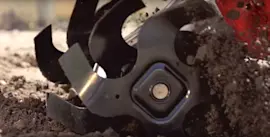
| Tines | Digging performance | When bent, cracked, or rounded |
| Belts | Tine and/or drive engagement | When slipping, frayed, or glazed |
| Spark plug | Starting and running quality | If fouled or hard starting |
| Air cleaner | Engine breathing | If dirty or damaged |
Why it matters
Knowing Craftsman makes and supports tillers helps you shop correctly for tiller parts, follow the right maintenance schedule, and avoid mismatched components that can cause poor tilling, belt slip, or control problems.
Last updated: February 2026
What would cause a tiller to not start?
On the Craftsman 917292480 front-tine tiller, a no-start is usually caused by a fuel issue (empty, stale, or water-contaminated gas), incorrect choke/throttle settings, or an ignition/airflow problem such as a loose spark plug wire, dirty air cleaner, or a bad spark plug gap. Use the steps in the 917292480 owner's manual to match symptoms to the correct fix.
Quick checks (fastest to rule out)
- Confirm the fuel tank has fresh gasoline (do not use last-season fuel).
- Set choke correctly for a cold start; if the engine is flooded, wait a few minutes and try again.
- Make sure the spark plug wire is fully seated on the plug.
- Inspect the air cleaner; a dirty filter can prevent starting.
- Check for water in fuel (often shows up after storage or bad fuel cans).
- Verify the throttle control is set properly for starting.
Most common causes and what to do
| What you notice | Likely cause | What we recommend |
|---|---|---|
| Pull cord feels normal but it never fires | Stale fuel, clogged tank, or carburetor issue | Drain/refill with fresh gas; clean tank; clean carburetor |
| It tries to start only with choke fully on | Dirty air cleaner or carburetor out of adjustment | Clean/replace air cleaner; check carb settings per manual |
| No hint of ignition | Loose plug wire, bad plug, wrong gap | Reseat wire; replace plug; set gap to spec |
| Starts then dies quickly | Water in fuel or dirty fuel | Drain tank and carburetor; refill with fresh gasoline |
Parts that can contribute (when linkage or engagement is off)
If the controls are not moving smoothly, the tine control may not engage correctly and can complicate starting and operation. Inspect the control linkage and cable routing; replace damaged hardware as needed.
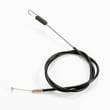
- Cbl/cltch t 583731701 (clutch/control cable)
- Cable clip 532165197 (secures cable routing)
- Control lever 584447601 (tine control lever)
Why it matters
A tiller that will not start is often telling you something simple: fuel quality, airflow, or ignition. Fixing the root cause prevents repeated flooding, plug fouling, and hard starting that can shorten engine life.
Last updated: February 2026