Installation guide
 Owner’s manual
 Error Codes


Where to find Kenmore gas range model number?
For Kenmore gas range model 79070402012, the model and serial number are printed on the appliance identification plate. On this model, you typically access that plate by opening the broiler drawer or storage drawer and looking at the frame area.
Where to look on model 79070402012
Check these spots in order (they are the most common for this Kenmore range):
- Open the broiler drawer (some versions) and look for the identification plate on the frame
- Open the storage drawer (some versions) and look along the frame rails or side wall
- Look just inside the lower front frame area behind the drawer opening
- If the label is hard to see, use a flashlight and wipe grease off the plate with a damp cloth
For the exact serial plate location and how it’s shown for your configuration, use the 79070402012 owner's manual.
Quick checklist: what you need from the label
When you find the plate, record these items (they help ensure correct parts and service info):
- Model number (example format: 790.7040xxxx)
- Serial number
- Gas type information (if listed)
- Manufacturing/approval information (if listed)
Why it matters
We use the full model number to match the correct Kenmore range parts (like an oven igniter, temperature sensor, or control overlay). Even small model-number differences can change which burner, valve, or control parts fit.
Common locations at a glance
| Location | What to do | When it’s most likely |
|---|---|---|
| Broiler drawer opening | Pull drawer out and look on the frame | Models with a broiler drawer |
| Storage drawer opening | Pull drawer out and look on the frame | Models with a storage drawer |
| Lower front frame | Look behind the drawer opening | If the plate isn’t on the drawer itself |
Last updated: February 2026
How long should a Kenmore gas stove last?
A Kenmore gas range like model 79070402012 typically lasts 15 years with normal household use. Consistent cleaning, correct burner flame, and quick repair of ignition or temperature issues help you reach that lifespan; see the maintenance guidance in the 79070402012 owner's manual.
What affects lifespan the most
- Cleaning habits: keeping spills and grease off burners, grates, and the oven bottom reduces corrosion and flare-ups.
- Ignition health: slow or failed lighting strains components and can lead to no-heat complaints.
- Oven temperature accuracy: chronic overheating or underheating increases wear and cooking time.
- Ventilation: using a vent hood and cleaning its filter helps reduce grease buildup around the range.
- Gas supply setup: correct installation and stable gas pressure support reliable burner operation (use the 79070402012 installation guide for setup checks).
Quick maintenance checklist (monthly)
- Wipe the cooktop and burner caps; keep burner ports clear.
- Check burner flames; they should be steady and mostly blue.
- Clean the oven interior after heavy spillovers.
- Inspect the power cord and outlet; a weak connection can cause intermittent ignition.
- Replace dim or failed oven lights with the correct bulb type.
Common “wear” items vs. longer-life components
| Item | Typical symptom when failing | What we usually replace |
|---|---|---|
| Ignition parts | Clicking but no flame, delayed ignition | Range oven burner igniter 5304509706 |
| Oven sensing | Oven temp swings, bakes unevenly | Range oven temperature sensor 316233903 |
| Oven light | Light out, flickers | Appliance light bulb, 40-watt 316538904 |
Why it matters
A 15-year lifespan assumes the range heats efficiently and safely. When ignition gets weak or the oven runs off-temperature, cooking times increase and parts cycle harder, which shortens overall life.
Last updated: February 2026
Why is my Kenmore oven not igniting?
If your Kenmore gas range model 79070402012 is not igniting, the most common causes are loss of electrical power to the range (needed for spark/glow ignition), the gas supply or regulator being OFF, or a failed oven ignition component such as the igniter. Use the checks below, then confirm control settings in the 79070402012 owner's manual.
Quick checks we recommend first
- Confirm the range is plugged in and the outlet has power (electric ignition needs power).
- Check for a home power outage; the oven will not ignite without power.
- Verify the gas supply is ON and the gas regulator valve is in the ON position.
- Make sure the oven controls are set correctly for the cooking mode you want (Bake or Broil).
- If surface burners are also acting up, clean burner ports and ignition ports after the burner is OFF and cool.
Most likely parts when the oven won’t light
A weak or cracked igniter is a top cause of “no ignition” on many Kenmore gas ranges.
| Symptom | What it usually points to | What to do next |
|---|---|---|
| No heat, no ignition attempt | No power, control not set | Verify outlet power and settings in the manual |
| Clicking/glow but no flame | Weak igniter or gas flow issue | Inspect igniter; confirm regulator ON |
| Intermittent ignition | Igniter weakening, wiring issue | Check connections; consider igniter replacement |
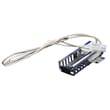
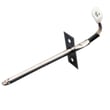
If you suspect the igniter, the model-specific replacement part is the range oven burner igniter 5304509706.
Safety notes before troubleshooting
- Turn the oven OFF and let it cool before inspecting or cleaning.
- Never block oven bottom slots, holes, or passages; restricted airflow can create a carbon monoxide hazard.
- Avoid spraying cleaner on electrical controls or switches to prevent shorts and sparking.
Why it matters
On model 79070402012, ignition depends on both utilities: electric power for the ignition system and gas flow through the regulator. A simple power or regulator setting issue can look like a bad part, so these checks prevent unnecessary replacement.
Last updated: February 2026
How to tell if a gas stove igniter is bad?
On our Kenmore 79070402012 gas range, a bad igniter shows up as repeated clicking with no flame, delayed ignition (sometimes a “whoosh”), a dim or non-glowing oven igniter, or a gas odor without ignition. Use the safety steps in the 79070402012 owner’s manual before testing.
Signs that point to an igniter problem
- Surface burner keeps sparking at LITE but does not light
- Burner lights slowly, then ignites suddenly
- Oven burner will not light; igniter glows weakly or not at all
- You smell gas and the burner does not ignite (stop and ventilate)
- Ignition works sometimes, then fails again (intermittent)
Quick checks we use to rule out simple causes
- Turn the knob fully to LITE; visually confirm the burner lights, then adjust flame
- Clean and dry the burner cap and ports; clogs can cause partial flame around the burner head
- Confirm the range has power (electronic ignition needs electricity)
Testing and what the results mean
| Test/observation | What it indicates | Next step |
|---|---|---|
| Strong spark but no flame | Burner/cap alignment or clogged ports | Clean, dry, reseat parts |
| No spark on any surface burner | Power, wiring, or ignition circuit issue | Check outlet, then wiring/service |
| Oven igniter glows but burner never lights | Weak hot-surface igniter | Replace igniter |
Part that commonly fixes oven ignition
If the oven burner is slow to light or will not light, the oven igniter is a common repair:
Why it matters
Fast, consistent ignition prevents delayed lighting and reduces the chance of gas odor during startup.
Last updated: February 2026
What are the parts of a gas stove?
A gas stove (gas range) like Kenmore model 79070402012 is made up of the cooktop burner system (burners, caps, grates, valves, igniters), the oven burner system (burner, igniter, gas valve), and the control and safety components that regulate gas flow and temperature. For diagrams and names, use the 79070402012 owner's manual.
Main parts you will see on a gas range
- Surface burners (burner heads and burner ports) that mix gas and air to create a stable flame
- Burner caps and grates that spread heat and support cookware
- Knobs and burner valves that control gas volume and flame size
- Ignition system (spark electrode and wiring) that lights the surface burners
- Oven burner and igniter that light and maintain the bake flame
- Oven temperature sensor that helps the control maintain the set temperature
- Pressure regulator that stabilizes incoming gas pressure (natural gas or LP/propane)
Parts on this model that commonly come up in repairs
If you are troubleshooting “won’t light,” “weak flame,” or “oven not heating,” these parts are frequent suspects on the 79070402012:
- Range oven burner igniter 5304509706 (oven lights slowly or not at all)
- Range oven temperature sensor 316233903 (temperature swings, underbakes, overbakes)
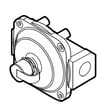
- Range pressure regulator 5304521339 (gas flow issues after installation or conversion)
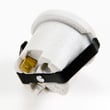
- Appliance light bulb, 40-watt 316538904 and range light socket 316116400 (oven light problems)
Quick “what it does” reference
| Part/system | What it does | Common symptom when it fails |
|---|---|---|
| Surface burner + electrode | Lights and shapes the cooktop flame | Clicking but no flame, uneven flame |
| Oven igniter | Opens the oven gas valve by drawing current and igniting gas | No bake, long preheat |
| Pressure regulator | Keeps gas pressure consistent | Weak flames, poor heating |
| Temperature sensor | Feeds oven temperature to the control | Inaccurate oven temperature |
Why it matters
Knowing the correct part names helps you match the right replacement and diagnose faster. For example, cleaning burner ports and keeping the electrode area free of spills can restore ignition, while an aging oven igniter often causes slow ignition and low oven heat.
Last updated: February 2026
How to change Kenmore spark electrode igniter?
To change a spark electrode igniter on your Kenmore gas range model 79070402012, we shut off power, remove the grate and burner parts, swap the electrode and wire connection, then reassemble and test on LITE. Use the 79070402012 installation guide for access details.
Before you start (safety)
- Turn the burner knob to OFF and let the cooktop cool.
- Shut off power at the breaker (spark ignition is electrical).
- Remove the burner grate, burner cap, and burner head.
- Keep screws and small parts organized.
- Avoid pulling on the wire itself; grip the connector.
Replace the electrode (typical surface burner)
- Remove the screw holding the electrode to the burner base or orifice holder.
- Pull the wire connector straight off the electrode terminal.
- Transfer the connector to the new electrode (crimp only if your connector style requires it).
- Reinstall the electrode and tighten the mounting screw.
- Reinstall burner head and cap so they sit flat; then reinstall the grate.
Test and troubleshoot
- Restore power; turn the knob to LITE and verify ignition.
- After it lights, turn the knob off LITE to set the flame (the ignitor keeps sparking if left on LITE).
- If it clicks but will not light: reseat the burner cap and dry/clean burner ports.
| Symptom | Likely cause | Fix |
|---|---|---|
| All burners click when one is on LITE | Normal on this design | Light the selected burner; then adjust flame |
| No spark at one burner | Loose connector, cracked electrode | Reseat connector; replace electrode |
| Spark present, no flame | Gas off or clogged ports | Verify gas; clean ports |
Why it matters
A tight connector and correctly positioned electrode give reliable ignition and prevent repeated clicking. The use and care information also notes that when any knob is set to LITE, multiple surface ignitors may spark even though only one burner should ignite.
Last updated: February 2026