Installation guide
 Owner’s manual
 Error Codes


Where is the model number on a Kenmore side by side refrigerator?
On Kenmore side-by-side refrigerator model 10651062100, the model number is printed on the model and serial number label located on the inside wall of the refrigerator (fresh food) compartment. Use that label to record both the model and serial number for parts and service.
Where to look (quick checklist)
- Open the refrigerator (fresh food) door, not the freezer door
- Look along the inside wall of the refrigerator compartment
- Check near the upper side walls and around the crisper area
- Use a flashlight; the label can be small or partially hidden by shelves
- Write down the full model number and serial number exactly as shown
What you will see on the label
Most labels include both identifiers plus other details. Use this as a guide:
| Item on label | What it’s used for | Example format |
|---|---|---|
| Model number | Matching parts to your exact refrigerator | 10651062100 |
| Serial number | Identifying production run and date info | Letters and numbers |
| Purchase date (you add) | Your records and warranty paperwork | Your date |
Why it matters
We use the model number to match the correct Kenmore parts diagrams and compatible replacement parts (for example, an ice maker assembly, water inlet valve, or thermostat). Using the full model number helps avoid ordering the wrong part.
Helpful tip for keeping it handy
After you find it, record the model and serial number in your 10651062100 owner's manual so it’s easy to reference later.
Last updated: February 2026
What are the most common problems with Kenmore refrigerators?
The most common problems we see on Kenmore refrigerators like model 10651062100 are no cooling or weak cooling, ice maker and water dispenser issues, water leaks, frost buildup from defrost problems, and noisy operation. Many fixes start with power, airflow, and water supply checks in the owner's manual.
Most common symptoms and what usually causes them
- Not cooling or warm temperatures: controls set incorrectly, unit in a defrost cycle, airflow blocked, dirty condenser coils, or a failed cooling component
- Ice maker not making ice: clogged or misinstalled water filter, low water supply, frozen fill area, or a failed ice maker
- Water dispenser slow or not dispensing: clogged filter, kinked water line, or a failing inlet valve
- Water leaking: air in water lines after filter changes, ice stuck in the chute holding the door open, or a supply line issue
- Frost buildup / poor airflow: defrost system trouble (timer, heater circuit, defrost thermostat) or door not sealing
- Runs a lot / noisy: hot room conditions, restricted airflow, fan issues, or the unit recovering after door openings
Quick checks we recommend first (safe DIY)
- Confirm the refrigerator is plugged into a grounded 3-prong outlet and the breaker is not tripped.
- Make sure the refrigerator and freezer controls are not set to OFF; for digital controls, cycle OFF then ON to reset.
- Allow 30 minutes if the unit is in an automatic defrost cycle, then recheck temperatures.
- If ice or water is acting up, remove and reinstall the filter correctly; flush water to clear air from the lines.
- Inspect the home water line for kinks and verify the shutoff valve is fully open.
Parts that commonly solve these problems on 10651062100
| Problem area | Common fix | Example part for this model |
|---|---|---|
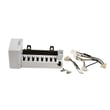
| No ice or small cubes | Replace failed ice maker | Ice maker assembly - refrigerator ice maker by whirlpool 4317943 |
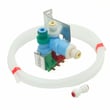
| No water or slow water | Replace inlet valve | Refrigerator inlet valve W10408179 |
| Frost or warm temps (defrost-related) | Replace defrost timer | Refrigerator defrost timer W10822278 |
Why it matters
Catching airflow, water supply, and defrost issues early helps prevent food spoilage, reduces ice buildup, and avoids extra strain on the sealed refrigeration system.
Last updated: February 2026
How wide is a Kenmore side-by-side refrigerator?
Most Kenmore side-by-side refrigerators are about 32 to 36 inches wide; the exact cabinet width varies by model and configuration. For your Kenmore 10651062100, we recommend confirming the published dimensions in the owner's manual and allowing extra clearance for door swing and airflow.
Typical width ranges (what you can expect)
Side-by-side refrigerators commonly fall into these width bands:
- 32 to 33 inches: space-saving models
- 35 to 36 inches: most full-size side-by-sides
- 36+ inches: larger capacity or premium configurations
Installation clearances that affect “how wide it needs to be”
Even if you know the cabinet width, the opening must include clearance for ventilation and door swing.
- Leave about 1/2 inch of space on each side and at the top for airflow
- If installed next to a fixed wall, leave about 2 inches minimum on the hinge side so the door can swing open
- If the unit has an ice maker, allow extra space behind for the water line connection
These clearances are called out in the installation guide.
Quick sizing checklist
Use this checklist before you measure your opening:
- Measure the refrigerator cabinet width (not including handles)
- Measure door swing clearance (especially next to a wall)
- Measure depth (counter-depth vs standard-depth matters)
- Confirm leveling leg adjustment space
- Plan for water line routing if you use the ice maker or dispenser
Width vs. opening size (simple comparison)
| What you are sizing | What it includes | Why it matters |
|---|---|---|
| Refrigerator width | Cabinet only (varies by model) | Determines basic fit |
| Required opening width | Cabinet width plus side clearance | Prevents overheating and rubbing |
| Door swing space | Clearance near walls/cabinets | Lets doors open fully |
Why it matters
If the opening is too tight, the refrigerator can run warmer, doors may not open fully, and the cabinet can vibrate or rub against surrounding panels. Proper clearance helps cooling performance and reduces wear on hinges and door seals.
Last updated: February 2026
How to clean the coils on a Kenmore side by side refrigerator?
For Kenmore side-by-side refrigerator model 10651062100, we clean the condenser coils by unplugging the refrigerator, pulling it out for access, and removing dust and pet hair with a coil brush and vacuum. Clean coils help the compressor run cooler and more efficiently.
Before you start (safety and access)
- Unplug the refrigerator (or disconnect power at the breaker).
- If your model has a base grille, remove it to improve access to the lower front area.
- Protect the floor with cardboard or a thin mat before sliding the refrigerator.
- Use a nonflammable cleaner for nearby surfaces if needed (never spray flammables around the appliance).
How we clean the condenser coils
- Unplug power.
- Locate the coils:
- Many side-by-side units have coils under the refrigerator behind the base grille.
- Some have coils on the back.
- Dry clean first (best for dust):
- Use a condenser coil brush to loosen packed lint.
- Vacuum with a crevice tool as you brush to capture debris.
- Clean the surrounding areas:
- Vacuum the floor under the unit.
- Vacuum the rear lower area where the condenser fan pulls air (if accessible).
- Reinstall the base grille (if removed), slide the refrigerator back, and restore power.
What to use (and what to avoid)
Recommended tools
- Coil brush
- Vacuum with crevice tool
- Flashlight
Avoid
- Pressure air that blows dust into the compressor area
- Wet cleaning directly on electrical components
- Abrasive pads or harsh cleaners on plastic parts and gaskets
How often to clean coils
| Home situation | Cleaning interval |
|---|---|
| Pets or heavy dust | Every 3 to 6 months |
| Typical household | Every 6 to 12 months |
| Low dust, no pets | About once a year |
Why it matters
Dirty condenser coils reduce heat transfer, which makes the sealed system work harder. That can lead to longer run times, warmer temperatures, and higher energy use. Keeping coils clean is one of the simplest ways to protect cooling performance.
Helpful reference
- Coil and general cleaning guidance for this model is covered in the 10651062100 owner's manual.
Last updated: February 2026
What is the cubic foot of Kenmore refrigerator model 10651062100?
The Kenmore side-by-side refrigerator model 10651062100 has a total capacity that’s listed in the specifications section of the product literature; use the total capacity (refrigerator plus freezer) value shown in the 10651062100 owner's manual for the exact cubic feet for your unit.
Where to find the cubic feet rating
In the manual, the capacity is typically shown with other specs such as electrical requirements and feature descriptions.
- Check the Specifications or Product data section
- Look for wording such as “total capacity,” “total volume,” or “cu. ft.”
- Use the combined number (fresh food plus freezer)
- If you see separate compartment volumes, add them only if the manual presents them that way
Total capacity vs. usable space
Cubic feet is a standardized measurement; your day-to-day storage feels smaller because installed components take up room.
| Measurement | What it includes | Common space reducers |
|---|---|---|
| Total capacity (cu. ft.) | Refrigerator and freezer interior volume | Shelves, bins, ice bucket, air channels |
| Usable space | What you can practically load | Ice maker hardware, bulky packaging, airflow clearance |
Why it matters
Knowing the exact cubic feet helps when you are comparing side-by-side refrigerators, planning food storage, and confirming fit expectations for features like an ice maker and door bins.
Last updated: February 2026