Owner’s manual
 Error Codes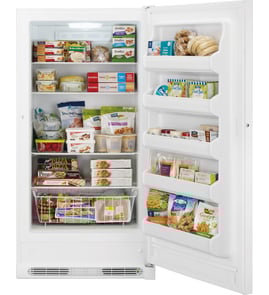



How long does a Kenmore upright freezer last?
A Kenmore upright freezer like model 25327002411 typically lasts 10 to 15 years. With steady temperatures, good airflow around the cabinet, and clean condenser areas, many units reach the high end of that range before major sealed-system or compressor repairs become likely.
Typical lifespan and what to expect
Most upright freezers follow a predictable pattern as they age:
- 0 to 5 years: Mostly maintenance items (door seal alignment, cleaning, minor noises)
- 5 to 10 years: Higher chance of fan, defrost, or control issues
- 10 to 15 years: Cooling performance and efficiency often decline; repairs become more frequent
- 15+ years: Major failures (sealed system, compressor) become more common
For model-specific care and operating guidance, follow the maintenance and temperature recommendations in the owner's manual.
What shortens (or extends) freezer life
These factors have the biggest impact on how long your Kenmore Elite freezer runs reliably:
- Heat and poor ventilation: Tight spaces make the compressor work harder
- Dirty condenser coil: Causes longer run times and higher wear
- Door seal leaks: Warm air intrusion leads to frost buildup and longer cycles
- Frequent door openings: Adds moisture and heat load
- Overpacking shelves: Restricts airflow and can cause uneven temperatures
Quick check: repair vs. replace signals
| If you notice this | It usually points to | Common next step |
|---|---|---|
| Heavy frost, warm temps | Defrost system or air leak | Check door seal and defrost components |
| Loud humming or clicking | Start components or compressor strain | Test start relay/capacitor |
| Fan noise, weak airflow | Evaporator fan issue | Inspect fan motor and blade |
Parts that commonly affect performance as the unit ages
If your freezer is running warm, frosting up, or getting noisy, these model-matched parts are often involved:
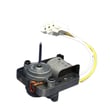
- Freezer evaporator fan motor 297309000 (air circulation)
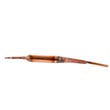
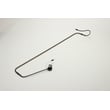
- White-westinghouse freezer defrost heater 5304496284 (defrost heat)
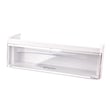
- Freezer door gasket 5304506131 (seal to prevent warm air leaks)
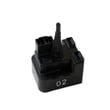
- Freezer start relay 297259515 (helps the compressor start)
Why it matters
A freezer that is struggling to maintain temperature can waste energy and risk food quality. Catching airflow, defrost, or door-seal problems early often prevents bigger failures and helps your 25327002411 reach its full 10 to 15 year service life.
Last updated: February 2026
What are the common problems with Kenmore Elite refrigerators?
Common Kenmore Elite refrigerator and freezer problems include not cooling or warm temperatures, heavy frost buildup, unusual noises, and water leaks. On Kenmore Elite model 25327002411, these symptoms most often trace back to airflow issues, a failing defrost system, or a sealed-system start problem; use the owner's manual to match symptoms to checks and settings.
Most common symptoms and what they usually mean
- Not cooling or weak cooling: dirty condenser area, evaporator fan not running, or a start device issue
- Frost or ice buildup on the back wall/evaporator: defrost heater or defrost control problem, or a door not sealing
- Buzzing, rattling, or squealing: evaporator fan blade hitting ice, worn fan motor, or vibration
- Water on the floor or ice on the freezer bottom: clogged/iced defrost drain
- Door not closing well: gasket not sealing, hinge/closure wear, or overloaded door bins/shelves
Parts that commonly relate to these problems (for model 25327002411)
If troubleshooting points to a specific failure, these model-matched parts are commonly involved:
- Airflow/noise: freezer evaporator fan motor 297309000, fan blade 5304513294
- Frost/defrost: white-westinghouse freezer defrost heater 5304496284
- Warm temps from air leaks: freezer door gasket 5304506131
- Compressor won’t start or clicks: freezer start relay 297259515, gibson refrigerator run capacitor 297286803
Quick checks we recommend before replacing parts
- Confirm settings: set colder and allow 24 hours to stabilize.
- Listen for the evaporator fan when the door switch is pressed; no fan often means airflow loss.
- Inspect the door seal for gaps, tears, or frost trails.
- Look for heavy frost on the rear interior panel (classic defrost/airflow clue).
- Check for drain icing if you see water or a sheet of ice on the freezer floor.
Symptom-to-part cheat sheet
| Symptom | Most likely area | Example model-matched part |
|---|---|---|
| Warm freezer, fan silent | Air circulation | 297309000 |
| Heavy frost, airflow blocked | Defrost system | 5304496284 |
| Frost around door, sweating | Door seal | 5304506131 |
| Clicking, won’t start | Start components | 297259515 |
Why it matters
Cooling and frost problems often cascade: frost blocks airflow, temperatures rise, the compressor runs longer, and food quality drops. Catching a weak fan, bad gasket, or defrost failure early helps prevent bigger sealed-system stress.
Last updated: February 2026
Is there a reset button on a Kenmore upright freezer?
Most Kenmore upright freezers, including model 25327002411, do not have a single dedicated “reset” button. Instead, you reset the controls by using the temperature control panel (or by power-cycling the freezer) to clear a temporary control glitch and restore normal operation. See the 25327002411 owner's manual for the exact control layout and reset steps for your unit.
How to reset a Kenmore upright freezer (25327002411)
- Try a control-panel reset: Press and hold the temperature control buttons (often Up and Down together) for about 5 seconds.
- Power-cycle reset: Unplug the freezer (or switch off the breaker) for 5 minutes, then restore power.
- Wait for stabilization: After a reset, allow 12 to 24 hours for temperatures to fully stabilize.
- Confirm settings: Set the freezer to a normal target of about 0°F.
- Check the door seal: Make sure the door closes tightly and nothing is blocking it.
If it still will not cool after a reset
A “reset” only helps if the issue is a temporary control problem. If cooling does not return, these are common causes to check:
- Evaporator fan not running (no airflow inside): consider the freezer evaporator fan motor 297309000.
- Heavy frost on the back wall (defrost problem): consider the white-westinghouse freezer defrost heater 5304496284.
- Door not sealing (warm air leaks, frost buildup): consider the freezer door gasket 5304506131.
- Compressor not starting (clicking, intermittent running): consider the freezer start relay 297259515 and the gibson refrigerator run capacitor 297286803.
Quick symptom guide
| What you notice | What it usually points to | What to do next |
|---|---|---|
| Lights on, no cooling | Control glitch or start issue | Power-cycle; then check start components |
| Warm freezer, no fan sound | Evaporator fan issue | Inspect fan area; replace fan motor if needed |
| Frost blanket on rear panel | Defrost system issue | Defrost fully; check heater and airflow |
| Frost around door edge | Door seal leak | Inspect gasket; warm and reshape or replace |
Why it matters
Resetting is a fast first step, but repeated warm-ups can lead to food spoilage and can force the compressor to run longer than normal. If a reset does not restore cooling, checking airflow, defrost, and door sealing usually finds the real cause.
Last updated: February 2026
What causes an upright freezer to stop freezing?
An upright freezer like Kenmore model 25327002411 usually stops freezing because cold air is not being moved properly, the sealed system is not running correctly, or warm air is leaking in through the door. The most common culprits are airflow problems, defrost-system failures, or compressor start components.
Quick checks we recommend first
- Confirm the temperature control is set colder and the display responds (if equipped).
- Make sure the door closes fully and the cabinet is level.
- Listen for the evaporator fan; it should run when the freezer is calling for cooling.
- Look for heavy frost on the back interior panel (a strong sign of a defrost problem).
- Check for blocked vents from overpacked food.
- Verify the condenser area is not packed with dust and lint.
Most common causes (and what they look like)
| What’s failing | Typical symptom | What you can observe without tools |
|---|---|---|
| Evaporator fan system | Freezer warms, little or no airflow | Fan is silent; weak airflow at vents |
| Defrost system | Gradual warming, frost blanket forms | Thick frost behind rear panel |
| Door seal or alignment | Frost near door, temperature swings | Gaps, torn gasket, dollar-bill test fails |
| Compressor start components | Clicking, compressor not staying on | Repeated click-hum-click cycle |
| Sealed system (compressor/refrigerant) | Runs a lot but won’t reach temp | Minimal frost pattern, poor cooling |
Parts that commonly fix “not freezing” on this model
If symptoms point to a specific failure, these model-matched parts are common solutions:
- If the fan is not running: freezer evaporator fan motor 297309000
- If the compressor clicks and won’t start: freezer start relay 297259515 and gibson refrigerator run capacitor 297286803
- If you see heavy frost buildup: white-westinghouse freezer defrost heater 5304496284
- If warm air is leaking in: freezer door gasket 5304506131
Why it matters
A freezer that is not freezing is often a simple airflow or defrost issue. Fixing it early helps prevent food loss, reduces frost damage to shelves and liners, and avoids extra strain on the compressor.
Model-specific tip
Use the troubleshooting and component location diagrams in the owner's manual for Kenmore 25327002411 to match your symptom to the correct test and access steps before ordering parts.
Last updated: February 2026
What is the cubic foot of my Kenmore refrigerator model 25327002411?
Kenmore model 25327002411 is an upright freezer (not a refrigerator). Its capacity is typically listed in the specifications section of the 25327002411 owner's manual; use that value to plan storage and to compare freezer sizes accurately.
How to find the exact cubic feet for model 25327002411
- Open the specifications or product data section in the 25327002411 owner's manual.
- Look for “capacity,” “total volume,” or “cu. ft.” (sometimes shown as “net” capacity).
- If both “gross” and “net” are listed, use net for usable storage planning.
- Match the model number on your rating label to 25327002411 to avoid mixing similar 253-series units.
Typical upright freezer capacity range (for planning)
Most full-size Kenmore upright freezers fall in this range; your manual provides the exact number for 25327002411.
| Upright freezer size class | Typical capacity | Best for |
|---|---|---|
| Mid-size | 14 to 18 cu ft | Smaller households, overflow storage |
| Full-size | 18 to 22 cu ft | Most families, bulk shopping |
| Extra-large | 22 to 25+ cu ft | High-volume storage, long-term freezing |
Why it matters
Capacity affects how well the freezer holds temperature when loaded. Overpacking can block airflow and cause warm spots or frost buildup, even when the freezer is mechanically fine.
Parts that help protect usable space and performance
If you are losing space to frost or temperature swings, these are common checks:
- Door seal condition: freezer door gasket 5304506131
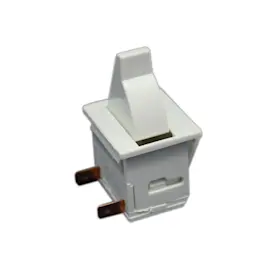
- Door closure and light circuit: freezer door switch 216822900
- Air movement inside the cabinet: freezer evaporator fan motor 297309000
Last updated: February 2026