 Installation guide
 Owner’s manual




Can I still use my appliance with an E22 error?
On a Bosch dishwasher like model SHE3ARF2UC, an E22 error usually points to a draining restriction (most often a dirty filter area or a blockage at the pump). We recommend fixing the cause before running more cycles because continued use can leave standing water and lead to poor cleaning.
What to do first (safe, quick checks)
- Turn the dishwasher off, then cancel and drain if the control allows.
- Remove and clean the filter area in the bottom of the tub; rinse debris off thoroughly.
- Check the sump area for glass, labels, or food that can jam the impeller.
- Inspect the drain hose for kinks, crushing, or a clogged air gap (if your setup has one).
- Make sure the sink drain or garbage disposal connection is clear (a blocked disposer inlet is common after installation).
When E22 usually means a part problem
If the filter and hose are clear but the dishwasher still will not drain, the issue is often in the drain system.
| Symptom | Most likely area | Example part for this model |
|---|---|---|
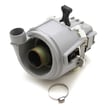
| Hums but does not move water | Drain pump or pump obstruction | Dishwasher drain pump 00611332 |
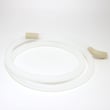
| Drains slowly or backs up | Drain hose restriction | Dishwasher drain hose 00668108 |
| Won’t fill after repeated drain issues | Water level and fill logic affected | Dishwasher water inlet valve 00622058 |
Why it matters
E22 is the dishwasher telling us it cannot move water out as expected. Clearing the restriction early prevents standing water, odor, and repeat cycle failures, and it helps protect the pump and control from repeated drain faults.
Helpful reference
For model-specific reset steps, filter removal, and drain guidance, use the SHE3ARF2UC manual. You can also match the displayed code and symptoms using Bosch dishwasher error codes.
Last updated: January 2026
What is the most common problem with Bosch dishwashers?
For Bosch dishwashers like model SHE3ARF2UC, the most common service issue we see is drainage trouble (standing water, slow drain, or a cycle that stops with water left in the tub). In many cases, the fix is clearing a blockage in the filter area, drain path, or drain hose; then checking the drain pump if the problem returns.
Most common symptoms and what they usually mean
- Water left in the bottom after a cycle: clogged filter area, blocked drain hose, or a weak/failed drain pump
- Humming but not draining: drain pump trying to run but jammed by debris
- Bad odors: food soil trapped in the filter and sump area
- Poor drying: normal for condensation drying if rinse aid is low or plastics are loaded in a way that traps water
- Random fill or overfill behavior: inlet valve not closing fully or a fill-related control issue
Quick checks we recommend first (before replacing parts)
- Cancel/drain the cycle and listen for the drain pump running.
- Clean the filter area in the bottom of the tub and remove any debris.
- Inspect the drain hose routing for kinks and confirm it has a proper high loop/air gap per the SHE3ARF2UC installation guide.
- Check the sink/disposer connection for a clog (and confirm the disposer inlet plug was removed if newly installed).
- Run a hot cycle after cleaning to flush the drain path.
Parts that commonly solve Bosch draining and filling complaints
If the basic checks do not restore normal draining or filling, these parts are common next steps for SHE3ARF2UC troubleshooting:
| Problem you notice | Common part to check | What it does |
|---|---|---|
| Won’t drain or drains slowly | Dishwasher drain pump 00611332 | Pumps water out through the drain hose |
| Fills slowly or not at all | Dishwasher water inlet valve 00622058 | Opens to let water into the dishwasher |
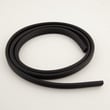
| Drains but leaks at the door | Dishwasher door seal 00645141 | Seals the tub opening to prevent leaks |
Why it matters
Drainage problems can trigger error codes, leave dirty water on dishes, and cause odors. Fixing the drain path early also prevents extra strain on the drain pump and helps cycles finish normally.
Helpful reference
For code-based symptoms (like a drain or fill error), use our Bosch dishwasher error codes to match the display to the most likely cause.
Last updated: January 2026
How do I find the model number on my SHE3ARF2UC?
Your Bosch dishwasher’s model number is printed on the rating label, usually located on the tub frame around the door opening. Open the door on your SHE3ARF2UC and look along the left or right inner edge for a sticker or metal tag with the model and FD numbers.
Where to look on a Bosch dishwasher
Check these common rating-label locations:
- On the left side of the inner door frame (tub lip)
- On the right side of the inner door frame (tub lip)
- Along the top edge of the door opening under the countertop
- On the side edge of the door itself (visible with the door open)
For diagrams and label examples specific to this unit, use the SHE3ARF2UC owner's manual.
What to write down (so you get the right parts)
Bosch labels often include several identifiers. Capture all of these:
- Model number (for example, SHE3ARF2UC)
- FD number (factory date code)
- E-Nr (model identifier used by Bosch)
- Serial number
Quick guide to what each number does
| Label item | What it’s used for | Why you need it |
|---|---|---|
| Model number | Finds the correct parts list and diagrams | Prevents ordering the wrong fit |
| FD number | Identifies production version | Helps match revised parts |
| Serial number | Identifies your exact unit | Useful for service history |
Why it matters
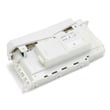
Bosch dishwashers can have multiple production versions under a similar model name. Using the full model information from the rating label helps us match the correct components (like a control board, door seal, or drain pump) the first time.
Last updated: March 2026





