Owner’s manual
 Error Codes


What is the biggest problem in a Whirlpool refrigerator?
The biggest problem we see in Whirlpool refrigerators like model GB2SHDXTQ00 is cooling trouble caused by restricted airflow or heat not being released. In practice, that shows up as warm temperatures, frost buildup, or inconsistent cooling, often tied to blocked vents, dirty coils, or a failing evaporator fan.
Most common “big problems” (and what they look like)
- Air vents blocked by food packages: warm spots, moisture, and uneven temps (the manual warns blocked vents prevent airflow).
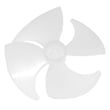
- Evaporator fan not moving air: freezer may get cold but fresh food warms, or you hear abnormal fan noise.
- Defrost system trouble: frost/ice on the back wall, weak airflow, temps creep up.
- Control or sensor issues: temperatures swing, compressor runs longer than expected.
- Water/ice maker related issues: buzzing when the valve fills can be normal, but leaks or no ice point to a supply or valve problem.
Quick checks we recommend first (GB2SHDXTQ00)
- Confirm controls are set near the factory recommended setting (often “4” on many Whirlpool designs); see the GB2SHDXTQ00 owner's manual.
- Make sure rear/top freezer vents and top refrigerator vents are not blocked.
- Listen for normal operating sounds (fan circulating air, refrigerant gurgle, defrost sizzling) versus grinding or repeated clicking.
- If fresh food is warm, check for strong airflow from the refrigerator vents.
- If you suspect a fan issue, inspect the fan area for ice buildup and consider the evaporator motor WPW10128551 if the fan is not running.
Common symptoms and likely causes
| Symptom | Most likely cause | What to do next |
|---|---|---|
| Fresh food warm, freezer OK | Weak/no evaporator airflow | Check vents; test/replace evaporator fan motor |
| Frost on back wall | Defrost problem | Check defrost components and airflow |
| Runs a long time | Normal high-efficiency operation or temp issue | Verify settings, door seal, airflow |
| Buzzing during ice maker fill | Normal water valve operation | Monitor for leaks or no-ice symptoms |
Why it matters
Airflow is the backbone of a bottom-mount refrigerator’s cooling system. When vents are blocked or the evaporator fan cannot circulate air, temperatures and moisture control suffer quickly, and food quality follows.
Last updated: February 2026
Is it better to have a freezer on top or bottom of the refrigerator?
For most households, a bottom-freezer refrigerator like the Whirlpool GB2SHDXTQ00 is the better everyday layout because the fresh-food section (what you use most) sits at eye level, so you bend less and access items faster. Freezer-on-top designs can be more efficient in some kitchens, but they are less convenient day to day.
Quick comparison: top vs bottom freezer
| Feature | Bottom freezer (like GB2SHDXTQ00) | Top freezer |
|---|---|---|
| Fresh-food access | Best (eye level) | Requires bending |
| Freezer access | Requires bending/pulling drawer | Easy reach |
| Organization | Drawer baskets, good for bulk | Shelves, easy visibility |
| Typical cost | Often higher | Often lower |
When a bottom freezer is the better choice
- You use the refrigerator section more than the freezer.
- You want less bending for milk, produce, leftovers, and condiments.
- You prefer a wide refrigerator compartment for trays and platters.
- You like freezer drawers for bagged foods and bulk items.
When a top freezer can be the better choice
- You use frozen foods daily and want them at chest height.
- You want a simpler layout with fewer drawer parts.
- You are prioritizing lower upfront cost and straightforward storage.
Why it matters (airflow and real-world performance)
In the GB2SHDXTQ00, proper cooling depends on steady airflow between the freezer and refrigerator sections. Blocking vents with food packages can cause temperature swings and moisture issues regardless of freezer position. We recommend following the vent and temperature-control guidance in the GB2SHDXTQ00 owner's manual.
Practical tips that help either style perform better
- Keep air vents clear in both compartments.
- Use the recommended control settings first, then adjust in small steps.
- Avoid overpacking; leave space for air circulation.
- Keep doors closed as much as possible to reduce warm-air intrusion.
- Clean spills and wrap foods to reduce odor transfer between sections.
Last updated: February 2026
How do I find the cubic feet of my Whirlpool refrigerator?
For your Whirlpool GB2SHDXTQ00 bottom-mount refrigerator, the most accurate way to find cubic feet is to look up the model’s published capacity in the GB2SHDXTQ00 owner's manual. If you need a quick estimate, measure the usable interior space and convert cubic inches to cubic feet.
Fast ways to get the capacity
1) Use the model information (most accurate)
- Find the model/serial label inside the fresh food compartment (often on a side wall or ceiling).
- Confirm the model number matches GB2SHDXTQ00.
- Check the capacity listing in the GB2SHDXTQ00 owner's manual.
2) Measure and calculate (good estimate)
Use this when you cannot access the published spec right away.
- Measure usable interior width, height, and depth in inches
- Multiply:
width x height x depth = cubic inches - Divide by 1,728 to convert to cubic feet
- Subtract space you cannot use (thick shelves, bins, air channels) for a more realistic estimate
Measurement tips that improve accuracy
- Measure the main open cavity, not door bins.
- Measure depth to the back wall, not to the front of shelves.
- If the back wall has a hump or air tower, measure the average usable depth.
- Do the refrigerator and freezer separately, then add them.
Typical capacity ranges (for context)
Published capacity varies by configuration; most bottom-mount refrigerators commonly fall in these ranges:
| Refrigerator style | Typical total capacity range |
|---|---|
| Bottom-mount (like GB2SHDXTQ00) | 18 to 25 cu. ft. |
| Side-by-side | 20 to 28 cu. ft. |
| French door | 22 to 32 cu. ft. |
Why it matters
Cubic feet helps you compare storage space, choose the right refrigerator water filter and organization accessories, and set realistic expectations for airflow clearance so temperatures stay stable.
Last updated: February 2026
What's the average lifespan of a Whirlpool refrigerator?
Whirlpool refrigerators typically last 10 to 18 years. For your Whirlpool GB2SHDXTQ00 bottom-mount refrigerator, lifespan depends most on basic care (cleaning, airflow, and door sealing) and addressing cooling or defrost problems early; see the GB2SHDXTQ00 owner's manual for model-specific care guidance.
What affects refrigerator lifespan most
A refrigerator usually reaches the high end of its lifespan when the sealed system stays healthy and the unit runs efficiently.
- Keep condenser area clean and allow proper ventilation around the cabinet
- Keep door gaskets sealing tightly to prevent warm air leaks
- Avoid overloading shelves and blocking air vents inside the fresh food section
- Fix frost buildup, warm temperatures, or unusual noises quickly
- Use correct temperature settings and avoid frequent door openings
Quick “lifespan vs. repair” guide
Use this as a practical rule of thumb when deciding whether to repair or replace.
| Age of refrigerator | Typical approach | Why |
|---|---|---|
| 0 to 5 years | Repair is usually worth it | Most parts failures are straightforward |
| 6 to 12 years | Repair if the issue is isolated | Cost-to-value is often reasonable |
| 13 to 18 years | Repair only if low-cost | Efficiency and major failures become more likely |
| 19+ years | Replace in most cases | Major components can become uneconomical |
Parts that commonly impact longevity
If you are troubleshooting poor cooling, noise, or temperature swings on model GB2SHDXTQ00, these parts often matter:
- Evaporator fan and airflow components (freezer-to-fridge cooling)
- Temperature sensing (thermistor) and controls
- Defrost system components (to prevent ice blockage)
- Door switches and light switches (door-ajar heat load)
For example, a failing evaporator fan motor can reduce cooling and increase run time; the evaporator motor WPW10128551 is one common airflow-related part for this model.
Why it matters
A refrigerator that runs longer than it should (from dirty coils, air leaks, or airflow restrictions) puts extra wear on the compressor and control system. Good maintenance helps stabilize temperatures, reduce energy use, and extend overall service life.
Last updated: February 2026
Can I use a generic filter in my Whirlpool?
Yes, you can use a generic water filter in your Whirlpool GB2SHDXTQ00 bottom-mount refrigerator as long as it is specifically listed as compatible with your exact model and it seals correctly; a poor-fit filter can cause leaks and weak water flow. For the correct filter type and replacement steps, follow the GB2SHDXTQ00 owner's manual.
What to check before buying a generic filter
- The box explicitly lists GB2SHDXTQ00 as a compatible model.
- The filter has third-party certification for drinking-water filtration (commonly NSF/ANSI standards).
- The O-rings look intact and lubricated from the factory (no nicks, flat spots, or dryness).
- The filter installs fully and locks in without forcing.
- After installation, you can run water without sputtering after purging air.
How to avoid leaks and low flow after installation
- Turn the filter until it is fully seated (do not cross-thread or force it).
- Dispense and discard several batches of water to purge air and carbon fines.
- Check for drips at the filter head and housing for the next 10 to 15 minutes.
- If you see leaking, remove the filter, inspect the O-rings, and reinstall.
Quick symptom-to-cause guide
| Symptom | Most common cause | What to do |
|---|---|---|
| Dripping at filter area | Mis-seated filter or damaged O-ring | Reinstall; replace filter if O-ring is torn |
| Slow dispenser flow | Filter not fully seated or clogged media | Reseat; try a new filter |
| Sputtering/air bursts | Air trapped after change | Purge more water |
| Bad taste/odor remains | Old filter or fridge needs cleaning | Replace filter; clean interior |
Why it matters
A refrigerator water filter is also a plumbing connection point. If a generic filter does not match the Whirlpool filter head precisely, it can leak into the fresh food section or down to the floor, and it can restrict flow to the dispenser or ice maker.
Related DIY help
Last updated: February 2026