Owner’s manual
 Error Codes


Are bottom mount fridges better?
A bottom-mount refrigerator like the GE CYE22TP4MBW2 is “better” when you use the fresh-food section most often; it keeps everyday items at eye level and puts the freezer down low. The tradeoff is you bend more for frozen foods and the freezer drawer can feel heavier when fully loaded.
What “better” usually means in real kitchens
Bottom-mount designs tend to win on day-to-day convenience because the refrigerator compartment is the one most households open the most.
Common advantages:
- Fresh food shelves are higher, so you bend less for milk, produce, and leftovers
- Wider refrigerator shelves make it easier to see and organize items
- Freezer drawer helps contain bags and boxes so they do not fall out when you open the door
Common drawbacks:
- You bend more to access frozen foods
- A packed freezer drawer can be heavy to slide out
- If you use the ice bin often, you may still be opening the upper doors frequently (varies by configuration)
Quick comparison: bottom-mount vs top-freezer
| Feature | Bottom-mount (like CYE22TP4MBW2) | Top-freezer |
|---|---|---|
| Fresh food access | Best (eye level) | Requires more bending |
| Freezer access | More bending | Best (eye level) |
| Organization | Strong for fresh food | Strong for frozen food |
| Best for | Fresh-food heavy households | Frozen-food heavy households |
Model-specific notes for GE CYE-series bottom freezer units
GE CYE models are counter-depth bottom freezer refrigerators, which many people prefer for a built-in look and easier reach into the back of shelves. For features, controls, and compartment layout details, use the owner's manual.
Why it matters
Choosing the right layout reduces daily strain and helps food stay visible, which cuts down on forgotten items and temperature swings from long door-open times.
Last updated: February 2026
Is GE Café considered high end?
Yes. GE Café is considered a high-end line within GE’s mainstream lineup; it focuses on premium design, upgraded features, and a more “built-in” look compared with standard GE models. For your CYE22TP4MBW2 refrigerator, the owner's manual reflects Café branding, support, and warranty coverage typical of a premium tier.
What “high end” means for Café appliances
Café is positioned for customers who want a more luxury-style experience without moving into true luxury-only brands.
Common high-end traits include:
- Design-forward finishes and hardware options
- Feature-rich controls and dispenser options (model dependent)
- Higher parts complexity (more sensors, boards, and UI components)
- Premium pricing compared with entry and mid-tier lines
- Strong emphasis on fit, finish, and kitchen aesthetics
How Café compares to other GE lines
Here’s a practical way to think about the tiers when shopping or comparing features.
| GE family | Typical positioning | What you usually get |
|---|---|---|
| GE (standard) | Value and everyday reliability | Core features, simpler controls |
| GE Profile | Premium mainstream | More features, more electronics |
| GE Café | Premium design-forward | High-end look plus premium features |
| Monogram | Luxury | Highest-end materials, built-in luxury focus |
Why it matters for parts and repairs
A “higher-end” refrigerator often uses more electronic components and specialized assemblies. When troubleshooting, we focus first on the most common failure points for temperature control, airflow, and user interface.
On CYE22TP4MBW2, examples of premium-type components you may encounter include:
- Refrigerator main control board WR55X46805 for overall operation and cooling logic
- Refrigerator temperature sensor WR55X10025 for temperature feedback
- Refrigerator lcd touch screen WR55X45229 for display and control input
Quick tip if you’re evaluating ownership costs
Café models can cost more to repair when a control board, display, or sealed-system component is involved. For day-to-day performance, staying on top of maintenance helps.
Maintenance that protects performance:
- Replace the water filter on schedule (use the correct filter type)
- Keep doors sealing tightly and level the refrigerator
- Avoid blocking interior air vents with food packages
- Clean spills quickly to prevent odors and airflow restriction
Last updated: February 2026
What is the most common problem with a GE refrigerator?
The most common issue we see with GE refrigerators like model CYE22TP4MBW2 is a cooling complaint (fresh food too warm, freezer too warm, or temperatures that swing). Many “cooling problems” trace back to airflow, fan operation, defrost performance, or a sensor/control issue rather than the sealed system.
Quick checks first (no tools)
- Confirm the temperature settings and give the unit up to 24 hours to stabilize after a power outage or first plug-in.
- Make sure vents inside the fresh food and freezer compartments are not blocked by food packages.
- Listen for normal fan and cooling sounds; fans can run fast after frequent door openings or loading groceries.
- Check that doors close fully and gaskets seal all the way around.
- If you have low water flow or weak ice production, replace the water filter (a clogged filter can create multiple symptoms).
Common symptoms and the most likely causes
| Symptom | Most common cause | What to check next |
|---|---|---|
| Fresh food warm, freezer OK | Airflow issue or evaporator fan problem | Fan noise, frost buildup, blocked vents |
| Both sections warm | Control, sensor, or compressor start issue | Error codes, condenser airflow, run components |
| Strange noises | Often normal operation | Compare to the sound guide in the manual |
| Water/ice issues | Filter restriction or inlet valve issue | Filter, water pressure, valve |
Parts that often relate to these problems
If troubleshooting points to a failed component, these model-matched parts are common fixes:
- Refrigerator temperature sensor WR55X10025 for inaccurate temperature sensing.
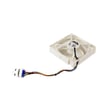
- GE refrigerator evaporator fan motor WR60X26866 if airflow is weak or the fan is noisy.
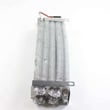
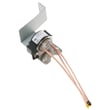
- Refrigerator defrost heater WR51X10132 or refrigerator defrost bi-metal thermostat WR50X10108 if frost buildup is choking airflow.
- Refrigerator main control board WR55X46805 when symptoms are widespread or intermittent.
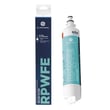
- GE refrigerator water filter RPWFE for slow dispensing and reduced ice production.
Why it matters
Cooling problems can look like a “bad refrigerator,” but they are often caused by airflow and temperature control. Catching a failing fan motor, defrost component, or sensor early helps prevent food spoilage and reduces strain on the compressor.
Where to confirm model-specific behavior
Use the sound and troubleshooting guidance in the owner's manual for CYE22TP4MBW2; it explains normal fan speed changes, cracking/popping during defrost, and other noises that are easy to mistake for a failure.
Last updated: February 2026