Owner’s manual
 Error Codes



Is a top mount or bottom mount fridge better?
A bottom-mount refrigerator like the Maytag MFI2665XEM1 is better when you want everyday fresh-food items at eye level and more flexible refrigerator storage. A top-mount is better when you prioritize a lower purchase price and slightly simpler access to the freezer.
| Feature | Top-mount (freezer on top) | Bottom-mount (freezer on bottom) |
|---|---|---|
| Fresh-food access | You bend more often | More convenient, eye-level access |
| Freezer access | Easier, higher up | You bend more often |
| Organization | Typically simpler shelving | Often more drawers and pull-out storage |
| Energy use | Often slightly lower | Often slightly higher |
| Best for | Budget, basic needs | Frequent cooking, fresh-food use |
- Choose bottom-mount if you use the refrigerator section more than the freezer (most households do).
- Choose top-mount if you want a straightforward layout and you access frozen foods frequently.
- If you have back or knee concerns, bottom-mount usually feels easier day to day.
- If you meal prep and store lots of produce, bottom-mount layouts typically make organization easier.
Your fridge style affects daily ergonomics, food visibility (which reduces waste), and how well you can keep temperatures stable by minimizing door-open time.
If you are comparing layouts because your current refrigerator is not performing well, start with the care and use guidance in the owner's manual. Many “layout” frustrations are actually caused by temperature settings, door sealing, or airflow issues.
Last updated: February 2026
Can you remove a bottom freezer drawer?
Yes. On the Maytag MFI2665XEM1 bottom-mount refrigerator, you can remove the bottom freezer drawer by fully extending it, releasing the drawer from the slide rails, and then lifting the drawer front up and off. Use the steps in the owner's manual for the exact release points on your rail style.
- Unplug the refrigerator or switch off power to avoid the light or fan running while the door is open.
- Pull the freezer drawer all the way open.
- Remove the upper basket/bin (if equipped) so you can access the rail area.
- Look for release tabs, locking clips, or stop screws on the left and right slide rails.
- Press the release tabs (or remove the stop screws) while supporting the drawer.
- Lift the drawer front up to unhook it from the rail brackets, then pull it straight out.
- Ice buildup on rails: Defrost the rail area; ice can lock the slides.
- Overloaded basket: Remove food and bins to reduce weight and twisting.
- Stops still engaged: Some rails require the drawer to be at a specific position before the tabs release.
- Misaligned rails: If one side releases and the other does not, re-seat the released side and try again evenly.
| Task | What “right” looks like |
|---|---|
| Re-hook drawer front | Both sides sit evenly on the rail brackets |
| Slide travel | Drawer opens and closes smoothly without binding |
| Seal check | Drawer closes flush; no gaps along the gasket |
Removing the freezer drawer the correct way prevents bent slide rails, cracked drawer fronts, and air leaks that can cause frost buildup and temperature swings.
Last updated: February 2026
What is the life expectancy of a bottom freezer refrigerator?
A bottom-freezer refrigerator like the Maytag MFI2665XEM1 typically lasts 10 to 15 years. With consistent cleaning, good airflow, and prompt repair of cooling or water issues, it commonly reaches the high end of that range.
Most bottom-mount units land in a predictable window, but usage and maintenance make a big difference.
- Typical lifespan: 10 to 15 years
- Often lasts longer when: condenser area stays clean, doors seal tightly, temperatures stay stable
- Often fails sooner when: door gaskets leak, condenser is clogged, ice maker or water valve leaks go unnoticed
- High-impact components: compressor, electronic control board, evaporator fan system, door gaskets
Use these habits to reduce compressor run time and prevent temperature swings.
- Keep refrigerator at 37°F and freezer at 0°F (typical targets)
- Clean dust from the condenser area regularly (improves efficiency)
- Confirm doors close fully and gaskets seal all the way around
- Replace water filters on schedule to protect the water system
- Fix puddles, frost buildup, or warm spots quickly to avoid bigger failures
| Symptom | Common cause | What to check first |
|---|---|---|
| Warm fridge, freezer OK | Airflow or evaporator fan issue | Vents blocked, frost buildup, fan noise |
| Frost buildup in freezer | Door not sealing or defrost issue | Gasket condition, door alignment |
| No ice or slow ice | Water supply or ice maker issue | Water line, inlet valve, ice maker |
| Clicking, hard starts | Start components or compressor strain | Run capacitor, airflow, dirty condenser |
If you are troubleshooting performance or leaks on the MFI2665XEM1, these model-matched parts are commonly involved:
- Refrigerator water inlet valve WPW10498990 (ice maker and dispenser water supply)
- Refrigerator ice maker assembly WPW10300024 (ice production issues)
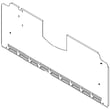
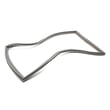
- Refrigerator gasket panel (gray) W10830055 (warm temps, moisture, frost from air leaks)
- Refrigerator run capacitor WPW10662129 (hard-start symptoms)
A refrigerator that is running longer than normal (from dirty coils, air leaks, or restricted airflow) puts extra stress on the sealed system. Reducing run time is one of the most reliable ways to extend service life.
For model-specific care and settings, follow the owner's manual.
Last updated: February 2026
Why does my Maytag bottom freezer build up ice on the bottom?
Ice on the bottom of the freezer in your Maytag MFI2665XEM1 happens when the defrost drain clogs. Defrost water can’t flow down to the drain pan, so it backs up into the freezer and refreezes on the floor into a thick ice sheet.
During defrost, frost melts off the evaporator and should run through a drain hole and tube to the drain pan under the refrigerator. When that drain path plugs with ice, food particles, or sludge, water overflows and freezes where you see it.
- Make sure the freezer drawer closes fully and stays closed.
- Inspect the door gasket for gaps, tears, or areas not sealing.
- Look for a solid ice sheet under the bottom bin/drawer.
- Check that food packages are not blocking vents or the back panel.
- Confirm the refrigerator is level (slightly tipped back helps doors self-close).
- Unplug the refrigerator.
- Remove the freezer bins/drawer.
- Melt the ice on the freezer floor and around the drain trough using warm water.
- Flush the drain hole with hot water until it drains freely.
- If needed, clear the drain tube from the back/bottom area carefully.
For model-specific panel removal and access details, follow the MFI2665XEM1 owner’s manual.
| What you see | Most likely cause | What to do |
|---|---|---|
| Ice sheet mainly on freezer floor | Clogged defrost drain | Thaw and flush drain path |
| Frost coating the back wall | Air leak or defrost issue | Check gasket, door closure, frost pattern |
| Water under refrigerator | Drain tube restricted | Clear tube and confirm routing |
A clogged drain can also cause water leaks, freezer drawer sticking, and temperature swings if ice blocks airflow.
Related help: how to get rid of refrigerator puddles.
Last updated: February 2026