Error Codes

How long do Kenmore electric stoves last?
Most Kenmore electric ranges, including model 6284558252, last 13 to 15 years with normal household use and basic maintenance. Keeping the oven heating system and surface elements in good condition helps the range heat evenly and reduces wear on electrical components.
Typical lifespan and what affects it
A range’s service life depends more on usage and upkeep than the badge on the front.
- Heavy daily cooking and high-heat baking shorten lifespan
- Power surges and loose wiring can damage controls
- Spills that bake onto elements and drip pans speed up corrosion
- Poor airflow around the range can overheat wiring and switches
- Replacing wear parts early often prevents bigger failures
Common “end-of-life” symptoms
If you see these issues repeatedly, repairs can add up quickly.
| Symptom | Most common cause | What we usually check first |
|---|---|---|
| Oven won’t heat or heats unevenly | Failed bake element | Bake unit 5303051519 |
| One burner won’t heat | Burned-out coil element or receptacle issue | Surface unit 318372210 |
| Burners arc, smell hot, or cut out | Loose/overheated power connection | Terminal block 5304409888 |
| Frequent smoking on cooktop | Warped or rusted drip pans | Pan 316048414 |
Maintenance that helps you reach 15 years
These steps reduce stress on the heating circuit and cooktop hardware.
- Keep drip pans clean and replace them when pitted or warped
- Avoid foil on the oven bottom; it can trap heat and damage components
- Tighten loose burner connections during routine service (power off)
- Use cookware that matches the element size to prevent overheating
- If the clock/control acts erratic after outages, consider a surge protector rated for ranges
Why it matters
A well-maintained electric range holds temperature better, cooks more evenly, and avoids expensive electrical failures (like overheated wiring at the terminal block) that can take the range out of service.
Last updated: February 2026
How to find Kenmore Range model number?
For a Kenmore electric range, we typically find the model number on the oven frame behind the door, on the back panel near the vent, or on the frame behind the storage drawer. Once you locate it, match it exactly to your parts list (for example, model 6284558252).
Where to look on a Kenmore electric range
Check these common label locations first:
- Door jamb or oven frame (open the oven door and look along the frame)
- Behind the bottom storage drawer (pull the drawer out and look on the frame)
- Back of the range near the vent or power cord area
- Side panel edge (less common, but possible)
What the model number tag looks like
Most Kenmore ranges use a paper or foil label that includes a model number and often a serial number.
| What you see | What it means | What to do with it |
|---|---|---|
| Model number (example: 6284558252) | Identifies the exact range design | Use it to choose correct parts and diagrams |
| Serial number | Production identifier | Helpful for service history, not usually needed for parts |
| “MOD” or “MODEL” | Label heading | Follow the number next to it |
Tips to avoid ordering the wrong part
Small differences in the model number can change the wiring, surface elements, or oven controls.
- Copy the model number exactly, including all digits
- Take a clear photo of the tag before ordering
- If the tag is worn, look for a second tag behind the drawer
- Use the model number to confirm fit before buying items like a terminal block 5304409888
Why it matters
The model number is the fastest way to match your Kenmore range to the correct replacement parts (such as a bake element, surface unit, or terminal block) and avoid returns due to mismatched fit or wiring.
Last updated: February 2026
How to replace Kenmore Range oven control board?
To replace the oven control board on your Kenmore electric range model 6284558252, we remove power, access the control area, label and transfer each wire one at a time, then reinstall the new board and reassemble the back panel. This keeps wiring correct and restores oven functions.
Before you start (safety and prep)
- Turn off the range breaker (240V) and confirm the display is dark.
- Let the oven cool completely.
- Use masking tape to label each wire and take a clear photo of the wiring layout.
- Use a container for screws so none fall behind the range.
- If the control uses a ribbon cable, handle it by the stiffened ends, not the film.
Access and replacement steps (typical for this style of Kenmore range)
- Pull the range forward enough to work behind it.
- Remove the rear access panel screws and set the panel aside.
- Locate the control board and identify all wire connectors.
- Transfer wires one connector at a time from the old board to the same position on the new board.
- If present, reattach the ribbon cable by fully inserting it into the connector, then locking the retainer.
- Mount the new board, reinstall the rear panel, and restore power.
Quick wiring checklist
| Item | What to do | Common mistake to avoid |
|---|---|---|
| Spade connectors | Pull on the connector, not the wire | Damaging the wire crimp |
| Multi-pin plugs | Match the locking tab orientation | Forcing a plug in backward |
| Ribbon cable | Insert straight, then lock | Creasing or partially seating it |
If the display is still dead or the oven still will not heat
- Recheck the breaker and verify the outlet/terminal connections are tight.
- Inspect the power connection area for heat damage; replace the terminal block 5304409888 if it is burned or brittle.
- If the oven heats poorly after the repair, test the bake element; replace the bake unit 5303051519 if it is open or visibly damaged.
- If you see an error code after restoring power, use our Kenmore glass touch module electric range error codes reference to narrow the failure.
Why it matters
The control board is the “traffic director” for bake, broil, and timing. Correct wire placement and a fully seated ribbon cable prevent misfires, no-heat symptoms, and repeated control failures.
Last updated: February 2026
What does E1 F5 mean on Kenmore oven?
On the Kenmore electric range model 6284558252, the E1 F5 (or F5 E1) error points to a door lock problem (the control is not seeing the lock switch change state correctly). Reset power first; if the code returns, the door lock circuit needs service.
What to do first (safe, quick checks)
- Turn the range off and let it cool completely.
- Reset power: switch the range breaker OFF for 1 minute, then back ON.
- If the oven was in or near a self-clean cycle, wait 30 to 60 minutes for the lock area to cool.
- Try a basic bake cycle; if the code reappears immediately, stop and troubleshoot.
- If the door is physically stuck locked, do not force it; forcing can bend hinges and damage the latch.
Likely causes and the most common fix
In most Kenmore ranges, E1 F5 shows up when the control cannot confirm the door lock position. Common causes include:
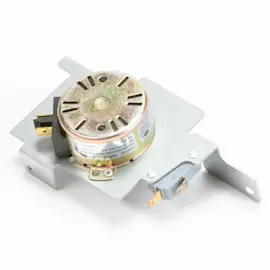
- Failed door lock motor or latch assembly
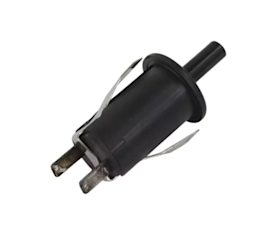
- Bad lock switch (does not open/close reliably)
- Loose or overheated wiring at the lock circuit
- Control board not reading the lock feedback correctly
If the error returns after a power reset, the most common repair is replacing the door lock assembly (or repairing the wiring to it). If you are also seeing odd oven function selection behavior, the oven selector circuit can contribute; the model-specific part to check is the selector switch 5301314788.
Quick symptom guide
| What you notice | What it usually means | What to check next |
|---|---|---|
| Code appears during self-clean | Lock did not engage or disengage | Door lock assembly, wiring |
| Door stays locked after cooling | Lock stuck or switch not changing state | Lock mechanism, switch feedback |
| Code appears as soon as you start bake | Control sees invalid lock state | Lock switch circuit, control input |
Why it matters
The oven control uses the door lock feedback as a safety interlock. When it cannot confirm the lock position, it may disable heating to prevent unsafe operation, especially around self-clean temperatures.
Last updated: February 2026
Where is the thermal fuse located on a Kenmore oven?
On a Kenmore electric range like model 6284558252, the thermal fuse is typically mounted on the back of the oven, behind the rear access panel, close to the bake or broil element wiring terminals. We access it from the rear of the range, not from inside the oven cavity.
Typical location on this style of Kenmore range
In most freestanding electric ranges, the thermal fuse (or high-limit safety device) is placed where it can sense excessive heat and open the circuit to protect the appliance.
Common places we find it:
- On the rear sheet-metal panel, upper-middle area
- Near the bake element terminal block connections
- Near the broil element terminal block connections
- In-line with the oven power feed wiring harness
- Occasionally near the control area if the model uses a control-cavity thermal cutoff
Safe access steps (rear-panel check)
Before removing any panels, disconnect power. Electric ranges use 240 volts, and the rear panel exposes live wiring.
- Turn off the range breaker (double-pole) and confirm the cooktop and oven are dead
- Pull the range forward carefully to avoid stressing the power cord
- Remove the rear access panel screws
- Look for a small, flat safety device with 2 wires on it near the element terminals
- If you see heat damage at the power connection, inspect the terminal block 5304409888
What it looks like and what it does
| Item | What you’ll notice | What it means |
|---|---|---|
| Thermal fuse / thermal cutoff | Small device with 2 wires, often on a metal bracket | Opens when overheating occurs to stop power flow |
| High-limit thermostat (some designs) | Rounder disc-style switch with 2 wires | Cycles or opens at a set temperature depending on design |
Why it matters
If the thermal fuse opens, the oven may stop heating (and sometimes the control or elements may not operate). Finding it near the bake or broil wiring helps you confirm you are checking the correct safety circuit before replacing parts.
Last updated: February 2026
Why is my Kenmore electric range not heating up?
If your Kenmore electric range model 6284558252 is not heating, the most common causes are a failed oven heating element (bake or broil), a bad selector switch, or a power supply issue (tripped breaker or loose cord connection). Start with a quick visual check, then test components for continuity.
Quick checks first (no tools)
- Confirm the range is getting full power: electric ranges typically need 240 volts; a half-tripped double breaker can leave you with lights but no heat.
- Make sure the oven is set to Bake (not just Timer/Clock) and the temperature is above 200°F.
- Look for obvious damage: blisters, cracks, or holes on the bake element.
- If the cooktop works but the oven does not, focus on oven components (bake element, selector switch, wiring).
- If nothing heats (cooktop and oven), focus on power supply and the terminal block.
Most likely failed parts on this model
In many Kenmore electric ranges, the oven can stop heating when one of these fails:
| Symptom | Most likely cause | What to check |
|---|---|---|
| Oven will not heat in Bake | Bake element failed | Inspect and test the bake unit 5303051519 |
| Oven will not heat in Broil | Broil element failed | Inspect broil element for breaks (if equipped) |
| Bake and Broil both dead | Selector switch or power issue | Test the selector switch 5301314788 and verify 240V supply |
| Intermittent heat, burning smell at back | Loose/burned power connection | Inspect the terminal block 5304409888 for heat damage |
Safe troubleshooting steps (basic DIY)
- Shut off power at the breaker before removing panels or touching wiring.
- Pull the bake element forward slightly and check for burned or loose wire terminals.
- Use a multimeter to check continuity on the bake element; no continuity means replacement.
- If the element tests good, check the selector switch contacts and wiring harness connections.
- If you see melted wires or scorching at the cord connection, replace the terminal block and repair any damaged wiring.
Why it matters
An oven that will not heat is often a simple failed heating circuit, but loose power connections can overheat and damage wiring. Catching a failing element, selector switch, or terminal block early helps restore safe, consistent baking temperatures.
Related help: oven wont heat troubleshooting electric range problems video
Last updated: February 2026