 Installation guide
 Owner’s manual
 Error Codes





What is the average life expectancy of a GE dishwasher?
A GE dishwasher typically lasts 10 to 12 years. For your specific GE GSD2100V70BB dishwasher, that same 10 to 12 year average is a solid expectation; consistent cleaning, correct detergent use, and avoiding chronic drain issues can help it reach the upper end of that range. See the GSD2100V70BB owner’s manual for care and cleaning guidance.
- Water quality: hard water speeds mineral buildup on internal parts
- Heat and drying use: frequent heated dry can add wear to heating components
- Drain performance: clogs and backflow strain the pump and can cause leaks
- Loading habits: blocking spray arms reduces cleaning and increases rewash cycles
- Maintenance: periodic cleaning reduces odor, film, and buildup
- Dishes stay dirty even after cleaning filters and using proper cycles
- Standing water in the tub or repeated “won’t drain” symptoms
- Loud grinding or humming that is new or getting worse
- Leaks at the door or underneath the unit
- Cycles stop mid-cycle or controls become unreliable
- Run hot water at the sink until it is hot before starting a cycle
- Use a quality automatic dishwasher detergent (never hand dish soap)
- Keep the rinse aid dispenser filled when spotting or filming appears
- Clean the interior periodically to reduce hard-water film and odor
- Check the sink drain, disposer, and air gap (if installed) when draining slows
| Dishwasher type | Typical lifespan | Notes |
|---|---|---|
| Standard residential dishwasher | 10 to 12 years | Most common expectation |
| Well-maintained, moderate use | 12 to 15 years | More likely with routine cleaning |
| Heavy daily use | 8 to 10 years | More wear on pump, seals, and heater |
Knowing the expected lifespan helps us decide whether to maintain and repair (often cost-effective in mid-life) or plan for replacement when multiple major components start failing.
Last updated: January 2026
What is the most common problem with GE dishwashers?
For the GE GSD2100V70BB dishwasher, the most common service issues we see are draining problems (water left in the tub), no-start conditions (often related to the door latch or power), and poor cleaning from restricted water flow. Many of these start with simple clogs or a door not latching fully.
- Won’t drain or has standing water: clogged drain path, air gap/disposer restriction, or a drain component issue
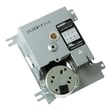
- Won’t start or stops: door not fully latched, wall switch off, tripped breaker, or a control/timer issue
- Not cleaning well: low water temperature, blocked spray arm holes, or a dirty filter area
- Leaks: door seal wear, tub corner baffles, or installation/leveling problems
- Drying complaints: low inlet water temperature, rinse aid empty, or heated dry not selected
- Confirm the kitchen sink drains normally; a slow sink often means a drain restriction.
- Verify hot water is at least 120°F at the sink before starting a cycle.
- Check that the door closes and latches firmly; the dishwasher will not run if the latch is not engaged.
- Clean the air gap (if you have one) and confirm the disposer drain plug was removed.
- Make sure the spray arms spin freely and the holes are not clogged.
If troubleshooting points to a failed component, these model-compatible parts are commonly involved:
| Symptom | Common suspect part | Example part for this model |
|---|---|---|
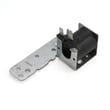
| Won’t drain | Drain solenoid/actuator or drain hose restriction | GE dishwasher drain solenoid assembly WD21X10268 |
| Won’t start | Door latch/switch not closing | Dishwasher door latch WD13X10003 |
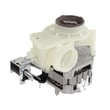
| Poor cleaning/no wash action | Pump or motor not circulating water | GE dishwasher pump and motor assembly WD26X10051 |
Catching a drain restriction or latch problem early helps prevent repeat cycle failures, odors from standing water, and unnecessary wear on the pump and motor.
- Use the GSD2100V70BB owner’s manual for cycle selection, loading guidance, and troubleshooting tables.
- If you’re seeing blinking lights or fault behavior, check GE dishwasher error codes to match symptoms to likely causes.
Last updated: January 2026
Is normal or high dry boost better?
On the GE GSD2100V70BB dishwasher, you typically will not have “Normal” vs “High” Dry Boost choices. This model uses a simple drying selection: HEATED DRY ON (adds heat and extends the cycle) or HEATED DRY OFF (air dry). See the GSD2100V70BB owner’s manual for the exact labels on your control panel.
In practice, “better” depends on whether you want maximum dryness or maximum energy savings.
- Choose HEATED DRY ON for plastics, cups with recessed bottoms, and items that trap water
- Choose HEATED DRY ON when you need dishes dry right away for putting away
- Choose HEATED DRY OFF for everyday loads when you can let dishes air dry
- Choose HEATED DRY OFF to reduce energy use and avoid extra heat
- Use a rinse aid and proper loading to improve drying with either setting
Per the model’s use and care guidance, turning heated dry on uses the heater for faster drying and typically adds time to the wash cycle.
| Option on GSD2100V70BB | What it does | Typical tradeoff |
|---|---|---|
| HEATED DRY OFF | Dishes air dry naturally | More moisture left on plastics and in cup bottoms |
| HEATED DRY ON | Heater runs for faster drying | More energy use; longer cycle time |
Drying performance affects how much water remains on plastics, whether cups come out ready to store, and how quickly you can unload. If dishes still feel wet with heated dry on, rinse aid level, water temperature, and loading usually make the biggest difference.
Last updated: January 2026





