Owner’s manual
 Error Codes


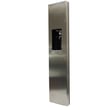

How wide is a 25.6 cubic foot refrigerator?
Most 25.6 cu. ft. side-by-side refrigerators measure about 35 to 36 inches wide. For your GE GSL25JFPHBS, the exact cabinet width and required door-swing space are listed in the owner's manual.
A “25.6 cubic foot” capacity does not lock in one exact width; it is a storage-volume rating. In this size class, manufacturers commonly use a full-width, standard side-by-side cabinet.
- Typical cabinet width: 35 to 36 in.
- Typical height: 69 to 71 in.
- Typical depth (case only): 28 to 32 in.
- Depth with handles can be greater; measure your space to confirm
Even if the cabinet width fits, you still need clearance for airflow, water line routing, and door swing. The GE documentation for this model family calls out these minimum clearances:
- Sides: 1/8 in.
- Top: 1 in.
- Back: 1 in.
- Door swing: about 3/4 in. clearance for a 90° door opening (better access)
| What you are measuring | What to use | Why |
|---|---|---|
| Opening width | Cabinet width + side clearances | Prevents rubbing and improves airflow |
| Opening depth | Depth + room for water line | Avoids kinks and makes service easier |
| Door clearance | Space in front and at hinge side | Lets doors open fully for drawers and bins |
If the refrigerator is too tight in the opening, doors may not open far enough to remove crisper drawers, airflow can be restricted (warm temps), and the water line can kink, affecting the dispenser and ice maker.
Last updated: February 2026
What is the average lifespan of a GE refrigerator?
A GE refrigerator typically lasts 13 years on average. For a side-by-side like GE GSL25JFPHBS, we see a normal service life of 10 to 20 years, with longevity driven most by condenser coil cleaning, stable temperatures, and keeping the water system maintained per the owner's manual.
Most full-size household refrigerators fall into these real-world ranges:
- 10 to 12 years: more repairs start showing up (fans, sensors, ice maker issues)
- 13 to 16 years: common “average” lifespan window
- 17 to 20 years: achievable with strong maintenance and timely part replacement
- 20+ years: less common, usually with lighter use and fewer dispenser features
The biggest factors are heat removal, airflow, and moisture control.
- Dirty condenser coil: raises compressor run time and heat stress
- Weak airflow: failing condenser fan or evaporator fan can cause warm temps and icing
- Defrost problems: frost buildup strains the cooling system
- Water system neglect: old filters and valve issues can lead to leaks or dispenser problems
- Door seal habits: frequent door opening and poor closing increases run time
If performance drops, these are common wear items for GSL25JFPHBS:
| Symptom | Common system | Example part on this model page |
|---|---|---|
| Warm fridge or freezer | Air circulation | Evaporator motor WR60X10185 |
| Frost buildup, poor cooling | Defrost system | Refrigerator defrost heater WR51X10055 |
| Slow water, bad taste | Filtration | Refrigerator water filter MWFP |
Use this as a practical baseline:
- Every 6 months: vacuum and brush the condenser area (more often with pets)
- Every 6 months: replace the water filter (or sooner if flow drops)
- Monthly: confirm doors seal and close easily
- Anytime temps drift: check for blocked vents and overpacked shelves
A refrigerator’s most expensive components are in the sealed system (compressor, condenser, evaporator). Keeping coils clean and airflow strong reduces run time and heat load, which is the most reliable way to reach the 15 to 20 year end of the lifespan range.
Last updated: February 2026
What is the most common problem with a GE refrigerator?
The most common problem we see with GE refrigerators like model GSL25JFPHBS is not cooling well (fresh food too warm, freezer not staying cold, or temperatures swinging). In many cases, the root cause is restricted airflow or a failed cooling-system support part such as a fan motor, sensor, or defrost component; the troubleshooting steps in the owner's manual help narrow it down.
- Make sure the doors fully close and seal; a door left slightly open can cause warm temps and slow ice freezing.
- Avoid blocking air vents with food packages; keep space for airflow.
- Give the refrigerator time after changes; temperature stabilization can take up to 24 hours.
- Clean dust from condenser area (common cause of poor heat removal).
- Confirm the unit is installed in a suitable location; avoid areas below 60°F (16°C).
If the basic checks do not help, these parts are frequent suspects on side-by-side designs:
- Evaporator fan not moving air: evaporator motor WR60X10185
- Temperature feedback problems: refrigerator temperature sensor WR55X10025
- Frost buildup from a defrost failure: refrigerator defrost heater WR51X10055 and refrigerator defrost thermostat WR50X10068
- Poor condenser airflow (warm cabinet, compressor running a lot): refrigerator condenser motor WR60X10220
| What you notice | What it usually points to | What to do first |
|---|---|---|
| Freezer cold, fridge warm | Airflow issue between compartments | Check vents, listen for evaporator fan |
| Frost/ice on back wall of freezer | Defrost system problem | Inspect for heavy frost, then test defrost parts |
| Compressor runs a lot, cabinet feels warm | Dirty condenser area or condenser fan issue | Clean condenser area, check condenser fan |
| Ice cubes small or hollow | Water filter restriction | Replace the refrigerator water filter MWFP |
Poor cooling is more than an inconvenience; it can lead to food spoilage, excessive run time, and extra wear on the compressor. Catching airflow, fan, sensor, or defrost issues early keeps temperatures stable and helps the refrigerator run efficiently.
Last updated: February 2026
Are GE side by side refrigerators good?
Yes. GE side-by-side refrigerators like model GSL25JFPHBS are a solid choice for everyday use because they typically offer easy access to both fresh food and frozen items, strong door storage, and convenient dispenser features. Long-term performance depends most on correct setup, airflow clearances, and routine maintenance.
A side-by-side design is a good fit when you want organized storage and don’t want to bend for freezer drawers.
- Narrow freezer section helps keep frozen foods visible and easy to reach
- Adjustable shelves and door bins make it easier to customize storage
- Through-the-door ice and water adds convenience (with more parts to maintain)
- Works best when doors seal tightly and airflow is not blocked
- Regular filter changes help keep dispenser flow and taste consistent
Correct installation has a big impact on temperature stability, noise, and energy use. Our GSL25JFPHBS documentation calls out these typical clearances for proper air circulation:
| Location | Typical clearance |
|---|---|
| Sides | 1/8 in. |
| Top | 1 in. |
| Back | 1 in. |
We also recommend reviewing the placement, leveling, and water line guidance in the GSL25JFPHBS owner's manual.
Most “good vs. bad” experiences come down to upkeep. Focus on these items first:
- Replace the water filter on schedule; use the reset procedure described in the manual
- If you’re waiting on a filter, install the filter bypass plug so the dispenser and icemaker can operate
- Keep condenser area clean (dust buildup can raise temps and increase run time)
- Don’t overpack the freezer; blocked vents cause warm spots and slow ice production
- Watch for frost buildup; it can point to a defrost system issue
If you’re troubleshooting cooling, defrosting, or dispenser problems on GSL25JFPHBS, these model-matched parts are often involved:
- Refrigerator water filter MWFP (water taste, flow, dispenser performance)
- Refrigerator defrost heater WR51X10055 (heavy frost, warm freezer)
- Evaporator motor WR60X10185 (poor airflow, warm sections, unusual fan noise)
A GE side-by-side can be “good” for many years when airflow clearances are correct, the water system is maintained, and cooling airflow parts (fans, defrost components, sensors) are kept in working order. That combination prevents temperature swings, frost problems, and dispenser complaints.
Last updated: February 2026