Owner’s manual
 Error Codes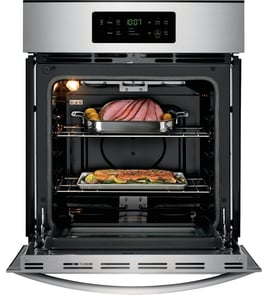



Do I need an electrician to install a wall oven?
If you’re replacing an existing electric wall oven with the same type and the wiring and breaker are already correct, you typically do not need an electrician. If any wiring changes are needed (new 240V circuit, junction box work, or breaker changes), we recommend using a qualified electrician for safety and code compliance.
When you can usually DIY (replacement only)
You’re typically in “swap the oven” territory when all of these are true:
- You’re replacing an electric wall oven with another electric wall oven
- The existing 240V circuit and breaker are already in place and correctly sized
- The oven connects to an existing junction box with enough wire length and good connections
- The cabinet cutout and mounting points match the new oven’s requirements
- You can secure the oven properly, including the anti-tip hardware
For model-specific safety notes and installation requirements, follow the 79048789901 owner's manual.
When you should hire an electrician
Use an electrician when any of the following applies:
- You’re converting from a gas oven to an electric wall oven (new 240V circuit is usually required)
- The breaker trips, wiring looks overheated, or connections are loose or damaged
- You need to change the circuit size, breaker type, or run new cable
- The junction box is missing, undersized, or not accessible for a safe connection
- You’re not comfortable verifying power is fully off and testing for voltage
Quick decision guide
| Situation | Electrician recommended? | Why |
|---|---|---|
| Replace electric with electric; existing junction box and breaker are correct | Usually no | Minimal electrical work |
| New 240V circuit, breaker, or wiring needed | Yes | High-voltage wiring and code requirements |
| Converting gas to electric | Yes | New circuit and proper sizing |
| Signs of heat damage at connections | Yes | Prevents repeat failure and fire risk |
Why it matters
A wall oven uses high voltage and must be secured to prevent tipping. Proper wiring connections and correct circuit sizing help prevent nuisance breaker trips, overheating at the junction box, and unsafe operation.
Last updated: January 2026
Are all 30 inch wall ovens the same size?
No. “30-inch” wall ovens are grouped by a nominal width, but the exact outside dimensions and the cabinet cutout size vary by brand and model. For Kenmore model 79048789901, use the cutout and clearance specs in the 79048789901 owner's manual before ordering a new oven or modifying cabinetry.
What “30-inch” usually means
Most 30-inch wall ovens are designed to fit a 30-inch cabinet opening, but manufacturers can differ slightly in:
- Overall width (frame and trim can add or change the fit)
- Cutout width and cutout height requirements
- Depth behind the control panel and door clearance
- Venting location and required airflow space
- Whether it is single, double, or combo configuration
How to measure for a correct fit
Measure your existing opening and compare it to the new oven’s required cutout dimensions.
- Cutout width: inside left-to-right of the cabinet opening
- Cutout height: inside top-to-bottom of the opening
- Cutout depth: from cabinet front to back wall (account for wiring)
- Front clearance: door swing and handle clearance
- Vent clearance: keep the vent area unobstructed for safe operation
Quick comparison: “nominal” vs “actual”
| Label you see | What it really refers to | What can vary |
|---|---|---|
| 30-inch wall oven | Product category/fit class | Cutout width/height, trim overlap, depth |
| Standard size | Common industry grouping | Exact measurements by model |
| Same brand | Similar styling | Still not guaranteed to match cutout |
Why it matters
A small difference (even under an inch) can prevent the oven from sliding into the cabinet, leave gaps around the trim, or restrict airflow. Proper venting is especially important because warm air is released through the oven vent during operation.
Last updated: January 2026
Can you still buy wall ovens?
Yes. You can still buy new wall ovens, and they remain a common built-in option for many kitchens. If you already own a Kenmore wall oven like model 79048789901, we also support keeping it running with replacement parts and care guidance from the 79048789901 owner’s manual.
What’s available today
Wall ovens are widely sold in multiple sizes and configurations, including single and double ovens, convection models, and self-cleaning options.
Common choices include:
- Single wall ovens (most common for standard cutouts)
- Double wall ovens (two cavities for more capacity)
- Convection wall ovens (fan-assisted baking for more even results)
- Manual-clean vs. self-clean (features vary by model)
If you’re deciding between repair and replacement
If your Kenmore 79048789901 is heating unevenly, not reaching temperature, or showing error codes, repair is often practical when the issue is isolated to a serviceable component.
Typical repair items we see on electric wall ovens:
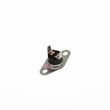
- Oven temperature sensor (temperature regulation issues)
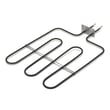
- Bake element or broil element (no heat or weak heat)
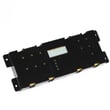
- Control board (dead display, erratic operation)
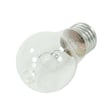
- Oven light components (no interior light)
Quick comparison
| Goal | Best next step | Typical outcome |
|---|---|---|
| Keep your current oven running | Diagnose and replace the failed part | Lowest cost, fastest turnaround |
| Improve features/efficiency | Compare new wall oven features and cutout fit | New controls, new warranty |
| Fix temperature accuracy | Test sensor and calibrate settings | More consistent baking |
Why it matters
Wall ovens are built-in appliances; replacing one usually means confirming cutout dimensions, electrical requirements, and ventilation clearances. Repairing a known issue can avoid cabinet modifications and downtime.
Safety note for wall ovens
From the Kenmore guidance: keep the oven vent unobstructed and avoid touching hot surfaces near the vent during operation. Also disconnect power before servicing items like the oven light. Refer to the 79048789901 owner’s manual for model-specific safety and operating details.
Last updated: January 2026
Are electric wall ovens 110 or 220?
Most Kenmore electric wall ovens like model 79048789901 are wired for a 240-volt (often called 220-volt) household circuit, not a standard 120-volt (110-volt) outlet. This oven is hardwired at a junction box, so correct voltage and breaker size are essential for safe, reliable heating.
What to expect for power requirements
Most U.S. electric wall ovens use a dedicated 240V circuit because the bake and broil elements need higher wattage than a 120V circuit can provide.
- Voltage: typically 240V (sometimes labeled 208V/240V)
- Connection: usually hardwired to a junction box (not a standard plug)
- Circuit: dedicated circuit with the correct breaker size for the oven
- Symptoms of wrong supply: weak heating, long preheat times, error beeps, or no heat
For model-specific electrical details (wiring method, ratings, and any special notes), use the 79048789901 owner's manual.
Quick comparison: 120V vs 240V
| Feature | 120V (110V) circuit | 240V (220V) circuit |
|---|---|---|
| Typical use | Small countertop appliances | Electric wall ovens, ranges, dryers |
| Heating performance | Limited wattage | Full bake and broil output |
| Installation | Standard receptacle | Dedicated breaker; often hardwired |
If the oven will not power up or heat
If your 79048789901 display flashes after a power interruption, the clock must be set before programming cooking functions. Also confirm the home breaker is fully engaged and the wiring connection is secure.
- Reset the breaker fully (OFF then ON)
- Set the clock after power is restored
- Confirm the oven is connected at the junction box (not a loose cord)
- If the breaker trips repeatedly, stop and have the circuit checked
- If the oven has power but heats poorly, test the oven temperature sensor and heating elements
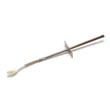
If you are troubleshooting temperature problems, the range oven temperature sensor 5304504897 is a common part involved.
Why it matters
Using the correct 240V supply prevents underheating, nuisance shutdowns, and electrical damage. It also ensures the bake element and broil element can reach and maintain set temperature for consistent results.
Last updated: January 2026