 Owner’s manual





Is GE WPRB8050D1WW considered high end?
GE WPRB8050D1WW is a standard GE top-load washer, not a “high-end” or luxury model. It focuses on practical cleaning features like ONE TOUCH cycles and an advanced variable-speed motor for flexible agitation and spin performance (as described in the owner's manual).
What “high end” usually means for washers
When customers say “high end,” they typically mean a washer that includes more premium build, more automation, and more specialty cycles than a basic model.
Common high-end traits include:
- Larger capacity and more cycle customization
- Quieter operation and stronger vibration control
- More advanced controls (often with more diagnostics)
- Higher spin speeds for better water extraction
- More premium finishes and matching feature sets
What we can confirm about WPRB8050D1WW features
From the model documentation, this washer is designed around simplified cycle selection and variable-speed operation.
Key model highlights:
- ONE TOUCH cycles that automatically set load size, soil level, temperature, and wash/spin settings
- Variable-speed motor that can agitate more slowly than conventional washers for gentler clothes care
- Spin behavior that can ramp up gradually to remove water with less wrinkling
Feature snapshot
| Category | What you get on WPRB8050D1WW | What’s typical on “high end” |
|---|---|---|
| Cycle selection | ONE TOUCH automatic settings | More specialty cycles and deeper customization |
| Drive system | Variable-speed motor | Variable-speed plus more sensors and automation |
| User experience | Simple, guided setup | More advanced UI and diagnostics |
Why it matters
If you are comparing models, “high end” affects expectations for noise, cycle flexibility, and long-term repair costs. Even on a standard washer like this GE model, replacing common wear parts (like a leaking tub seal) can restore performance without replacing the whole machine.
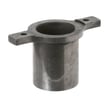
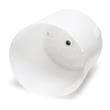
If you are troubleshooting leaks or bearing noise, the washer tub seal WH02X10383 and tub bearing WH2X1198 are common related parts for tub and spin issues.
Last updated: February 2026
How to force GE washer to drain and spin?
On the GE WPRB8050D1WW washer, we force a drain and spin by selecting the DRAIN & SPIN cycle and pressing START. If the washer is mid-cycle, cancel or pause first, then restart DRAIN & SPIN with the lid closed.
Steps to drain and spin (quick method)
- Press Power to wake the control.
- If a cycle is running, press Start/Pause to pause; then cancel the cycle if your model allows.
- Select DRAIN & SPIN.
- Confirm the lid is fully closed (the washer will not agitate or spin with the lid open).
- Press START.
If it still will not drain
A drain problem is usually a hose issue, a restriction, or a pump problem.
- Check the drain hose for kinks or crushing behind the washer.
- Make sure the washer is not sitting on the hose.
- Verify the standpipe height: the top of the drain outlet should be under 8 ft (2.5 m).
- If the washer fills and drains at the same time, confirm the standpipe is above 30 in (76.2 cm).
- If you hear the motor but no water moves, inspect the pump area for blockage; replacement is typically the fix.
Common parts related to “won’t drain”
| Symptom | Most likely area | Part to consider |
|---|---|---|
| Hums but won’t drain | Pump jammed or failed | Washer drain pump assembly WH23X10030 |
| Drains slowly | Hose kink or partial clog | Drain hose routing (no part needed) |
| Stops before spin | Lid not sensed closed | Washer lid switch magnet WH12X10276 |
Why it matters
Running DRAIN & SPIN clears standing water so you can unlock the lid, prevent odors, and avoid water spilling when you move laundry. It also helps confirm whether the issue is control-related or a true drain system problem.
Reference
For the exact button sequence and cycle behavior on this model, use the owner's manual.
Last updated: February 2026
What is the life expectancy of a GE washing machine?
A GE washing machine typically lasts 10 to 14 years with normal household use. Your GE WPRB8050D1WW can reach the high end of that range when it is kept level, not overloaded, and maintained (especially the tub, drain, and suspension components). See the care and safety guidance in the owner's manual.
What affects washer lifespan the most
- Load size and frequency: frequent heavy loads shorten bearing, belt, and motor life.
- Out-of-balance operation: repeated banging stresses the suspension and tub.
- Water quality: grit and mineral buildup can accelerate seal and valve wear.
- Drain performance: slow draining makes the pump work harder and can leave residue.
- Basic upkeep: cleaning and checking for small leaks prevents bigger damage.
Maintenance habits that extend life
- Keep the washer level and stable; re-check after moving it.
- Avoid overloading; bulky loads should have room to circulate.
- Use the right amount of HE detergent to reduce residue.
- Inspect hoses and the tub area for early leak signs.
- Address new noises early (squeal, rumble, grinding) before they spread to other parts.
Parts that commonly drive “end of life” decisions
When a washer starts leaking, roaring in spin, or failing to drain, these are frequent repair areas for this model:
| Symptom | Common area | Example part on this model |
|---|---|---|
| Water leak at tub | Seal/bearing | Washer tub seal WH02X10383, tub bearing WH2X1198 |
| Loud rumble in spin | Bearing/tub support | Tub bearing WH2X1198 |
| Won’t drain or drains slowly | Pump | Washer drain pump assembly WH23X10030 |
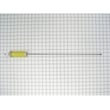
| Excessive shaking/banging | Suspension | Washer suspension rod and spring assembly WH16X10057 |
Why it matters
Knowing the typical 10 to 14-year lifespan helps us decide whether a repair is a smart investment. If your WPRB8050D1WW is within that window, fixing a targeted issue (like a drain pump or suspension problem) often restores reliable performance.
Last updated: February 2026
Does the GE ultrafresh vent system use a lot of electricity?
GE washer model WPRB8050D1WW is a top-load design and does not use an UltraFresh Vent fan system; its electricity use comes mainly from the drive motor, control, and any hot-water heating done by your home’s water heater. For the exact cycles and options on this washer, use the WPRB8050D1WW owner's manual.
What actually uses electricity on this washer
On WPRB8050D1WW, power draw is tied to normal wash functions, not a venting feature.
- Drive motor agitation and spin (largest electrical load on the washer itself)
- Drain pump operation during drain and spin
- Control board, lid lock or lid switch circuits
- Any optional features that extend run time (extra rinse, soak, longer wash)
- Standby power when the washer is plugged in
How to keep odors down without a vent system
These habits prevent musty smells while keeping energy use low.
- Remove laundry promptly when the cycle ends
- Leave the lid open between loads so the tub can air-dry
- Use the correct detergent amount to reduce residue buildup
- Run a periodic cleaning cycle (or a hot wash with an empty tub if your model supports it)
- Check that the washer drains fully; slow draining can leave water behind
Quick comparison: odor prevention vs. energy impact
| Method | Extra electricity used | Best use |
|---|---|---|
| Leave lid open | None | Everyday drying between loads |
| Periodic tub clean cycle | Low to moderate | Removing residue and odor sources |
| Re-washing a musty load | Moderate to high | When clothes already smell |
Why it matters
Most washer odor issues come from moisture plus detergent and soil residue. Since WPRB8050D1WW does not vent the tub with a fan, airflow (lid open) and routine cleaning are the most effective ways to keep the washer fresh.
Last updated: February 2026


