Owner’s manual
 Error Codes



How do you put the bottom grill on a GE refrigerator?
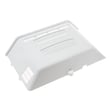
On the GE GWE19JSLGFSS bottom-mount refrigerator, you reinstall the bottom grille (base grille) by aligning it with the mounting slots along the lower front edge, pressing it into place until it seats evenly, then reinstalling any retaining screws (typically with a Phillips screwdriver).
Before you start
- Unplug the refrigerator or switch off power at the breaker if your hands will be near wiring.
- Pull the refrigerator straight out only if needed; raise the front leveling legs first to protect flooring.
- Keep the grille oriented correctly; the top edge usually hooks in first, then the bottom snaps in.
- If the grille uses screws, start them by hand to avoid cross-threading.
Step-by-step: reinstall the bottom grille
- Position the grille centered across the bottom front of the cabinet.
- Engage the top tabs/clips into the matching slots on the refrigerator frame.
- Push along the length of the grille until it sits flush and even.
- Reinstall screws (if equipped) using a Phillips screwdriver; snug is enough.
- Confirm airflow clearance; the grille should not bow inward or block the toe-kick venting.
Quick checks if it will not stay on
- Tabs not lined up: Re-seat the top edge first, then press the bottom in.
- Grille sits crooked: Make sure the refrigerator is level; adjust the front leveling legs.
- Broken clips: Replace the grille if the retaining tabs are cracked or missing.
| What you see | Most likely cause | What we do next |
|---|---|---|
| Grille pops off on one side | One tab missed its slot | Remove and re-hook the top edge, then snap in |
| Grille will not sit flush | Leveling legs too high/low | Level the cabinet, then reinstall |
| Rattling at the bottom | Loose screws or mis-seated clips | Tighten screws, press grille fully into place |
Why it matters
A properly installed bottom grille protects the condenser area, helps maintain correct airflow, and reduces vibration noise. If the grille is loose or missing, cooling performance and energy use can suffer.
For model-specific diagrams and fastener locations, use the GWE19JSLGFSS owner's manual. If you need to order replacement parts for your refrigerator, start with the parts list for this model or search by model number on Sears PartsDirect.
Last updated: February 2026
What is the most common problem with a GE refrigerator?
The most common problem we see with a GE refrigerator like model GWE19JSLGFSS is a cooling complaint: the fresh food section gets warm, temperatures swing, or airflow feels weak. The most frequent causes are restricted airflow, dirty condenser coils, or a failing fan or temperature-sensing component (see the GWE19JSLGFSS owner's manual).
Most common symptoms and what they usually point to
- Fridge warm but freezer cold: airflow issue, damper problem, or evaporator fan problem
- Both sections warm: condenser coils clogged, condenser fan issue, or sealed system/compressor problem
- Ice maker not making ice: water supply issue, filter restriction, or ice maker fault
- Frost buildup on freezer back wall: defrost system issue
- Door alarm or warm temp alarm: door not sealing, door left ajar, or temperature rising
Quick checks we recommend first (no parts needed)
- Confirm settings: 37°F for refrigerator and 0°F for freezer are typical targets.
- Make sure vents are not blocked by food packages.
- Clean condenser coils and verify the condenser fan runs when the compressor runs.
- Check door gaskets for gaps, wrinkles, or areas not gripping the cabinet.
- If you have a dispenser, replace the water filter on schedule and purge air after changes.
Parts that commonly solve “not cooling” and “temperature swings”
If basic checks do not fix it, these model-matched parts are common suspects:
| Symptom | Likely area | Example part for this model |
|---|---|---|
| Temps fluctuate, odd readings | Temperature sensing | GE profile refrigerator temperature sensor WR55X10025 |
| Weak airflow to fresh food | Air control | Refrigerator air damper WR60X27396 |
| Warm fridge, noisy or no fan | Evaporator airflow | Refrigerator evaporator fan motor WR60X32614 |
For ice and water complaints, a restricted filter is a frequent cause; this model uses the GE refrigerator water filter XWFE.
Why it matters
Cooling problems are usually airflow-related at first. Catching them early helps prevent food spoilage, reduces compressor run time, and can stop frost buildup from turning into a bigger defrost or fan repair.
If you need to order parts for GE GWE19JSLGFSS, use the parts list for this model or search by model number on Sears PartsDirect.
Last updated: February 2026
What do you call the bottom part of the refrigerator?
On a GE GWE19JSLGFSS bottom-mount refrigerator, the “bottom part” usually means either the bottom freezer compartment (the freezer drawer) or the lower front/base area under the fresh food doors where the cooling system airflow and components are located. The GWE19JSLGFSS owner's manual also notes it is normal to feel warm air from the bottom area.
Common names for “the bottom part”
Depending on what you are pointing to, these are the most common terms:
- Freezer drawer: the bottom freezer compartment you pull out for frozen food.
- Base grille or kickplate: the trim panel at the very bottom front (if your model has one).
- Machine compartment (bottom rear area): where heat is expelled during normal operation.
- Crisper drawers or pans: the lowest drawers inside the fresh food section for produce.
- Leveling legs (bottom front): adjustable feet used to level the refrigerator.
Quick guide: which “bottom” do you mean?
| If you mean this area | Common name | What it does |
|---|---|---|
| Pull-out compartment at the bottom | Freezer drawer | Stores frozen food; helps keep fresh food at eye level |
| Lowest drawers in the refrigerator section | Crisper drawers (pans) | Helps organize fruits and vegetables; manages moisture |
| Under the doors, near the floor | Base/kickplate area | Covers the lower front; warm airflow can be normal |
| Under/behind the unit | Machine compartment | Moves heat out of the refrigerator during cooling |
Why the bottom can feel warm
Warm air from the bottom of the refrigerator is part of normal cooling operation. Heat has to be released somewhere, and the area under the refrigerator is a common place for that heat to exit.
If the warmth seems excessive, check these basics:
- Make sure the doors close fully and seal all the way around.
- Keep vents inside the refrigerator from being blocked by food packages.
- Leave a little space around the cabinet for airflow.
- Confirm the temperature settings are in a normal range.
- Clean up any moisture under drawers; wipe dry as needed.
Parts that relate to “bottom area” symptoms
If you are troubleshooting cooling, airflow, or temperature swings (often noticed first in the lower areas), these model-matched parts are commonly involved:
- GE profile refrigerator temperature sensor WR55X10025
- Refrigerator air damper WR60X27396
- Refrigerator evaporator fan motor WR60X32614
You can order replacement parts for your GE GWE19JSLGFSS from the parts list for this model, or search by model number on Sears PartsDirect.
Last updated: February 2026