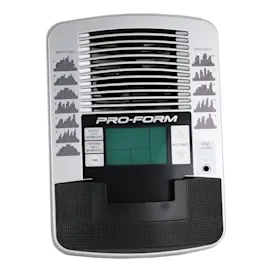
Owner’s manual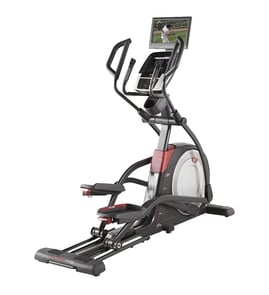

Are home ellipticals worth it?
Yes, a home elliptical is worth it when you will use it consistently; the Proform 831239352 (475e) gives you low-impact cardio at home, which helps protect knees and hips while still improving fitness. The best value comes from matching the machine’s features and maintenance needs to your routine.
- You want low-impact workouts (less joint stress than running).
- You prefer quick, convenient sessions at home (no commute).
- You plan to use it at least 3 times per week.
- You want steady-state cardio plus interval training options.
- You have a dedicated space and can keep the machine level and stable.
| Factor | Home elliptical | Gym membership |
|---|---|---|
| Convenience | Highest (work out anytime) | Depends on travel and hours |
| Cost over time | Upfront cost, then low ongoing cost | Monthly fees add up |
| Variety | One machine style | Many machines and classes |
| Maintenance | You handle wear items and adjustments | Gym handles repairs |
Use the 831239352 owner’s manual to confirm setup, safe use, and basic care. Then evaluate these practical points:
- Fit and comfort: stride feel, handlebar reach, pedal spacing.
- Noise and smoothness: squeaks or grinding usually mean a loose fastener, worn roller, or belt issue.
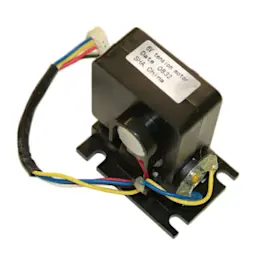
- Resistance performance: if resistance does not change or feels erratic, the elliptical resistance motor 193223 is a common component in the resistance system.
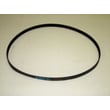
- Drive system condition: slipping, jerky motion, or a burning-rubber smell often points to the deflecto exercise cycle drive belt 176559.
- Flooring: use a mat and keep the unit level to reduce vibration and premature wear.
Ellipticals are popular because they deliver effective cardio with reduced impact. If you choose a model you will actually use and keep it maintained (belt tension, rollers, fasteners), you get better workouts, fewer breakdowns, and a longer service life.
Last updated: January 2026
Can you use an elliptical without power?
Yes, you can often use a Proform elliptical like model 831239352 without plugging it in, because the pedals and flywheel can still move from your stride. What you typically lose without power is the console display and any electronically controlled resistance changes; check the 831239352 owner's manual for your exact setup.
Many ellipticals are “self-powered” for motion but still need power for electronics.
- Usually works without power: basic pedaling motion, flywheel rotation, stride movement
- May not work without power: console screen, workout programs, heart-rate features, speakers
- Often limited without power: resistance adjustments if resistance is motor-controlled
| Feature | Without power | With power |
|---|---|---|
| Pedaling motion | Typically yes | Yes |
| Console display | Typically no | Yes |
| Resistance changes | Sometimes limited | Full control |
| Programs and tracking | Typically no | Yes |
Use these quick checks to identify whether your elliptical’s resistance is electronic or manual.
- Look for an AC adapter jack or battery compartment on the console
- Start pedaling: if the console stays blank, it likely needs batteries or an adapter
- Try changing resistance: if it changes only when the console is on, it is motor-controlled
- Listen for a small “whir” when changing resistance; that points to a resistance motor
If your resistance is motor-controlled, the component that commonly drives those changes is the elliptical resistance motor 193223.
If you plan to use the elliptical without power, you can still get a low-impact, weight-bearing workout, but you may be stuck at one resistance level and lose tracking features. Knowing whether resistance is electronic helps you avoid replacing the wrong part.
Last updated: January 2026
What are the disadvantages of elliptical?
Elliptical workouts are low-impact and convenient, but on the Proform 831239352 (Proform 475E) they can still feel repetitive, take up a lot of floor space, and may not build strength as effectively as resistance training. Use the 831239352 owner's manual to match your workout goals to the machine’s programs and resistance settings.
- Limited muscle and bone loading: Great for cardio, but it typically does not replace strength training for muscle gain and bone density.
- Repetitive motion: Doing the same stride pattern can irritate hips, knees, or feet if form is off.
- Bulky footprint: Many ellipticals are large and awkward to move once assembled.
- Plateau risk: If you always use the same resistance and pace, progress slows.
- Upper-body “help” can reduce leg work: Pulling hard on the moving arms can shift effort away from the legs.
| Option | Joint impact | Strength-building | Best use |
|---|---|---|---|
| Elliptical | Low | Low to moderate | Steady cardio, low-impact training |
| Treadmill walking/running | Moderate to high | Low | Weight-bearing cardio |
| Bike | Low | Low | Knee-friendly cardio, intervals |
| Rowing | Low to moderate | Moderate | Full-body conditioning |
- Use intervals (alternate easy and hard minutes) instead of one steady pace.
- Keep posture tall; avoid leaning on the handles.
- Push through your heels and keep knees tracking over toes.
- If resistance feels inconsistent, inspect the drive system and consider the elliptical resistance motor 193223 if your troubleshooting points to a resistance-control issue.
- If you notice slipping, squealing, or a “dead spot,” check belt condition and tension; the deflecto exercise cycle drive belt 176559 is a common wear item.
Knowing the limitations helps you plan a balanced routine: use the elliptical for low-impact cardio, then add basic strength work (squats, hinges, pushes, pulls) to cover what cardio machines do not.
Last updated: January 2026