 Owner’s manual
 Error Codes




What is the average lifespan of an LG dishwasher?
An LG dishwasher typically lasts 10 to 15 years. For your LG LDS5811ST-01, consistent care (cleaning, correct detergent, and avoiding overloads) is what most often determines whether it reaches the higher end of that range; follow the maintenance guidance in the LDS5811ST-01 owner's manual.
What affects lifespan the most
- Water quality and heat: hard water and low water temperature increase buildup and reduce cleaning performance.
- Filter and sump cleanliness: debris left in the sump strains the wash system.
- Loading habits: overloading blocks spray and forces longer, harsher cycles.
- Drying and venting: keeping the door closed after cycles can trap moisture and odors.
- Wear parts: racks, rollers, and seals wear faster when the unit is frequently overloaded.
Maintenance schedule we recommend
| Task | How often | What it prevents |
|---|---|---|
| Clean the filter area and remove debris | Weekly | Poor wash, pump strain |
| Run a dishwasher cleaner cycle | Monthly | Odors, mineral buildup |
| Check spray arms for clogs | Monthly | Spots, food residue |
| Inspect door sealing surfaces | Monthly | Leaks, moisture damage |
Signs your dishwasher is nearing end of life
- Cycles complete but dishes stay gritty or cloudy
- Standing water remains after the cycle
- Loud grinding or repeated motor-related noises
- Frequent leaking around the door or underneath
- Repeated heating or drying complaints (even after cleaning)
Why it matters
A dishwasher that is maintained well usually avoids early failures in high-wear areas like the wash system, drain path, and door sealing surfaces. That keeps cleaning performance consistent and helps your LDS5811ST-01 reach its normal service life.
Last updated: February 2026
How to identify LG dishwasher model?
To identify your LG dishwasher model, open the door and look for the rating label on the inside edge of the tub, typically along the left side. That label lists the model number (such as LDS5811ST-01) and the serial number; match it to your parts list and LDS5811ST-01 owner's manual.
Where to look (fast checklist)
- Open the dishwasher door fully.
- Check the tub frame just inside the door.
- Focus on the left-hand side area first.
- Look for a printed rating label with barcodes.
- Write down the model number and serial number exactly as shown.
What the label information is used for
The model number and serial number help us match the correct LG dishwasher parts and documentation, including items like the wash pump motor, heating element, and door latch.
| Label item | What it tells you | Why it matters |
|---|---|---|
| Model number | Exact product version (example: LDS5811ST-01) | Ensures correct part fit and diagrams |
| Serial number | Production identifier | Helps confirm manufacturing details for service |
Why it matters
LG dishwashers can look similar across series (for example LDS5811WW, LDS5811BB, and LDS5811ST). Using the exact model number from the rating label prevents ordering the wrong part and speeds up troubleshooting.
Last updated: February 2026
Can I replace dishwasher parts myself?
Yes, for the LG LDS5811ST-01 dishwasher, we often see DIYers successfully replace common wear parts (like racks/rollers, spray arms, hoses, and some seals) by shutting off power and water and following the steps in the LDS5811ST-01 owner's manual. For electrical diagnostics or leak-related repairs, plan extra time and use careful testing.
What you can usually replace yourself
These repairs are typically straightforward with basic hand tools:
- Clean or service the filter system (this model uses a self-cleaning filter that grinds food before it drains)
- Replace a leaking or damaged drain line such as the dishwasher drain hose assembly AEM69493807
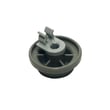
- Fix a rack that won’t roll smoothly by replacing the dishwasher dishrack roller, lower 4581DD3003C
- Replace a worn spray component like the dishwasher spray arm assembly, lower AGB32598301
- Replace a door latch that won’t hold the door closed (often a no-start symptom)
Repairs that are more advanced
These can still be DIY, but they require more disassembly, careful reassembly, and sometimes electrical checks:
- Water fill problems (inlet valve, float/float switch, flow sensor)
- Heating and drying issues (heater circuit, wiring, control-related checks)
- Wash performance issues tied to the pump or diverter system (motor assemblies, seals)
Quick skill-and-risk guide
| Repair type | Typical difficulty | Common risk if done wrong |
|---|---|---|
| Rack rollers, spray arm | Easy | Poor cleaning, rack damage |
| Drain hose | Medium | Leaks, siphoning, poor draining |
| Inlet valve, float switch | Medium | Overfilling, no-fill |
| Pump/diverter, heater circuit | Hard | Leaks, repeat failures, electrical issues |
Safety steps we recommend first
Follow these basics before any repair:
- Turn off power at the breaker (do not rely only on the door switch)
- Shut off the water supply; the manual notes this is especially important if the dishwasher will be unused for a long time
- Protect the floor and have towels ready for residual water
- Use only fingertip pressure on control buttons (hard/sharp objects can damage controls)
Why it matters
Dishwashers combine water, heat, and electricity. Doing the right prep (power off, water off, correct reassembly) prevents leaks, protects components like the wash pump motor and heating element, and helps your LG dishwasher run quietly and clean effectively.
Last updated: February 2026
What is the most common problem with the LG dishwasher?
The most common issues we see with the LG LDS5811ST-01 dishwasher are poor cleaning and draining problems. Most of the time, the root cause is restricted water flow (spray arm or filter issues), a drain restriction, or a door that is not fully latching, which can also trigger LG error codes.
Most common symptoms and what they usually mean
- Dishes still dirty: spray arm holes clogged, low water temperature, or circulation issue
- Water left in the bottom: drain hose restriction, sump blockage, or drain system problem
- Stops mid-cycle: door not fully latched, control sensing a fill or drain fault
- Not drying well: normal behavior varies by cycle; drying performance depends on heat and venting
- Unusual noise: debris in the sump area, pump strain, or a motor-related issue
Quick checks we recommend first (fast, no parts)
- Turn off power at the breaker for safety.
- Clean out visible debris in the bottom of the tub and around the sump area.
- Confirm the door closes firmly and the latch engages.
- Run hot water at the sink until it is hot, then start the cycle.
- If an error code appears, match it to the code list in LG dishwasher error codes.
Parts that commonly solve these problems on this model
If cleaning and basic checks do not fix it, these model-matched parts are common next steps:
| Problem you notice | Common part to inspect/replace | What it affects |
|---|---|---|
| Stops mid-cycle or will not run when door is shut | Dishwasher door latch lock 4026DD3001A | Confirms the door is closed so the cycle can run |
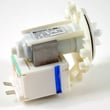
| Poor cleaning, weak spray, or odd wash sounds | Dishwasher wash pump motor EAU61383518 | Circulates water through the spray arms |
| Not filling or fills inconsistently | Dishwasher water inlet valve 5221DD1001F | Controls water entering the dishwasher |
| Heating or drying complaints tied to no-heat symptoms | Dishwasher water heating element 5301DD1001G | Heats wash water to improve cleaning and drying |
Why it matters
Poor cleaning and draining are usually water-flow problems. LG’s self-cleaning filter system helps by grinding food particles before they go down the drain, but heavy soil, low water temperature, or a restriction can still reduce performance. For cycle options and operating details, use the LDS5811ST-01 owner’s manual.
Last updated: February 2026





