 Owner’s manual



How much is an AC unit for a 2000 sq ft house?
For a 2,000 sq ft home, a typical installed central air conditioner system usually lands around $6,000 to $12,000; higher-efficiency equipment, ductwork repairs, electrical upgrades, or a heat pump setup can push the total higher. For Goodman model CK30-1 specifically, our parts list supports repairs, not full system pricing; use the CK30-1 owner's manual to confirm what type of outdoor unit you have and what matches your existing system.
- System size (tons/BTU): Many 2,000 sq ft homes end up in the 3 to 4 ton range, depending on climate and insulation.
- Efficiency rating: Higher efficiency typically costs more up front.
- Ductwork condition: Leaky, undersized, or damaged ducts add labor and materials.
- Electrical and pad work: Disconnect, whip, breaker sizing, and condenser pad replacement can add cost.
- Refrigerant line set work: Flushing, resizing, or replacing lines increases labor.
- Permits and labor rates: Local requirements and contractor pricing vary widely.
| Scenario | What’s included | Typical installed range |
|---|---|---|
| Straight replacement | Outdoor unit plus indoor coil match, minimal extras | $6,000 to $9,000 |
| Mid-complexity install | Some duct or electrical work, line set adjustments | $8,000 to $12,000 |
| High-complexity upgrade | Significant ductwork, premium efficiency, major electrical | $11,000 to $16,000+ |
If your Goodman CK30-1 outdoor unit is otherwise in good shape, repairing common wear items can be the most cost-effective path.
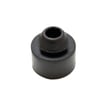
- Replace worn vibration isolators or pass-throughs to prevent wire rub and cabinet noise (example: grommet B1339530).
- Address corrosion and cabinet protection if the unit housing is deteriorating (example: appliance spray paint (bahama beige) B260S8291).
- Confirm wiring condition and connections before replacing major components.
An AC system that is oversized or installed without addressing duct leakage and electrical requirements can cost more to run, cool unevenly, and wear out faster. Matching capacity and airflow to the home is what protects comfort and equipment life.
You can also search by model number and order repair parts through our model parts list or on Sears PartsDirect.
Last updated: February 2026
What AC brands to stay away from?
We don’t recommend “avoiding” specific AC brands across the board because reliability depends heavily on correct sizing, installation quality, and maintenance. For a Goodman CK30-1 outdoor unit, the best approach is to evaluate the exact model’s parts support, serviceability, and installer track record, then compare total cost of ownership.
- Installer quality and load calculation: Proper sizing and airflow setup prevent short cycling and coil freeze-ups.
- Parts availability: Choose equipment with readily available common wear parts (contactors, capacitors, fan motors).
- Warranty terms you can actually use: Confirm registration requirements and what labor is or isn’t covered.
- Service access: Units with clear wiring diagrams and accessible panels reduce diagnostic time.
- Noise and efficiency goals: Match SEER2/HSPF2 targets to your climate and budget.
| What homeowners notice | Most common root cause | What to check before buying |
|---|---|---|
| Not cooling well | Incorrect sizing, duct issues, low refrigerant | Load calc, duct condition, commissioning report |
| Frequent breakdowns | Electrical issues, poor install practices | Installer reputation, surge protection, correct wiring |
| High bills | Low efficiency match, airflow problems | SEER2 match, static pressure, filter/return sizing |
| Short lifespan | Lack of maintenance, dirty coils | Maintenance plan, coil cleaning access |
- Confirm your exact equipment details using the CK30-1 owner’s manual.
- Compare how easy it is to maintain the outdoor unit (coil cleaning, electrical compartment access).
- Prioritize models with strong parts support; even small items like a grommet B1339530 matter for vibration control and wire protection.
- If you’re shopping broadly, search by model number and parts diagrams on Sears PartsDirect to see long-term parts coverage.
Most “brand problems” show up as comfort issues, noise, or repeat service calls. Those outcomes are usually driven by sizing, ductwork, electrical protection, and maintenance, not the logo on the cabinet.
Last updated: February 2026
What's the average lifespan of a Goodman AC?
A Goodman air conditioner like model CK30-1 typically lasts 10 to 15 years. With consistent maintenance (clean coils, correct airflow, and proper electrical connections), it’s common to reach the upper end of that range and sometimes longer in mild climates.
Most central AC and heat pump outdoor units fall into these practical ranges:
| Condition | Typical lifespan | What usually limits life |
|---|---|---|
| Minimal maintenance | 8 to 12 years | Dirty coils, overheating, electrical wear |
| Normal maintenance | 10 to 15 years | Compressor and fan motor wear |
| Excellent maintenance | 15 to 20 years | Corrosion, refrigerant leaks, major component failure |
We see the biggest lifespan gains when these basics are done on schedule:
- Replace or clean the indoor air filter regularly to protect airflow
- Keep the outdoor coil clean and the cabinet clear of leaves and grass
- Maintain 18 to 24 inches of clearance around the outdoor unit for ventilation
- Tighten and inspect electrical connections (loose wiring causes heat damage)
- Confirm the condenser fan runs smoothly and quietly (no wobble or scraping)
- Keep the unit level to reduce vibration and tubing stress
For model-specific service and safety notes, use the CK30-1 owner's manual.
These symptoms often mean the unit is nearing a major repair decision:
- Cooling is weak even after the coil is cleaned and airflow is correct
- Breaker trips or the contactor chatters (electrical wear)
- Loud grinding or squealing from the outdoor fan area
- Frequent hard starts or long run times with poor temperature drop
- Visible oil staining on refrigerant lines (possible leak)
Knowing the expected lifespan helps you plan: if your CK30-1 is already in the 10 to 15 year window, routine maintenance and small fixes can be cost-effective; repeated compressor or refrigerant issues usually push the decision toward replacement.
If you’re ordering maintenance items or small hardware for this model, you can shop the parts list for CK30-1 first, or search by model on Sears PartsDirect.
Last updated: February 2026