 Owner’s manual


What is the capacity of GTW460ASJ0WW?
The GE GTW460ASJ0WW top-load washer has a 4.2 cu. ft. wash basket capacity, which is a common “family-size” capacity for handling everyday mixed loads, towels, and bedding. For cycle and load-size guidance specific to this model, use the GTW460ASJ0WW owner's manual.
A 4.2 cu. ft. washer like the GTW460ASJ0WW is designed for medium-to-large loads without overpacking.
- Handles typical weekly laundry for 2 to 4 people
- Works well for towels and jeans when you avoid stuffing the basket
- Can wash bedding, but bulky comforters may need careful loading
- Cleans best when clothes can tumble and circulate (not packed tight)
Overloading is a top cause of poor cleaning, out-of-balance spinning, and extra wear on suspension parts.
- Load loosely to the top row of holes in the basket, not pressed down
- Mix large and small items to balance the spin
- Use the correct water level or load size setting for the fabric type
- If the washer bangs or walks, reduce load size and redistribute
- For heavy items, wash 1 to 2 at a time (blankets, rugs, heavy hoodies)
| Capacity range | Typical fit | Best for |
|---|---|---|
| 3.5 to 4.0 cu. ft. | Medium | Singles, couples, lighter weekly loads |
| 4.1 to 4.6 cu. ft. | Large | Families, towels, mixed loads |
| 4.7+ cu. ft. | Extra-large | Large bedding, frequent bulky loads |
Knowing the GTW460ASJ0WW capacity helps you choose the right load size and cycle so the washer fills, agitates, drains, and spins correctly. Proper loading also reduces vibration and helps prevent out-of-balance conditions.
Last updated: February 2026
How many years should a GE washing machine last?
A GE washing machine like model GTW460ASJ0WW typically lasts 10 to 14 years with normal household use. Consistent care (correct loading, good drainage, and periodic cleaning) helps you reach the high end of that range and avoid early failures.
Most top-load washers fall into a predictable lifespan range based on usage and maintenance.
| Usage pattern | Typical lifespan | What usually shortens it |
|---|---|---|
| Light (1 to 3 loads/week) | 12 to 15 years | Long idle periods, corrosion, pests |
| Average (4 to 7 loads/week) | 10 to 14 years | Overloading, poor leveling, hard water |
| Heavy (8+ loads/week) | 7 to 10 years | Constant high-speed spin, frequent bulky loads |
We see the biggest lifespan gains from a few simple habits:
- Keep loads balanced; avoid packing the basket tight.
- Use the right amount of HE detergent; too much can cause residue and odors.
- Level the washer to reduce vibration and wear on suspension parts.
- Check pockets; coins and screws can damage the drain pump and tub.
- Run periodic cleaning cycles and wipe the lid and tub ring area.
When a washer starts shaking, not draining, or not spinning, these are common wear items to check first:
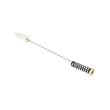
- Washer suspension rod and spring assembly WH16X26911
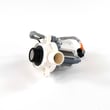
- Washer drain pump assembly WH23X28418
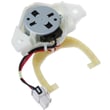
- Mode shifter WH03X30517
- Washer lid lock WH08X37938
Knowing the expected lifespan helps you decide whether to repair or replace. If your GTW460ASJ0WW is under about 10 years old, fixing a single failed part (like a drain pump or lid lock) is often the most cost-effective path.
For model-specific operating and care recommendations, follow the maintenance and loading guidance in the GTW460ASJ0WW owner’s manual.
Last updated: February 2026
What are common problems with GE washers?
Common problems we see on GE top-load washers like model GTW460ASJ0WW include not draining, not spinning or agitating, leaking, excessive vibration, and lid-lock issues. Many start with simple causes (load balance, clogs, oversudsing), but worn parts like the drain pump or suspension can also be the root.
- Won’t drain / water left in tub: clogged drain hose, blocked pump, or a failing drain pump
- Won’t spin or agitate: lid lock not engaging, mode shifter issue, drive system problem
- Loud banging or walking: unbalanced load, weak suspension rods, or an out-of-level cabinet
- Leaking: loose fill hoses, inlet valve seepage, tub ring splash-over, or pump/hoses leaking
- Won’t start / stops mid-cycle: lid lock problem, control issue, or cycle selection problem
- Unplug the washer for 1 minute, then retry the cycle.
- Redistribute the load (especially bulky items) and run a Drain and Spin.
- Check for oversudsing: use HE detergent and reduce amount if you see lots of foam.
- Inspect hoses: confirm fill hoses are tight and not cracked; check the drain hose for kinks.
- Look for a drain restriction: coins, socks, and lint commonly block the pump path.
| Symptom | Common suspect part | Example model-matched part |
|---|---|---|
| Not draining | Drain pump | Washer drain pump assembly WH23X28418 |
| Excessive vibration | Suspension | Washer suspension rod and spring assembly WH16X26911 |
| Won’t spin/agitate | Shifting mechanism | Mode shifter WH03X30517 |
| Lid won’t lock / won’t start | Lid lock | Washer lid lock WH08X37938 |
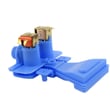
| Overfilling / slow fill | Water valve | Washer water inlet valve assembly WH13X26535 |
If your washer displays an error code, match it to the symptom first, then test the likely components (lid lock, drain pump, shifter, control). Use our GE gtw top load washer error codes reference alongside the troubleshooting steps in the GTW460ASJ0WW owner’s manual.
Catching the real cause early prevents repeat failures; for example, a “won’t drain” complaint can be a simple clog, but running the washer repeatedly with poor draining can strain the pump and leave odors behind.
Last updated: February 2026
How do I tell what model my GE washer is?
Your GE washer’s model number is printed on a rating label on the cabinet. On the GTW460ASJ0WW-STYLE top-load design, it’s most often under the lid opening, on the back of the control panel, or on a cabinet side near the bottom. Confirm the exact format in the GTW460ASJ0WW owner's manual.
- Lift the lid and check the rim around the tub opening
- Check the back of the control panel (rear panel area)
- Look on the left or right cabinet side near the bottom edge
- If you have a front-load GE instead, check the door jamb or behind the door
The label usually includes a MODEL field and often a SERIAL field. Write both down exactly as shown.
| Label field | What it’s used for | Example (format) |
|---|---|---|
| Model number | Matching parts and diagrams | GTW460ASJ0WW |
| Serial number | Production date and version details | Letters and numbers |
We use the model number to match the correct GE washer parts for your exact configuration (controls, lid lock, drain pump, and suspension components can vary by version).
- Copy the model number character-for-character (including any zeros)
- Take a clear photo of the label before ordering parts
- If the label is worn, check multiple locations on the cabinet for a duplicate sticker
Last updated: February 2026
How to tell if GE washer drain pump is bad?
On the GE GTW460ASJ0WW washer, a bad drain pump usually shows up as standing water left in the tub, a drain cycle that never finishes, or loud grinding or humming when the washer should be pumping water out. We confirm it by ruling out clogs first, then checking power to the pump and the pump motor’s electrical readings.
- Washer won’t drain or drains very slowly
- Water remains in the basket after the cycle
- You hear grinding, rattling, or a loud hum during drain
- The washer stops mid-cycle (often right when it should drain)
- You find leaks near the pump area (cracked housing or loose hose)
- Unplug the washer and turn off water.
- Check the drain hose for kinks, pinches, or a blocked standpipe.
- Inspect the tub-to-pump and pump-to-drain hoses for socks, coins, or lint buildup.
- If the hoses are clear, the pump itself is the next suspect.
If you need diagrams and access steps specific to this model, use the GTW460ASJ0WW owner’s manual.
These checks separate a failed pump motor from a control or wiring issue.
- Voltage to pump during drain: If the control sends power during the drain portion but the pump does not run, the pump is typically failed.
- Resistance of pump motor (unplugged): A reading that is open (OL) or far outside a typical small pump motor range points to a bad pump.
- Harness condition: Look for loose connectors, corrosion, or broken wires at the pump.
| What you observe | Most likely cause | What to do next |
|---|---|---|
| Hums but won’t move water | Jammed impeller or failing pump | Check for debris; replace pump if impeller is damaged |
| Silent during drain, has power | Failed pump motor | Replace the pump |
| No power to pump during drain | Control, lid lock, wiring, or mode issue | Check wiring; run diagnostics per manual |
For this model, the drain pump is the washer drain pump assembly WH23X28418.
A weak or failed drain pump can leave water in the tub, trigger out-of-balance behavior, and cause cycle interruptions. Catching it early prevents repeat stoppages and reduces the chance of leaks from pump strain.
Last updated: February 2026
Why is my GE front load washer leaking from the bottom?
A bottom leak usually comes from the drain path (hose or pump), the fill system (inlet valve or internal hose), or an internal tub-to-pump hose that loosens during heavy vibration. For the GE GTW460ASJ0WW, start by checking the drain pump area and all hose connections per the GTW460ASJ0WW owner’s manual.
- Loose, split, or rubbed-through drain hose (often after the washer vibrates or gets pushed back)
- Cracked or leaking drain pump housing
- Pump filter or pump-to-tub hose connection leaking (clamp not seated)
- Water inlet valve seepage that runs down the cabinet and looks like a bottom leak
- Oversudsing that forces water out of the tub ring area and down the frame
- Unplug the washer and turn off both water supply valves.
- Pull the washer forward and look for a trail line: water marks usually point back to the source.
- Run a small fill and watch the back and sides with a flashlight.
- Switch to drain/spin and watch the pump and drain hose.
- If the leak only happens during spin, check for excess vibration and an off-balance load.
| Symptom you see | Likely area | Part to consider |
|---|---|---|
| Leaks during drain or spin | Pump or pump hoses | Washer drain pump assembly WH23X28418 |
| Slow seep from back, worse during fill | Fill valve or internal fill hose | Washer water inlet valve assembly WH13X26535 |
| Water appears after lid locks and cycle starts | Not a lid issue; trace water path | Inspect hoses and clamps first |
A small bottom leak can quickly damage the drive components, cause corrosion on wiring, and lead to repeated out-of-balance events. Fixing the leak source early also prevents moldy odors and floor damage.
- You see water near wiring, the motor area, or the control components
- The washer leaks heavily or trips a breaker
- You find a cracked outer tub or major internal damage
Last updated: February 2026


