Owner’s manual
 Error Codes


What is the lifespan of an LG refrigerator?
LG refrigerators typically last 10 to 15 years. For your LG LRMDS3006S bottom-mount refrigerator, lifespan is driven less by the model number and more by maintenance, installation conditions, and how hard the sealed system and compressor have to work (heat, dust, door openings).
What affects lifespan the most
We see these factors make the biggest difference on French door, bottom-freezer models like LRMDS3006S:
- Condenser airflow and cleanliness (dust buildup makes the compressor run longer)
- Door seal condition (air leaks cause longer run times and moisture issues)
- Water quality and filter changes (helps protect the dispenser and icemaker water path)
- Room temperature and ventilation clearances (hot kitchens shorten component life)
- How often doors are opened and how full the compartments are
For model-specific operating and maintenance guidance, follow the schedule in the LRMDS3006S owner’s manual.
Simple maintenance that helps you reach the full lifespan
These are the highest-impact steps most owners can do without tools:
- Vacuum the condenser cover/vents periodically (do not remove panels)
- Keep doors closing fully; avoid overloading door bins
- Replace the air filter about every 6 months (or when the indicator comes on)
- Replace the water filter about every 6 months (or when flow drops)
- Keep freezer at 0°F and fresh food at 37°F (typical defaults)
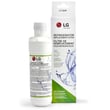
If you need a compatible replacement, use the LG lt1000p refrigerator water filter ADQ74793501 for this model.
Lifespan expectations at a glance
| What you’re evaluating | Typical expectation | What it means |
|---|---|---|
| Overall refrigerator lifespan | 10 to 15 years | Common replacement window for modern refrigerators |
| Filters (air and water) | About 6 months | Routine items that protect performance |
| Compressor and sealed system | Often longest-life components | Usually not the first failure when airflow is good |
Why it matters
A refrigerator that runs longer than it should (dirty condenser area, warm room, leaky gasket) puts extra load on the compressor and fans. Keeping airflow clear and temperatures stable is the most reliable way to extend the service life of your LRMDS3006S.
Last updated: January 2026
What is the most common problem with an LG refrigerator?
For the LG LRMDS3006S, the most common service issue we see across LG refrigerators is a cooling problem (fresh food or freezer warming up). On this model, start by ruling out simple causes like Demo/Display Mode, blocked airflow, and dirty condenser areas before suspecting a sealed-system or compressor-related failure.
Quick checks for LRMDS3006S cooling complaints
Use these steps first because they are fast and often solve “not cooling” calls.
- Confirm the control panel is not showing OFF (Display/Demo Mode); the reset steps are in the LRMDS3006S owner’s manual.
- Verify doors close fully and gaskets seal; warm air leaks can mimic a cooling failure.
- Make sure air vents inside the refrigerator are not blocked by food packages.
- Allow up to 24 hours for temperatures to stabilize after installation, moving, or a power outage.
- Clean the condenser cover and vents (do not remove sealed panels); restricted airflow can cause warm temps.
Other common LG refrigerator issues (and what they usually point to)
Beyond cooling, these are frequent symptoms customers report on French door/bottom-freezer designs like LRMDS3006S.
| Symptom | Common cause category | First thing to check |
|---|---|---|
| Ice maker not making ice | Water supply, temperature, sensor/bin issues | Freezer set to 0°F, water valve open, bin/sensor clear |
| Water dispensing slowly | Filter or low water pressure | Replace filter, confirm 20 to 120 psi supply |
| Frost buildup or clumping ice | Door not sealing, frequent openings | Ice room door closes tightly, clear chute |
| Unusual noises | Normal operation vs. fan/airflow | Leveling, items vibrating, airflow obstructions |
When a part is likely involved
If basic checks do not help and you have persistent warm temperatures, the repair often shifts from “maintenance” to “component diagnosis.” For LRMDS3006S, parts that can be involved include the compressor and airflow components.
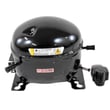
- If the unit runs but won’t cool: sealed system/compressor diagnosis is common; see compressor TCA36811409.
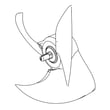
- If temperatures swing and airflow seems weak: inspect for fan/duct issues; see refrigerator freezer air duct cover and fan assembly AEB76044903.
- If odors are the complaint (not cooling): replace the air filter on schedule; see LG kenmore refrigerator air filter ADQ73214408.
Why it matters
Cooling problems can lead to food spoilage quickly, and they can also be caused by simple settings (like Display Mode) that look like a major failure. Checking settings, airflow, and condenser cleanliness first can save time and avoid unnecessary parts replacement.
Last updated: January 2026
Why does my LG freezer keep icing up at the bottom?
On the LG LRMDS3006S, ice building up on the freezer floor is most often caused by a clogged defrost drain; defrost water can’t flow to the drain pan, so it refreezes at the bottom. We recommend clearing the drain and fully defrosting the freezer to restore normal drainage (see the LRMDS3006S manual).
What to check first (quick diagnosis)
- Sheet of ice on the freezer floor: points to a drain that’s blocked by ice or debris.
- Water under the lower drawer or basket: meltwater is pooling and refreezing.
- Frost increases after door openings: warm, humid air adds moisture that later freezes.
- Door not sealing well: extra humidity enters and can worsen icing.
How to fix bottom ice buildup
- Unplug the refrigerator (or turn off power at the breaker).
- Remove food and the lower freezer drawer/baskets so you can access the freezer floor.
- Manually defrost the ice buildup (let it melt naturally; use towels to catch water).
- Clear the drain opening once the ice is softened. A turkey baster with warm water can help flush the drain.
- Dry the freezer floor and reinstall drawers.
- Restore power and monitor for 24 to 48 hours.
When a part may be involved
If the drain keeps freezing back up soon after you clear it, the issue can be related to airflow or a defrost/drain-heat problem. On this model, checking the freezer air movement is a practical next step; if airflow is weak or noisy, the fan assembly may need attention.
- If you suspect a freezer airflow issue, inspect the refrigerator freezer air duct cover and fan assembly AEB76044903 for ice blockage, damage, or abnormal noise.
Why it matters
A blocked drain doesn’t just create a nuisance ice sheet; it can lead to recurring frost, reduced freezer space, and temperature swings that affect food quality.
Symptom guide
| What you see | Most likely cause | Best next step |
|---|---|---|
| Solid ice sheet on freezer floor | Defrost drain blocked | Defrost and flush drain |
| Frost on packages plus bottom ice | Door left ajar or gasket leak | Check door seal and closing |
| Re-freezes within days | Drain line refreezing or airflow/defrost issue | Check airflow and defrost performance |
Last updated: January 2026
Why is my LG refrigerator leaking from the bottom?
On the LG LRMDS3006S, water leaking from the bottom is usually caused by defrost water not draining properly (so it overflows into the base) or a small leak in the water supply system for the dispenser or icemaker. Use the LRMDS3006S manual for safety steps and component locations.
Quick checks (start here)
- Pull out the freezer drawer and look for ice or water under the drawer bottom.
- Note when the leak appears: after dispensing water, after ice production, or all the time.
- Check the rear water line for kinks, rubbing, or a loose connection.
- Look for water trails down the back panel or onto the floor near the left or right rear corner.
- Make sure doors close fully; warm air leaks can create excess frost that later melts.
Most common causes and what to do
| Symptom | Most likely cause | What we recommend |
|---|---|---|
| Water/ice under freezer drawer | Defrost drain restricted or frozen | Unplug, thaw ice, then clear the drain opening and flush with warm water |
| Leak happens after using dispenser or making ice | Water line connection or valve seep | Inspect tubing and fittings; replace cracked fittings or a weeping valve |
| Slow drip from back/bottom even when not dispensing | Inlet valve not sealing fully | Check for seepage at the valve outlet; replace valve if it drips at rest |
Parts that may be involved (if the leak is from the water system)
If you confirm the leak is tied to the water supply (not defrost meltwater), these model-compatible parts are commonly involved:
- Refrigerator water inlet valve MJX64471402 (controls water flow to the dispenser and icemaker)
- Refrigerator water tube fitting 4932JA3002C (connects water tubing sections; can seep if cracked or loose)
- Refrigerator plastic tube 5210JA3005A (water tubing that can split, kink, or leak at the ends)
Why it matters
Bottom leaks can damage flooring and can also freeze into a sheet of ice under the freezer drawer, which can prevent proper door closing and reduce cooling performance.
Helpful DIY guidance
Last updated: January 2026