 Owner’s manual


How many years should a GE washing machine last?
A GE washer like model GTW180SCJ0WW typically lasts 10 to 14 years with normal household use. Consistent care (especially avoiding overloads and keeping the washer clean and dry between loads) is what most often determines whether you land closer to 10 years or closer to 14.
What affects washer lifespan the most
- Load habits: Overloading strains the drive system and suspension.
- Moisture control: Leaving the lid open after washing helps the basket dry out.
- Water supply hose condition: Old hoses can fail; replacing them on schedule prevents damage.
- Installation and leveling: A washer that shakes or walks wears parts faster.
- Detergent use: Too much detergent can cause buildup and poor rinsing.
Maintenance that helps GTW180SCJ0WW reach the high end of the range
We recommend these practical steps based on common washer wear points and GE care guidance:
- Leave the lid open after loads so moisture can evaporate.
- Clean the basket with a soft cloth and mild detergent (avoid harsh or gritty cleaners).
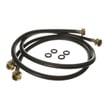
- Replace fill hoses every 5 years and shut off faucets when not in use.
- Load loosely and match the load size setting to the amount of laundry.
- Wipe spills promptly and avoid hitting the cabinet with sharp objects.
For model-specific care and operating details, follow the GTW180SCJ0WW owner's manual.
Quick lifespan expectations by usage
| Usage pattern | Typical outcome | What you will notice first |
|---|---|---|
| Light (few loads/week) | Closer to 14 years | Minor noise, slower drain/spin over time |
| Average (most households) | 10 to 14 years | Vibration, longer cycles, occasional imbalance |
| Heavy (daily loads) | Closer to 10 years | More frequent out-of-balance, wear in drive components |
Why it matters
Planning around a 10 to 14 year lifespan helps you decide when maintenance is worth it versus when a major repair (drive, tub, or control components) may not be the best long-term value.
Last updated: February 2026
Where is the filter on my GE Deep Fill washing machine?
On the GE GTW180SCJ0WW top-load washer, there is no routine, user-accessible “lint filter” like you may see on some other washers. Most filtering happens through the drain pump system; for model-specific care steps, follow the GTW180SCJ0WW owner's manual.
What you can check (the practical “filter” areas)
- Drain hose and standpipe: clogs here can act like a blocked filter and cause slow draining.
- Pump area (internal): small items (coins, pins, socks) can restrict flow; access typically requires opening the cabinet.
- Inlet valve screens: tiny screens where the hot and cold hoses connect can trap sediment and reduce fill.
- Washer basket: residue buildup can mimic “filter” problems; regular cleaning helps.
Quick symptoms and what they usually point to
| Symptom | Most common cause | What to do first |
|---|---|---|
| Won’t drain or drains slowly | Drain path restriction (hose/standpipe/pump) | Check drain hose routing and standpipe for blockage |
| Won’t fill or fills slowly | Sediment in inlet screens or low supply | Turn off water, remove hoses, rinse screens |
| Stops mid-cycle with lid open | Lid safety behavior | Close lid; cycle timer can keep running |
| Leaves lint on clothes | Overloading, too much detergent, poor sorting | Reduce load size, adjust detergent, sort by lint |
Why it matters
When a washer seems to have a “dirty filter,” the real issue is usually restricted water flow (fill or drain). Clearing those restrictions helps prevent poor cleaning, long cycle times, and standing water odors.
Helpful model-specific tips
- GE recommends replacing fill hoses about every 5 years to reduce leak risk and maintain good flow.
- Load items loosely; overloading can reduce wash performance and increase lint redeposit.
- If you’re seeing an error code, use the GE gtw top load washer error codes guide to match the code to the most likely cause.
Last updated: February 2026
What is the most common problem with GE washers?
The most common GE washer problems are “won’t drain” and “won’t spin,” and on the GE GTW180SCJ0WW those symptoms are often tied to a lid safety issue, a drain restriction, or a fill and water-level sensing problem that stops the cycle.
Most common symptoms and what they usually mean
- Won’t spin or agitate: the lid is open, the lid safety system is not being satisfied, or the drive system is not shifting.
- Won’t drain or leaves clothes wet: a drain path restriction or a pump-related issue can prevent proper water removal.
- Won’t fill or fills incorrectly: water supply is off, inlet screens are clogged, or the pressure system is not sensing water level correctly.
- Stops mid-cycle or pauses: some pauses are normal during wash and spin as the washer alternates actions.
- Loud noise or vibration: unbalanced loads, suspension wear, or bearing-related wear can cause noise and shaking.
Quick checks we recommend first (fast, no parts)
- Close the lid fully and restart the cycle; this model will not agitate or spin with the lid up.
- Confirm both faucets are fully on and the washer is plugged into a working outlet.
- Check the drain setup: the top of the drain outlet should be less than 6 ft above the floor.
- Reduce oversudsing: add detergent before clothes and avoid using too much (excess suds can affect performance).
- Look for error codes and match them to the symptom using GE gtw top load washer error codes.
Parts that commonly relate to these problems on GTW180SCJ0WW
If the basic checks point to a component issue, these model-matched parts are common suspects:
| Symptom | Commonly involved part | What it affects |
|---|---|---|
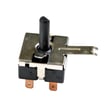
| Won’t spin/agitate with lid closed | Washer lid switch assembly WH12X10334 | Lid safety input to allow spin/agitate |
| Won’t fill or water level seems wrong | Washer water-level pressure switch hose WH41X365 | Water-level sensing to control fill |
| Slow/no fill | Washer water inlet valve WH13X22720 | Hot/cold water flow into the washer |
Why it matters
Drain, spin, and fill problems are the most common because they stop the cycle completely or leave clothes wet. Catching simple causes first (lid closed, water on, correct drain height, correct detergent use) prevents unnecessary part replacement and repeat breakdowns.
For model-specific operating details and care steps (including hose replacement guidance), use the GTW180SCJ0WW owner’s manual.
Last updated: February 2026


