


Is a 16 or 18 inch chainsaw better?
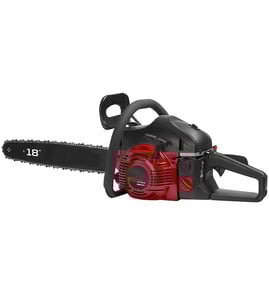
An 18-inch chainsaw is better for cutting larger limbs and small trees faster, while a 16-inch chainsaw is better for lighter work, easier handling, and reduced fatigue. For a Craftsman 358348230 gas chainsaw, choose based on the wood diameter you cut most often.
Quick comparison: 16-inch vs 18-inch bar
| Feature | 16-inch bar | 18-inch bar |
|---|---|---|
| Best for | Limbs, firewood, storm cleanup | Larger limbs, small tree felling, thicker rounds |
| Handling | Lighter, more maneuverable | Heavier, slightly less nimble |
| Cutting speed | Good | Faster in thicker wood |
| Kickback risk | Typically lower | Typically higher (more nose area) |
| Typical user | Homeowners, occasional use | Frequent cutting, bigger jobs |
How we recommend choosing
- Match the bar to your typical wood size: a good rule is the bar should be 2 inches longer than the average diameter you cut.
- Prioritize control over reach: if you cut overhead limbs or work in tight spaces, 16-inch handling usually wins.
- Consider engine load: longer bars can bog down more easily if the chain is dull or the saw is tuned lean.
- Think about maintenance: longer bars mean more chain to sharpen and more bar oil consumption.
- Safety first: whichever length you choose, keep the chain sharp and the chain brake working.
Why it matters
Bar length affects more than reach. It changes how the saw balances, how hard the engine works, and how likely the bar tip is to contact wood (a common cause of kickback). If your Craftsman 358348230 is hard to start or runs rough, fixing fuel and air issues often improves cutting performance more than adding bar length.
Parts that help performance (common on this model)
If the saw struggles under load, these maintenance parts are often involved:
- Air filter 545057701 (restricted airflow can reduce power)
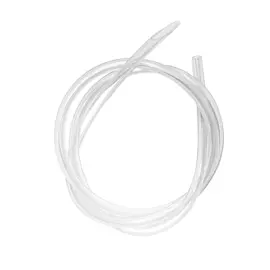
- Poulan lawn & garden equipment fuel line, small 530069247 (cracked lines can cause lean running)
- Craftsman lawn & garden equipment engine fuel filter 530095646 (plugged filter can starve fuel)
Related DIY help
Last updated: February 2026
What model is my Craftsman chainsaw?
Your Craftsman chainsaw’s model number is printed on a model tag or label attached to the saw. For the parts page you are on, the model is 358348230; match that number to the label on your saw to confirm you have the right parts list.
Where to look for the model number label
On most Craftsman gas chainsaws, the model tag is on the saw body, not on the bar or chain. Check these common spots:
- On the starter housing (recoil starter side)
- Near the rear handle or trigger area
- On the crankcase or engine housing
- Under the top cover (near the air filter area)
- Near the oil and fuel cap area
What to do once you find the number
Use the full model number exactly as shown on the label (including any extra digits). Then:
- Compare it to 358348230 to confirm compatibility
- Use the model number to choose parts like the air filter 545057701 or poulan lawn & garden equipment fuel line, small 530069247
- If the label is dirty or faded, wipe it clean and use a flashlight to read stamped or printed characters
Quick check: model number vs. part numbers
| What you found | What it’s used for | Example from this model |
|---|---|---|
| Model number | Identifies the exact chainsaw version | 358348230 |
| Part ID / part number | Identifies a replacement part | 545057701 (air filter), 530069247 (fuel line) |
Why it matters
Craftsman chainsaws can look similar across multiple model numbers, but parts like the chain brake, clutch, fuel line routing, and ignition components can differ. Confirming the model number first helps you avoid ordering the wrong chain, carburetor parts, or fuel system components.
Last updated: February 2026
Will an Oregon chain fit a Craftsman chainsaw?
Yes, an Oregon chain can fit a Craftsman chainsaw, but it must match your Craftsman 358348230’s exact chain specs (pitch, gauge, and drive link count) and be compatible with your bar. If any one of those specs is different, the chain will not fit or will run unsafely.
What you must match (the 3 chain specs)
Check the markings on your current chain, the bar stamp, or measure the old chain and bar to confirm:
- Pitch (common homeowner sizes include 3/8 low profile or .325)
- Gauge (common sizes include .050, .058, .063)
- Drive links (the count must match your bar length and sprocket setup)
If your saw currently uses a 20-inch chain, the drive link count is especially important.
A quick compatibility checklist
Use this checklist before buying any Oregon replacement chain:
- The chain pitch matches the bar and clutch drum sprocket
- The chain gauge matches the bar groove
- The drive link count matches your bar
- The chain type matches your use (low-kickback for homeowner use versus full chisel for faster cutting)
- Your chain brake and clutch area are in good condition (a worn sprocket can make a “correct” chain behave badly)
Compare your current chain to a known match for this model
One chain listed for Craftsman 358348230 is chain 20 (78/325-050) 952051310. Use it as a reference point for the three specs when selecting an Oregon equivalent.
| What to match | Where to find it | Why it matters |
|---|---|---|
| Pitch | Bar stamp or chain package | Must match sprocket and bar |
| Gauge | Bar stamp or measure drive link thickness | Must fit bar groove |
| Drive links | Count links or read chain package | Must match bar length/setup |
Why it matters
A chain that is the wrong pitch or gauge can bind in the bar, derail, or wear the clutch drum and bar quickly. Matching the specs keeps cutting smooth and helps the chain brake work as designed.
For more guidance on chain fit and general chainsaw maintenance, use our chainsaw common questions resource.
Last updated: February 2026
What is the best gas chainsaw on the market?
There is no single “best” gas chainsaw for everyone; the right choice depends on what you cut (limbs vs. trunks), how often you use it, and the bar length and power you can handle safely. If you are maintaining a Craftsman chainsaw like model 358348230, focus on fit, safety features, and parts support so it stays reliable.
How we recommend choosing the best gas chainsaw
- Cutting size and frequency: occasional storm cleanup needs less power than regular firewood cutting.
- Bar length: match the bar to typical wood diameter; longer bars add weight and kickback risk.
- Power-to-weight: a lighter saw with enough power usually performs better for homeowners.
- Safety features: chain brake, anti-kickback chain, throttle lock, and good front hand guard.
- Serviceability: easy access to the air filter, spark plug, and fuel system.
Quick comparison: what “best” means by use case
| Use case | What to prioritize | Typical bar length range |
|---|---|---|
| Yard cleanup and pruning | Light weight, easy starting, safety features | 12 to 16 in. |
| Firewood and medium logs | Power-to-weight, durable clutch, good filtration | 16 to 20 in. |
| Larger trees and heavy cutting | Higher power, longer bar capability, strong anti-vibration | 20 in. and up |
Why parts and maintenance matter as much as brand
A gas chainsaw that is easy to maintain usually starts easier, runs smoother, and lasts longer. For the Craftsman 358348230, common upkeep items include fuel delivery and filtration.
Parts that often solve “not running right” complaints
- Replace cracked or soft fuel line with the poulan lawn & garden equipment fuel line, small 530069247
- Clean or replace the air filter 545057701
- If fuel flow is restricted, replace the Craftsman lawn & garden equipment engine fuel filter 530095646
- If it will not shut off reliably, check the lawn & garden equipment kill switch 530069572
Helpful DIY guidance
If your decision is driven by starting problems or rough running (common reasons people think they need a “better” saw), use our troubleshooting steps in tips for a hard to start chainsaw before replacing the tool.
Last updated: February 2026
Do you use 40 1 or 50 1 gas in a chainsaw?
For a Craftsman chainsaw like model 358348230, use the fuel mix ratio specified for that engine; for most homeowner 2-cycle chainsaws the correct mix is 50:1, and some older designs use 40:1. Running too little oil (too lean) damages the piston and cylinder.
How to choose the right mix ratio
Use these rules to avoid engine damage:
- If your saw is specified for 50:1, you can run 40:1 short-term; it may smoke more and carbon up faster.
- If your saw is specified for 40:1, do not run 50:1; that is oil-leaner and causes rapid wear.
- Mix with fresh gasoline and 2-cycle oil; old fuel creates hard-start and poor-running problems.
- If the saw has been sitting, replace the fuel and inspect the fuel system before extended use.
Mixing chart (common amounts)
| Gasoline amount | 50:1 oil | 40:1 oil |
|---|---|---|
| 1 gallon | 2.6 oz | 3.2 oz |
| 2 gallons | 5.1 oz | 6.4 oz |
| 1 liter | 20 ml | 25 ml |
If it runs rough after changing fuel
A wrong mix ratio often shows up as hard starting, surging, bogging, or excess smoke. These parts commonly affect fuel delivery and mixture:
- Clogged filter: replace the air filter 545057701.
- Restricted fuel flow: replace the Craftsman lawn & garden equipment engine fuel filter 530095646.
- Cracked or soft lines: replace the poulan lawn & garden equipment fuel line, small 530069247.
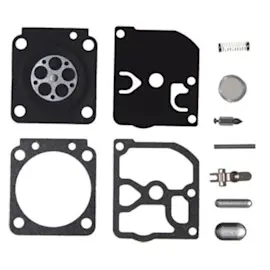
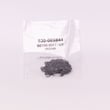
- Carburetor metering issues: rebuild with the husqvarna lawn & garden equipment engine carburetor diaphragm and gasket kit 530069844.
Why it matters
In a 2-cycle engine, the oil in the fuel lubricates the crank bearings, piston, and cylinder. Too little oil (oil-lean mix) removes that lubrication and quickly scores internal parts.
For step-by-step help diagnosing starting and running problems, use tips for a hard to start chainsaw.
Last updated: February 2026