Owner’s manual
 Error Codes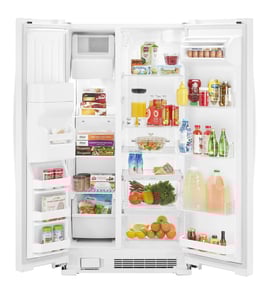

Are GE side by side refrigerators good?
Yes. GE side-by-side refrigerators like model PSS26NSWASS are a solid choice for everyday use because they typically deliver consistent cooling, convenient in-door ice and water, and practical storage. Like any side-by-side, performance depends on correct setup, airflow, and keeping the water and cooling systems maintained.
What “good” usually means for a side-by-side
A good side-by-side refrigerator balances temperature stability, usable freezer space, and reliable dispenser performance.
- Steady fresh food and freezer temperatures with normal compressor run time
- Convenient ice and water dispensing (when the water line and filter are maintained)
- Adjustable shelving and door bins for flexible organization
- Normal operating sounds (newer designs can sound different than older units)
- Long-term reliability improves with routine cleaning and proper door sealing
What to expect for noise and run time
Newer refrigerators often sound different than older models. It is normal to hear a high-efficiency compressor hum, occasional clicks/pops as the cabinet cools, and a brief whoosh when doors close as pressure equalizes. For model-specific operating notes and features, use the PSS26NSWASS owner's manual.
Quick sound guide
| Sound | Common cause | When to act |
|---|---|---|
| Hum or pulsing | Compressor running | If cooling is weak or sound is unusually loud |
| Whoosh at door close | Pressure equalizing | Normal |
| Clicks/pops/cracks | Materials expanding/contracting | Normal unless constant and cooling issues occur |
Maintenance that keeps performance “good”
These steps prevent the most common complaints (slow ice, weak water flow, warm temps).
- Replace the water filter on schedule; use the correct refrigerator water filter MSWF
- If you have reverse osmosis water, use the refrigerator filter bypass plug as directed in the manual
- Keep vents inside the fresh food and freezer sections unblocked
- Clean condenser area periodically to support efficient cooling
- Confirm doors close fully and gaskets seal all the way around
Why it matters
Side-by-side refrigerators rely on controlled airflow between compartments. When airflow is restricted or the water system is neglected, you can see temperature swings, slower ice production, and weaker dispenser flow even though the refrigerator is still running.
Last updated: February 2026
How to reset water filter on GE side by side?
On the GE PSS26NSWASS side-by-side refrigerator, you reset the water filter indicator after installing the new filter by confirming “Filter Replaced” on LCD models or pressing and holding the RESET FILTER pad for 3 seconds on non-LCD models. Then flush water for 5 minutes.
Reset steps (by control type)
- LCD display models: press FILTER REPLACED to confirm replacement.
- Non-LCD models: press and hold the RESET FILTER pad for 3 seconds.
- After resetting, run water from the dispenser for 5 minutes to clear air and reduce sputtering.
- If water spurts right after installation, keep dispensing; this is normal as air purges.
Install the new filter correctly (so the reset “sticks”)
A filter that is not fully seated can cause low flow, leaks, or a filter light that comes back on.
- Line up the arrow on the cartridge with the holder.
- Place the top of the cartridge up into the holder (do not force it upward).
- Slowly turn the cartridge to the right until it stops.
- Do not overtighten; it typically turns about 1/2 turn.
If you need the correct replacement cartridge for this model, use the refrigerator water filter MSWF.
Quick reference
| What you see on the fridge | What to do | How long |
|---|---|---|
| LCD screen reminder | Press FILTER REPLACED | A few seconds |
| Filter light on dispenser (no LCD) | Hold RESET FILTER pad | 3 seconds |
| Gurgling, sputtering, cloudy water | Flush dispenser water | 5 minutes |
Why it matters
Resetting the indicator keeps your maintenance schedule accurate, and flushing the system after a filter change helps prevent sputtering and improves water flow and taste. For the exact control layout on your PSS26NSWASS, follow the steps in the owner's manual.
Last updated: February 2026
What is the most common problem with a GE refrigerator?
The most common GE refrigerator problem is a cooling complaint: the fridge or freezer is warm, temperatures swing, or it runs longer than expected. On GE model PSS26NSWASS, the most frequent causes are airflow restrictions, frost buildup from a defrost issue, or a fan or sensor problem; start with basic checks, then test the cooling components listed in the PSS26NSWASS owner's manual.
Quick checks we recommend first
- Confirm the controls are set correctly and the cooling system is turned on.
- Make sure doors close tightly and are not being held open by bins or food.
- Clear blocked vents inside the fresh food and freezer sections.
- Listen for normal operating sounds; newer high-efficiency compressors can run longer and sound different.
- Check for heavy frost on the freezer back wall (a strong clue of a defrost problem).
Common causes and the parts that often fix them
If the refrigerator is warm or inconsistent, these are the most common component-level culprits:
| Symptom | Likely cause | Example part for PSS26NSWASS |
|---|---|---|
| Freezer cold, fridge warm | Airflow/damper issue | Refrigerator air damper assembly WR60X10229 |
| Frost on freezer back wall, weak airflow | Defrost system failure | Refrigerator defrost heater WR51X10055 or refrigerator defrost bi-metal thermostat WR50X10069 |
| Warm temps, no fan noise from freezer | Evaporator fan not running | Rca refrigerator evaporator fan motor WR60X10185 |
| Temps swing, odd cycling | Temperature sensing issue | GE profile refrigerator temperature sensor WR55X10025 |
| Runs a lot, warm cabinet, fan noise near bottom | Condenser fan issue | Refrigerator condenser fan WR60X10220 |
Why it matters
Cooling problems can spoil food and also make the compressor run longer than normal. Fixing airflow, defrost, or fan issues early helps the refrigerator maintain stable temperatures and reduces strain on major components.
Last updated: February 2026
Which are the best side-by-side refrigerators?
The “best” side-by-side refrigerator depends on your priorities (reliability, ice and water performance, noise, and storage layout). If you already own a GE PSS26NSWASS, the best value often comes from keeping it running efficiently with proper care and the right replacement parts listed in the PSS26NSWASS owner's manual.
How we recommend choosing the best side-by-side
Focus on the features that affect daily use and long-term ownership:
- Temperature stability: consistent fresh food and freezer temps
- Ice and water system performance: steady dispensing, minimal clogs
- Noise level: normal operating sounds vs. loud fan or compressor noise
- Interior layout: shelf adjustability, bin size, deli drawer usefulness
- Serviceability: parts availability for common wear items (fans, sensors, defrost parts)
What “best” looks like for most households
Most shoppers end up happiest with a side-by-side that balances these four areas:
| Priority | What to look for | What it prevents |
|---|---|---|
| Food freshness | stable temps, good airflow | warm spots, freezing in fresh food |
| Convenience | dependable ice and water | slow fill, dispenser issues |
| Efficiency | clean condenser area, good door seals | higher bills, longer run times |
| Low hassle | common parts are replaceable | costly downtime |
If you already have GE model PSS26NSWASS
Before replacing the refrigerator, we recommend checking a few high-impact items that commonly affect performance in side-by-sides:
- Replace the water filter on schedule (see refrigerator water filter MSWF)
- If temps swing or readings seem off, check the sensor (see GE profile refrigerator temperature sensor WR55X10025)
- If you hear loud airflow noise or have warm sections, inspect the evaporator fan system (see rca refrigerator evaporator fan motor WR60X10185)
- If you see frost buildup or poor cooling, inspect the defrost system (see refrigerator defrost heater WR51X10055 and refrigerator defrost bi-metal thermostat WR50X10069)
Why it matters
Side-by-sides rely on strong airflow and a working defrost system to keep both compartments at safe temperatures. When parts like a temperature sensor, evaporator fan motor, or defrost heater start failing, the refrigerator can seem “bad” even though it is repairable.
Last updated: February 2026