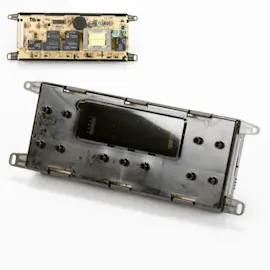
Error Codes


How to force GE washer to drain and spin?
On the GE WWSR3090TAWW washer, you typically force a drain and spin by selecting a spin-only or drain/spin portion of the cycle and starting it; if the washer will not drain, clear the drain path first so the pump can move water out.
Quick steps to drain and spin
- Turn the cycle knob to a spin setting (or the last portion of a cycle that is spin).
- Set the water level to the lowest setting (if your control has it).
- Pull the knob (or press Start, depending on your control style) to begin.
- If the tub is full of water and it will not start spinning, switch to off, wait 30 seconds, then try spin again.
- If you hear the motor but no water leaves, inspect the drain hose for kinks and confirm the standpipe is not clogged.
If it will not drain: what to check first
A drain problem is usually a restriction, a hose issue, or a drive issue.
- Make sure the drain hose is not shoved too far down the standpipe (it can siphon or block flow).
- Check for a kinked, crushed, or frozen drain hose.
- Reduce the load size; heavy, waterlogged loads can stall the drain and spin.
- If the washer hums but does not move water, the drive system may be slipping; inspect the washer drive belt WH1X2026.
- If the tub bangs hard or will not reach spin speed, worn suspension can keep it from spinning out; inspect the washer suspension rod kit WH16X543.
What you should see (normal vs not)
| What happens | What it usually means | What to do |
|---|---|---|
| Water pumps out, then basket accelerates | Normal drain and spin | Let the cycle finish |
| No drain sound, tub stays full | Drain restriction or pump not moving water | Check hose, standpipe, load |
| Drains slowly, then stops | Partial clog or hose routing issue | Re-route hose, clear blockage |
| Loud banging during spin | Out-of-balance or suspension wear | Rebalance load, check suspension |
Why it matters
Forcing a drain and spin is a fast way to remove standing water and confirm whether the issue is drainage, balance, or a slipping drive belt. Fixing the root cause prevents repeat no-drain problems and reduces wear on the motor and transmission.
For display-based diagnostics on GE washers, use our GE top load washer error codes reference to match symptoms to likely causes.
Last updated: January 2026
How to reset GE washer timer?
To reset the timer or controls on your GE WWSR3090TAWW washer, disconnect power for about 2 minutes, then restore power and reselect your cycle. If your washer uses a mechanical timer knob, rotate it away from the end of the cycle and set it to a new position.
Quick reset steps (most effective)
- Unplug the washer, or switch the washer circuit breaker OFF.
- Wait 2 full minutes (this clears the control state).
- Restore power.
- Turn the cycle selector to a fresh cycle and pull the knob (or press Start) to begin.
- If the washer was mid-cycle, choose a cycle that matches what you need now (for example, Drain/Spin).
If the timer knob is stuck or slipping
A timer that will not advance or a knob that spins without engaging is often a knob or clip issue, not the timer itself.
- Inspect the knob for a rounded-out center or cracks.
- Check that the knob clip is present and gripping the timer shaft.
- Replace the worn piece if the knob will not reliably turn the timer.
Helpful parts for this model:
What to expect after a reset
| What you see | What it usually means | What to do |
|---|---|---|
| Timer restarts from the beginning | Normal after power reset | Select cycle and run |
| Timer does not move during wash | Timer motor or drive issue | Confirm agitation and spin; then inspect drive system |
| Knob turns but timer does not | Knob or clip not engaging | Replace knob and or clip |
Why it matters
Resetting clears a “hung” control state after a power flicker or interrupted cycle, and it helps you confirm whether you have a simple control issue versus a worn timer knob, clip, or drive problem.
For display-based troubleshooting on other GE washer styles, we also use the GE top load washer error codes reference.
Last updated: January 2026
Why does my GE washing machine take so long?
On the GE WWSR3090TAWW washer, long cycle times usually happen when the washer is struggling to fill, drain, or balance the load; the timer can pause or advance slowly while the machine tries to reach the right water level or complete a spin safely.
Most common causes (and what to check first)
- Slow fill: Make sure both hot and cold supply valves are fully open; check inlet screens for sediment.
- Drain restriction: Verify the drain hose is not kinked, crushed, or shoved too far down the standpipe.
- Out-of-balance load: Bulky items can trigger repeated re-balance attempts, extending the cycle.
- Suds or wrong detergent: Too much detergent can reduce agitation and spin performance, adding time.
- Water level sensing issue: A loose, pinched, or leaking pressure hose can confuse water-level sensing; inspect the washer water-level pressure switch hose WH41X365.
Quick troubleshooting steps
- Run a small test load (3 to 5 towels) and note whether the delay happens during fill, wash, drain, or spin.
- Confirm the drain hose has a smooth path and the standpipe height is typical (most installs are roughly 30 to 96 inches).
- Reduce detergent to the minimum recommended amount and avoid extra suds.
- If the washer seems to agitate normally but struggles to spin or takes multiple tries to ramp up, inspect the belt and drive system; a worn belt can slip and slow progress.
Parts that commonly relate to long cycles on this model
| Symptom you notice | What it often points to | Example part to inspect |
|---|---|---|
| Takes a long time to reach full water level | Fill restriction or sensing issue | Washer water-level pressure switch hose WH41X365 |
| Washes but spin seems weak or delayed | Drive slippage | Washer drive belt (model-specific part selection) |
| Loud banging, repeated re-balance attempts | Suspension wear or load issues | Washer suspension rod kit (model-specific part selection) |
Why it matters
When a washer runs long, it is usually compensating for a condition that can also cause poor cleaning, poor rinsing, or extra wear on the drive and suspension. Fixing the root cause typically restores normal cycle time and improves performance.
Helpful reference
If your washer displays or signals a fault during troubleshooting, use GE top load washer error codes to match the code to the most likely cause.
Last updated: January 2026
Why is the deep fill button not working on my GE washer?
On the GE WWSR3090TAWW washer, a “deep fill” button that does nothing is usually caused by a stuck control knob/button interface, a control panel issue, or a cycle option that is not available for the selected cycle. Start with a power reset and then check for physical sticking or a loose knob/clip before assuming an electronic failure.
Quick checks (fastest fixes first)
- Unplug the washer (or switch off the breaker) for 2 minutes, then restore power and try again.
- Make sure a cycle is selected that actually allows a higher water level; some cycles limit fill by design.
- Press the button firmly and evenly; if it feels “mushy” or doesn’t click, the control interface may be binding.
- If the knob is loose, cracked, or slipping on the shaft, replace the knob.
- If the knob won’t stay seated, inspect the retaining clip.
Parts that commonly solve “button not working” symptoms
If the issue is mechanical (loose, slipping, or not engaging), these model-matched parts are the first place we look:
What to do if the washer fills but not “deep”
Sometimes the button works, but the washer cannot sense or control the water level correctly.
- Check the pressure hose for kinks, pinches, or a loose connection at the tub or pressure switch.
- Look for soap residue or moisture in the hose that can affect pressure sensing.
- If the hose is brittle or damaged, replace it.
A common model-matched item to inspect is:
Symptom-to-likely-cause guide
| What you notice | Most likely cause | What we recommend |
|---|---|---|
| Button/knob feels stuck or won’t “engage” | Knob/clip issue or control panel binding | Inspect/replace knob and clip; check panel fit |
| Button responds sometimes | Worn control interface or intermittent connection | Inspect control panel; reseat connections if accessible |
| Washer won’t change water level at all | Pressure sensing problem | Inspect/replace pressure switch hose |
| Multiple options don’t work | Control panel or control system problem | Inspect control panel; consider professional diagnosis |
Why it matters
A working deep fill option helps prevent under-washing bulky loads. If the control input or water-level sensing is failing, the washer can underfill, overfill, or behave inconsistently across cycles.
Last updated: January 2026